


LONDON, April 2 /PRNewswire/ -- E-Health Insider has started its search to uncover and reward this year's outstanding work and achievement within the healthcare IT sector. Entries for the annual E-Health Insider Awards are now being accepted via the website http://www.ehealthawards.com.

Jon Hoeksma, editor of E-Health Insider said: 2009 will see the third running of the awards and we would like to acknowledge once again the support and involvement of BT and our other sponsors within this prestigious awards programme.

     In the summer of 1981, a colleague at the NASA Ames Research Center in Mountainview, California, gave me a small black stone wrapped in aluminum foil that changed the course of my life.

BERLIN, April 2 /PRNewswire/ --

- Pan-European Developer Event to Connect Peers, Luminaries, and Business Professionals Worldwide in Cologne, Germany August 17-19

Online registration for the 2009 Game Developers Conference(R) Europe (GDC Europe) is now open through August 18. GDC Europe will play host to over 80 lectures, panels, and keynotes from top international speakers-serving as the country's premier professional event and addressing the needs and opportunities for developers and business professional throughout Europe today. Early registrants to GDC Europe receive additional discounts before the end of Professional Discount Day, July 29.

DUSSELDORF, Germany, April 2 /PRNewswire/ --

- Group Sales in the First Quarter of 2009 at Prior Year Level; Sales up Almost 3% in the Core Business Despite Difficult Market Environment

- Adjusted EBITDA Margin of 17.1% in the Core Business, Continued Operating Earnings Strength

- CEO Dr. Axel Herberg: Despite the difficult overall economic environment we continue to aim for profitable sales growth of around 6% to 7% in our core business for 2009.

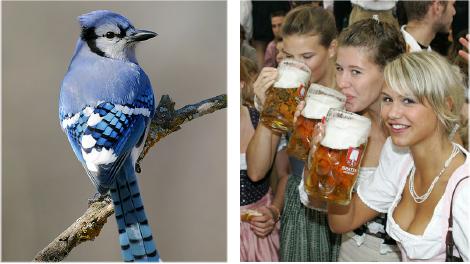
Some of the brightest colors in nature are created by tiny nanostructures with a structure similar to beer foam or a sponge, according to Yale University researchers.    Most colors in nature—from the color of our skin to the green of trees—are produced by pigments. But the bright blue feathers found in many birds, such as Bluebirds and Blue Jays, are instead produced by nanostructures. Under an electron microscope, these structures look like sponges with air bubbles.
 
If you’ve ever been sleep-deprived, you know how it correlates to baseball and the feeling that your brain is batting below the Mendoza Line and you just aren't seeing the ball very well.      Or you just feel muddled.

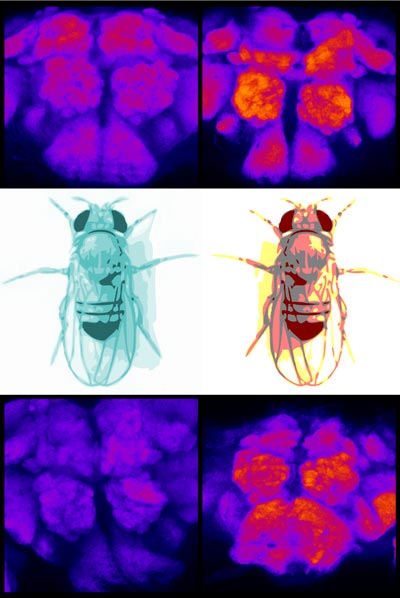
A study published in Science has molecular and structural evidence  saying proteins that build up in the brains of sleep-deprived fruit flies drop to lower levels in the brains of the well-rested - basically spring training, or a good cleaning, for your brain. The proteins are located in the synapses, those specialized parts of neurons that allow brain cells to communicate with other neurons. 
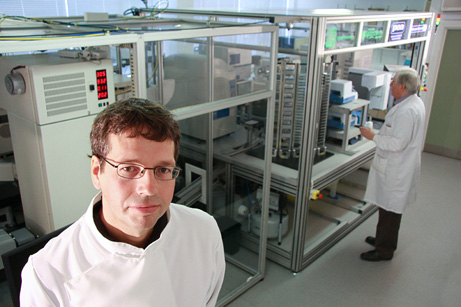
Scientists, this is your future research partner.    A 'Robot Scientist' named Adam has been created and the group behind it believe it is the first machine to have independently discovered new scientific knowledge. Adam is a computer system that fully automates the scientific process.
Yes, Charles Darwin did important things for science, but what we really want to know is how he squandered his money as a student.    Did he drink and smoke a lot?   Yeah, actually, which makes him all the more likable.   

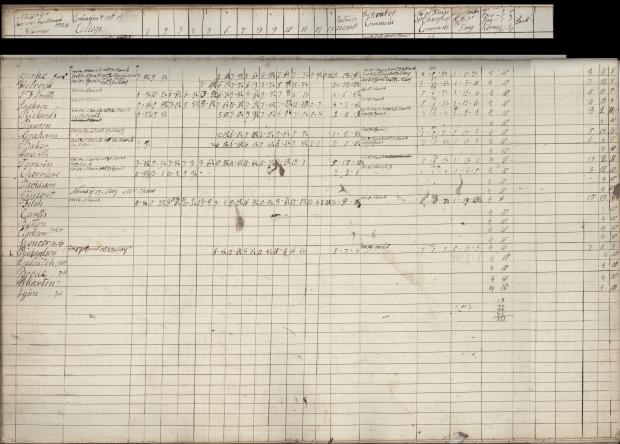
200 years after the great naturalist's birth, his successors at Christ's College, Cambridge, have unearthed bills which record intimate details about the young Darwin's previously unknown day-to-day life during his student years.

The six record books were published online March 23rd at The Complete Work Of Charles Darwin Online (http://darwin-online.org.uk/), making them freely available to readers anywhere in the world.
Some of the symptoms of the autistic condition Asperger Syndrome, such as a need for routine and resistance to change, could be linked to levels of the stress hormone cortisol, suggests new research led by the University of Bath.

Normally, people have a surge of this hormone shortly after waking, with levels gradually decreasing throughout the day. It is thought this surge makes the brain alert, preparing the body for the day and helping the person to be aware of changes happening around them.

However, a study led by Dr Mark Brosnan and Dr Julie Turner-Cobb from the Department of Psychology at the University of Bath, and Dr David Jessop from the University of Bristol, has found that children with Asperger Syndrome (AS) do not experience this surge.
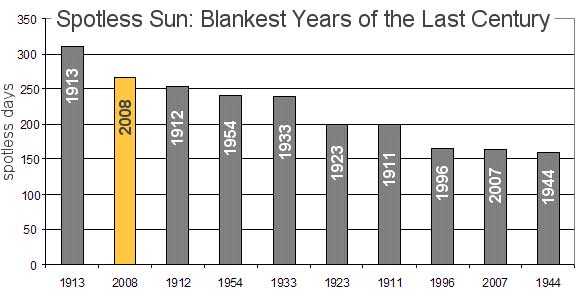
The sunspot cycle is behaving a little like the stock market. Just when you think it has hit bottom, it goes even lower. 

2008 was a bear. There were no sunspots observed on 266 of the year's 366 days (73 percent). To find a year with more blank suns, you have to go all the way back to 1913, which had 311 spotless days. Prompted by these numbers, some observers suggested that the solar cycle had hit bottom in 2008.

Maybe not. Sunspot counts for 2009 have dropped even lower. As of March 31st, there were no sunspots on 78 of the year's 90 days (87 percent).

