

KAISERSLAUTERN, Germany, February 25 /PRNewswire/ -- empolis is one of the 100 most important companies in knowledge management! For the third time, empolis - a leading enterprise content and knowledge management solution provider - has been selected by KMWorld Magazine for its prestigious list of KMWorld's 100 Companies that Matter In Knowledge Management.

CAPE TOWN, South Africa, February 25 /PRNewswire/ --

Sub-Saharan Africa is in urgent need of additional power generation capacities to meet the rising demand for power. The region's focus on the available hydropower potential is opening up a potentially lucrative market for hydro turbine suppliers. Equipment suppliers need to partner with EPC contractors to be able to supply the turnkey projects African customers desire.

(Logo: http://www.newscom.com/cgi-bin/prnh/20081117/FSLOGO)

New analysis from Frost Sullivan (http://www.energy.frost.com), Hydro Turbine Market in Sub-Saharan Africa, finds that the market earned revenues of US$120.0 million in 2007 and is estimated to reach US$425.0 million by 2013.

CAPE TOWN, South Africa, February 25 /PRNewswire/ --

The Energy Power Systems Group at Frost Sullivan is pleased to announce that it will be hosting a free online analyst briefing on the impact of the global economic slowdown on Africa's electricity sector on Wednesday 11 March 2009 at 2:00 pm GMT/ 4:00pm CAT.

(Logo: http://www.newscom.com/cgi-bin/prnh/20081117/FSLOGO)

Despite the global economic downturn, the sub-Saharan African electricity industry is still expected to grow. This is due to strong fundamentals that include an improved investment climate, a high demand for electricity, robust economies, the pursuit of the reform of the power sector and feedstock availability.

LONDON, February 25 /PRNewswire/ -- New research launched in Apprenticeship Week (23-27 February 2009) reveals that

CHANTILLY, Virginia and NEW YORK, February 25 /PRNewswire/ --

- Solution provides complete monitoring of complex multi-vendor trading infrastructures

LONDON, February 25 /PRNewswire/ --

The Brazilian Municipal Water and Wastewater Treatment Market has been experiencing strong growth since 2004. However, 80% of the country's population still needs to be connected to sewage treatment facilities. To remedy this, the Brazilian government has launched Programa de Aceleracao e Crescimento (PAC), an investment programme aimed at financing municipal water and wastewater projects. The Brazilian government has set lofty goals; it plans to reach 80% population coverage in the next seven years and hopes to achieve 100% coverage by 2020.

(Logo: http://www.newscom.com/cgi-bin/prnh/20081117/FSLOGO)

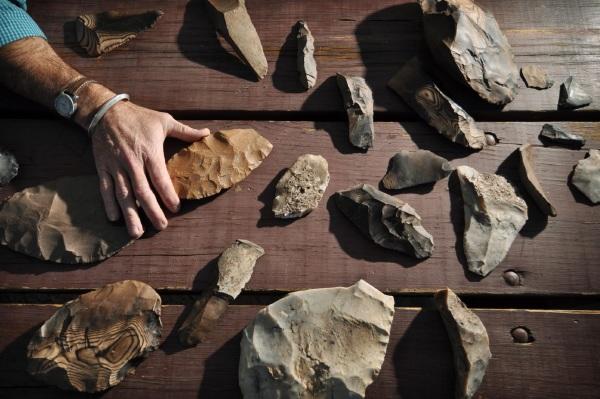
A biochemical analysis of a rare Clovis-era stone tool cache recently unearthed in the city limits of Boulder, Colo., indicates some of the implements were used to butcher ice-age camels and horses that roamed North America until their extinction about 13,000 years ago, according to a University of Colorado at Boulder study.

The study is the first to identify protein residue from extinct camels on North American stone tools and only the second to identify horse protein residue on a Clovis-age tool, said CU-Boulder Anthropology Professor Douglas Bamforth, who led the study. The cache is one of only a handful of Clovis-age artifact caches that have been unearthed in North America, said Bamforth, who studies Paleoindian culture and tools. 
A deep new image of the magnificent Helix planetary nebula has been obtained using the Wide Field Imager at ESO's La Silla Observatory. The image shows a rich background of distant galaxies, usually not seen in other images of this object.
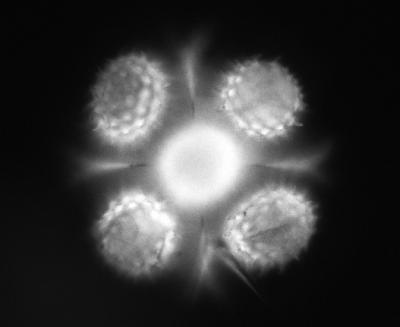
A team of Vanderbilt scientists have invented what is basically the world's smallest periscope and are using it to look at cells and other micro-organisms from several sides at once.

The researchers have officially dubbed these devices "mirrored pyramidal wells" and they consist of pyramidal-shaped cavities molded into silicon whose interior surfaces are coated with a reflective layer of gold or platinum. They are microscopic in dimension – about the width of a human hair – and can be made in a range of sizes to view different-sized objects. When a cell is placed in such a well and viewed with a regular optical microscope, the researcher can see several sides simultaneously.
We learn a lot from genes but it turns out we can learn even more - like where you lived or even who you spent time with.   It just requires knowing where and how to look.

Researchers from Stanford and Tel-Aviv University are using a technique called "reverse ecology" to examine metabolic networks and pull out proxies for reconstructing bacterial environments millions of years in the past. The work, published in the February issue of the Journal of Computational Biology, offers clues to the complex evolutionary interplay between organisms such as parasites and hosts.

