








While the use of IC50’s is a huge problem in the biological sciences, Academia, Industry and Regulatory bodies have good reason to avoid the established field of enzyme kinetics. As I said in the last post, the problem with IC50 values is that they strip away or obscure finer details of molecular interactions producing an artificial wall on the amount of information we can obtain from biological systems.  However, the perception is that modern enzyme kinetic drug studies do not provide a significant improvement in our understanding relative to the increase in resources that are required to do the studies.

Home dialysis therapies may help prolong the lives of patients with kidney failure compared with hemodialysis treatments administered in medical centers, according to an upcoming study at ASN Kidney Week 2014 at the Pennsylvania Convention Center in Philadelphia, PA.

Home dialysis therapies are more convenient and less expensive than in-center treatment, but it's unclear whether all home therapies - which include peritoneal dialysis and home hemodialysis - can prolong patients' survival. Researchers led by Austin Stack, MD, MBBCh, FASN (Graduate Entry Medical School, University of Limerick, in Ireland) analyzed national data to compare dialysis survival among 585,911 patients who started dialysis in the United States between 2005 and 2010. 

Air pollution may play a role in the development of kidney disease, according to a study upcoming at ASN Kidney Week 2014 November 11-16 at the Pennsylvania Convention Center in Philadelphia, Pennsylvania.

There are wide variances in the prevalence of chronic kidney disease (CKD) across the United States, only part of which is explained by differences in individuals' risk factors. To see if air quality may also play a role, Jennifer Bragg-Gresham, PhD (University of Michigan) and her colleagues looked at 2010 Medicare information on 1.1 million persons as well as air-quality data for all US counties provide by the Environmental Protection Agency.


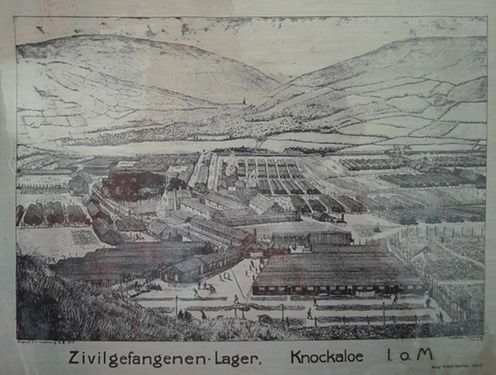
Knockaloe Camp. Stefan Manz

By Stefan Manz, Aston University

The German-Jewish painter and writer Paul Cohen-Portheim had spent a peaceful summer in 1914 visiting friends in Devon and enjoying the beautiful south-west coast.

But his idyllic holiday came to an abrupt end after Britain’s entry into war on August 4. Despite there being no suggestion of any sympathy towards his homeland’s military ambitions, Cohen-Portheim was classified as an “enemy alien” and prevented from leaving the country.

Major leaks from oil and gas pipelines can lead to home evacuations and even explosions. The line of lawyers waiting to sue for millions of dollars even if nothing happens can be seen from space.

And though most pipeline leaks are small, America leads the world in safe pipeline construction and oversight, it's better for everyone if leaks are stopped as quickly as possible. A report in Industrial&Engineering Chemistry Research outlines development of a new software-based method that finds leaks even when they're small, which could help prevent serious incidents and save money for customers and industry.

Wearable tech isn't just for humans any more. whistle.com

By Clara Mancini, The Open University

With the likes of Google Glass, Fitbit, and Emotiv wearables are now a familiar concept. Perhaps less known is that animals have been fitted with wearable technology for decades.

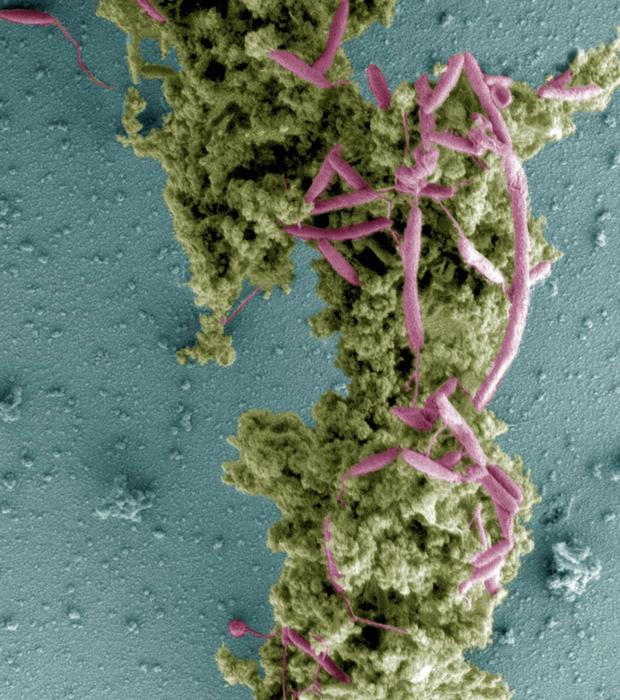
Campylobacter's persistence in the kitchen is boosted by organic matter from chicken carcasses - "chicken juice" - and that means better cleaning of surfaces used for food preparation is an easy way to keep illness from happening.

Campylobacter aren't particularly hardy bacteria, so one area of research has been to understand exactly how they manage to survive outside of their usual habitat, the intestinal tract of poultry. They are sensitive to oxygen, but during biofilm formation the bacteria protect themselves with a layer of slime. This also makes them more resistant to antimicrobials and disinfection treatments. 

In my previous article about the Kano Computer, I demonstrated how to use MIT’s Scratch graphical programming language on the Kano to flash an LED (the “Hello World!” program of hardware hacking). In this article, I’ll again demonstrate how to flash an LED, but using a special variable in Scratch called “MotorA”. Scratch automatically handles all of the programming for MotorA to produce a “pulse width modulation” (PWM) signal on Pin 11 of the Raspberry Pi. For a primer on pulse width modulation, see this article.

The human Y chromosome has retained only 3% of its ancestral genes. So why is it a shadow of its former self? Rafael Anderson Gonzales Mendoza/Flickr, CC BY-NC-SA

By Jenny Graves, La Trobe University

The Y chromosome, that little chain of genes that determines the sex of humans, is not as tough as you might think. In fact, if we look at the Y chromosome over the course of our evolution we’ve seen it shrink at an alarming rate.


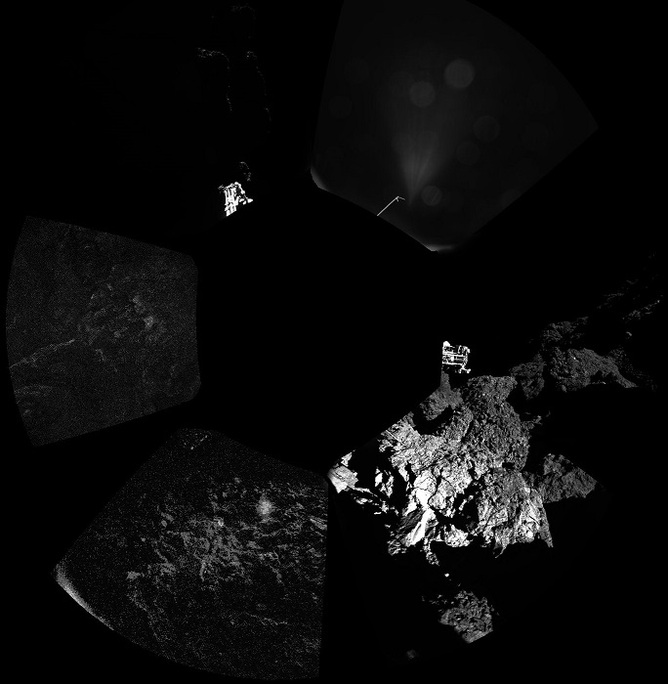
Hang on? Oh, there you are… ESA, Author provided

By Monica Grady, The Open University

Phew, what a day it was yesterday. Ended up having a quiet drink at the hotel. Last drink of the day – a nice cup of tea!

