







John F. Kennedy didn't just win the presidential election in 1960 because an alarming number of dead people in Chicago and Texas voted for him, it was only close in the first place because his debate with Vice-President Richard Nixon was televised - and he thought makeup was unmanly. While Kennedy looked healthy and vigorous, Nixon looked pale and sweaty. History was made and politics was changed forever.

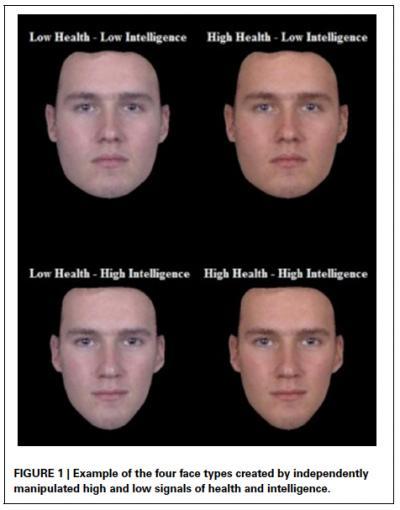
Two generations later, a healthy complexion is vital - but looking intelligent is not as important, except for positions that require negotiation between groups or exploration of new markets, find the authors of a paper in Frontiers in Human Neuroscience.

A new index to measure the magnitude of heat waves finds that under the worst climate scenario of temperature rise, estimated to be as much as 8.6 degrees Fahrenheit, extreme heat waves might become the norm by the end of the century.

They project that heat waves like the one that hit Russia in summer 2010, the strongest in recent decades, could occur as often as every two years.

There's a new reason not to go on a low-fat diet. The signs of brain aging can be postponed in mice if placed on a high-fat diet, which opens up the possibility for treatment of patients with Alzheimer's and Parkinson's disease. 

When we get older, defects begin to develop in our nervous system and our brain loses some of its intellectual capacity. The risk of developing diseases such as Parkinson's and Alzheimer's also increases. Alzheimer's disease is currently the fastest-growing age-related disease.

Fast testing for bacterial infections may help to reduce excessive antibiotic use, finds a systematic review. When doctors tested for the presence of bacterial infections, they prescribed fewer antibiotics.

By 2030, nearly 10 percent of colon cancers and nearly 25 percent of rectal cancers will be diagnosed in patients younger than the traditional screening age. This growing public health problem is underscored by data trends among 20- to 34-year-olds in the U.S., among whom the incidence of colon and rectal cancer (CRC) is expected to increase by 90% and 124.2%, respectively, by 2030.

Nearly 137,000 people will be diagnosed with
colon and rectal cancer
in the U.S. this year, and more than 50,000 will die of the disease.
colon and rectal cancer
is the third most common cancer among men and women, and the third leading cause of cancer death.

Addiction recovery has numerous pitfalls and the inability to sleep only compounds the risk of relapse, so persistent insomnia is a concern, write researchers in the Journal of Addiction Medicine.

The authors believe that the incidence of insomnia in early recovery may be five times higher than the general population and may persist for months or even years. They say insomnia may be linked with a higher risk of alcohol-related problems and relapse. The association may run in the other direction as well—population studies report people with sleep disturbance are more likely to be at risk of developing addiction..

Do stores that carry cigarettes create new smokers or do they carry cigarettes because their customers smoke? Would a nexus of comic book stores create more comic book readers? Will that work with broccoli?

A new geography paper matches smoking to store locations that carry cigarettes and correlates the two, suggesting that teenagers are much more likely to take up smoking if they live in neighborhoods with a large number of shops that sell tobacco products.

Words are so 20th century. The 21st century could belong to brains communicating directly with each other.

Researchers have successfully replicated a direct brain-to-brain connection between pairs of people. In the newly published paper, which involved six people, researchers were able to transmit the signals from one person's brain over the Internet and use these signals to control the hand motions of another person within a split second of sending that signal.


Rosetta mission: A giant leap for humans and robots. Huart, ESA

By Natalie Starkey, The Open University

Online gambling has exploded in the last decades and several states, hungry for more revenue without direct taxes, have approved measures to legalize various types of gambling.

Critics contend that will lead to more crime and more broken homes due to gambling problems.

A new University at Buffalo Research Institute on Addictions (RIA) survey says that isn't the case. They interviewed 2,613 people in 1999-2000, and the second survey interviewed 2,963 people in 2011-13. Individuals were asked about their participation in a broad range of gambling activities, including raffles, office pools, pulltabs, bingo, cards, pool, gambling machines, casinos, lottery, Internet gambling, and sports, horse or dog track betting.

