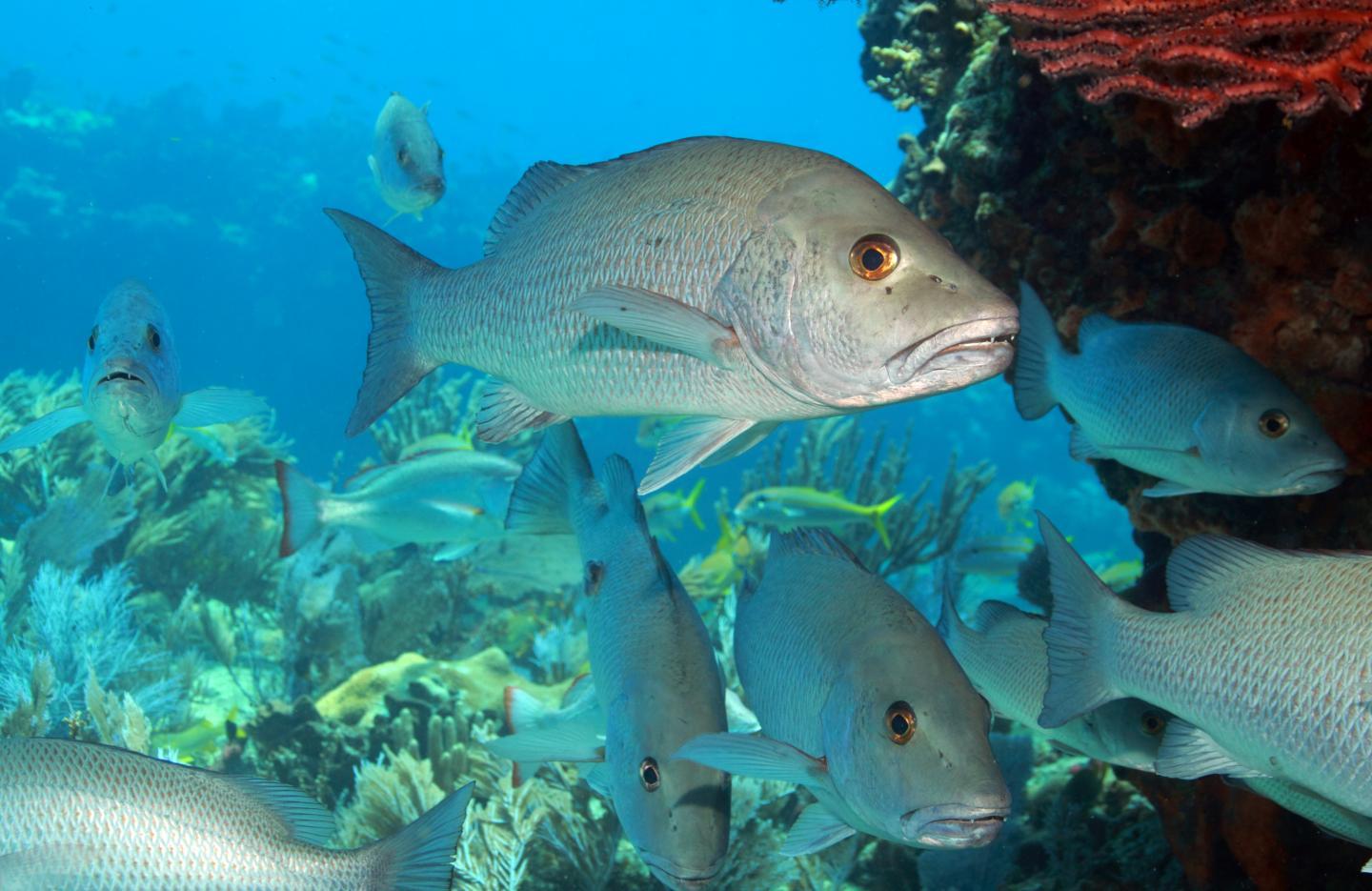










Researchers recently used audio and video recording tools to record larval orientation behavior in the pelagic environment. 

In their field experiment, the scientists put the recording devices i a drifting in situ chamber called DISC  near Fowey Rocks lighthouse in the northern Florida Keys. In total 58 deployments were conducted, 27 during the day and 31 at night. The team also recorded sounds in a laboratory setting to confirm that the sounds observed in the field were from gray snapper larvae. The researchers also referred to the public sound archive at the Macaulay Library to compare the larval sounds to those produced by adult L. griseus.

Fibromyalgia is a symptom-based disorder that manifests itself as chronic pain. Its underlying causes are unknown.

The results of a new study compares brain activity in individuals with and without fibromyalgia and indicate that decreased connectivity between pain-related and sensorimotor brain areas could contribute to deficient pain regulation in fibromyalgia, according to an article published in Brain Connectivity.

In the new study by Pär Flodin and coauthors from Karolinska Institutet in Sweden, they add on to previous findings from other fibromyalgia papers that used brain imaging and found abnormal neuronal activity in the brain associated with poor pain inhibition.

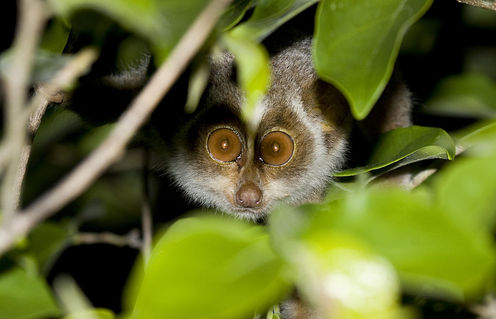
Going, going, gone: wildlife like the loris are disappearing. Credit: N. A. Naseer, CC BY-NC-ND

By Paul Jepson, University of Oxford

Some sharks are more 'gregarious' than others and have strong social connections while others are solitary and prefer to remain inconspicuous. That's not an exception, according to a new study, these notorious predators have personality traits.

Personalities obviously exist in many animals but they are usually defined by individual characteristics such as how exploratory, bold or aggressive an individual animal is. The paper in
the journal Behavioral Ecology and Sociobiology involved testing for social personality by recording the social interactions of groups of juvenile small spotted catsharks in captivity under three different habitat types.  

We are stardust - scientists and citizen scientists alike

Physics Today's Ashley Smart describes a huge recent win for citizen science: some 30,000 volunteers pored over millions of microscopic images looking for dust collected a decade ago by NASA's Stardust probe, and their efforts have helped identify candidate interstellar grains:

Abortion and teen pregnancy dropped among teens who received free contraception and were educated about the pros and cons of various birth control methods, according to a new study in the New England Journal of Medicine.


Giving publishing power to the people. Credit: Thinglass/Shutterstock

By Gillian Rudd, University of Liverpool


The need for caution when any anomaly is revealed in new research. Credit: Flickr/Adam Gerard, CC BY-NC-SA

By Michael J. I. Brown, Monash University

UNDERSTANDING RESEARCH: What do we actually mean by research and how does it help inform our understanding of things? What if research throws up a result that calls for a new way of thinking? How do we handle that?

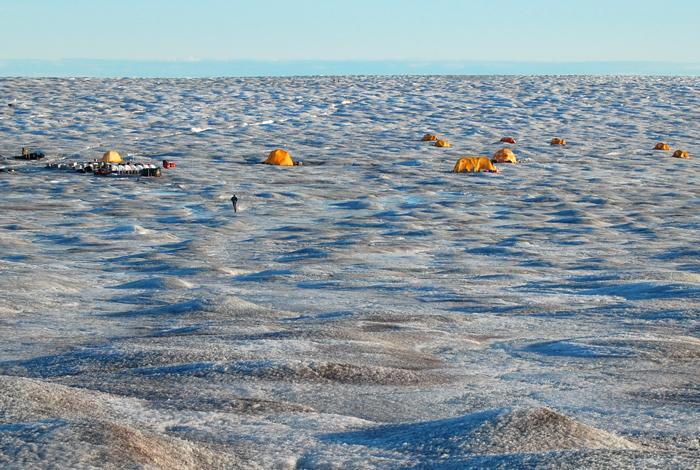
Ice sheets were never simple. There is no magic knob that could be turned to optimize melting rates and movement, outside environmental press releases.

A new paper in Nature this week
shows that not only is meltwater not as simple as sometimes contended, we don't even know what we don't know. Observations of moulins (vertical conduits connecting water on top of the glacier down to the bed of the ice sheet) and boreholes in Greenland show that subglacial channels ameliorate the speedup caused by water delivery to the base of the ice sheet in the short term.

BEIJING; BERKELEY, CA; and UPTON, NY - The Daya Bay Collaboration, an international group of scientists studying the subtle transformations of subatomic particles called neutrinos, is publishing its first results on the search for a so-called sterile neutrino,

Though the search is on for a possible new type of neutrino beyond the three known neutrino "flavors," or types, the so-called sterile neutrino remains elusive.

A new paper by the Daya Bay Collaboration in Physical Review Letters finds no evidence for sterile neutrinos in a previously unexplored mass range.

