



Alzheimer's research is always big news. The reason is simple: people are living longer and they also want to be living better. While progress in general health issues for seniors marches on, the brain remains trickier stuff. Instead of less Alzheimer's than in the past, we have more, thanks to better diagnosis and greater longevity. Once you reach a certain age, you are almost certain to have someone in your family with it. 

The term 'living fossil' is a topic for argument among scientists because it appears to suggest that some organisms have stopped evolving. Like 'missing link' or 'God particle' the concern is the colloquial meaning has overtaken the science one.

The number of Americans diagnosed with asthma is up to 26 million and a new paper says a majority, nearly two-thirds or more of all asthmatics, also have an allergy.  Asthma is frequently associated with children but 3 percent or more of adults 60 years and older also have it. The number may be higher, because older people did not grow up in a diagnosis culture, so asthma could be under-diagnosed in older adults. 

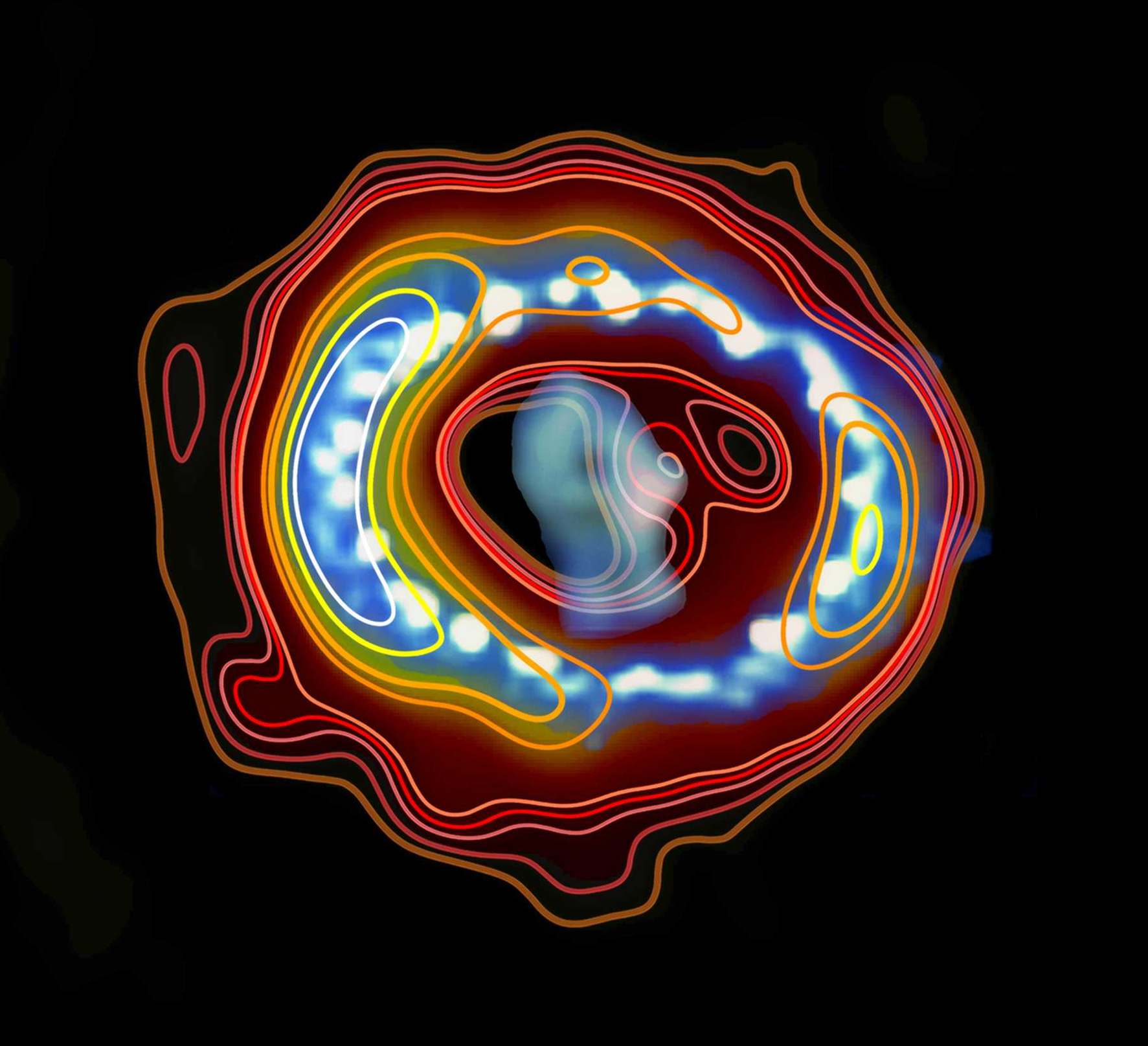
A team of astronomers led by the International Centre for Radio Astronomy Research (ICRAR) have succeeded in observing the death throws of a giant star in unprecedented detail.

In February of 1987 astronomers were observing the nearby dwarf galaxy known as the Large Magellanic Cloud when they discovered what looked like a new star.

It wasn't new, instead it was the end of one and it was the brightest supernova seen from Earth in the four centuries since the telescope was invented. By the next morning news of the discovery had spread across the globe and southern hemisphere stargazers began watching the aftermath of this enormous stellar explosion.

The mediatic effect of the Higgs boson discovery of last July is clear to everybody. And CERN has been very good at exploiting it, making fundamental physics a familiar topic and creating interest worldwide. Yet I think we can do more. The gap between basic research in physics and the public is wide, and we are doing still too little to fill it.
On Killing

On Killing

Apr 02 2013 | comment(s)

I recently watched a program on the Science Channel entitled "Human Nature: Born to Kill".  In this episode, part of the objective was to explore humans killing other humans.  Of course, the usual array of topics were raised, from evolutionary psychology to genes [i.e. the "warrior gene"] and even the "nature vs nurture debate".

However, there were a few points that I felt were muddled and confused.

"Organic" food and products is a $29 billion big business and its marketing power is very strong: studies have shown that this simple label can lead us to think that a food is healthier, what is known as the 'health halo effect'.  Marketing attempts to penalize conventional food would also capitalize on that bias, making genetically modified food seem less healthy.  

A new paper by Cornell University's Food and Brand Lab out to to determine if an organic label can influence much more than health views: they found hat perceptions of taste, calories and value can be significantly altered when a food is labeled "organic". And certain people are more susceptible to 'health halo' marketing.

Men with Lynch syndrome, an inherited genetic condition linked to a higher risk of several types of cancer, face a higher lifetime risk of developing prostate cancer and appear to develop the disease at an earlier age, according to a new study.

People with Lynch syndrome have up to 80 percent lifetime risk of colorectal cancer and are also more likely to develop endometrial, gastric, ovarian, urinary tract, pancreatic and brain tumors. Overall, about 1 in 440 people are carriers for the genetic mutation, making it one of the most common inherited cancer conditions.

An experiment using microvesicles generated from mesenchymal bone marrow cells to treat cancer, neurological researchers at Henry Ford Hospital have discovered a novel approach for treatment of tumor.

Specifically, the research team found that introducing genetic material produced by mesenchymal bone marrow cells significantly reduced a particularly resistant form of malignant brain tumor in living lab rats.

