A new study suggests that the increase of MRSA in healthcare settings results from clinicians who prescribe antibiotics more often and more broadly than clinical circumstances and evidence-based guidelines warrant because of medical liability concerns.
So it isn't politicians or insurance companies who are picking your treatment, it is lawyers.
This morning LHC machinists, experimentalists from the LHC experiments, as well as other CERN personnel gathered in the Main Auditorium at CERN to give their end-of-year report. After a LHC status report the spokespersons of ALICE, ATLAS, CMS, LHCB, and TOTEM briefly flashed their first experimental results, obtained from 900 GeV and 2.36 TeV collisions acquired in the course of the last three weeks.
Nanotechnology is a big buzzword this decade but there are questions about how safe nano-based products are and we are unsure how to even measure, much less regulate, them.
Anti-odor socks, makeup, makeup remover, sunscreen, anti-graffiti paint, home pregnancy tests, plastic beer bottles, anti-bacterial doorknobs, plastic bags for storing vegetables, and more than 800 other products are already in use so time is critical.
Dark spots on flower petals are common across many angiosperm plant families and occur on some flowers such as lilies, orchids, and considerable research has been done on the physiological and behavioral mechanisms for how these spots attract pollinators, but what these spots are composed of, how they develop, and how they only appear on some but not all of the ray florets has long been a puzzle.
Dr. Meredith Thomas from the University of Cambridge and associates from England and South Africa focused on the South African endemic beetle daisy Gorteria diffusa (Asteraceae), which has a unique, raised, dark spot at the base of some of its ray florets to help find deeper answers. The American Journal of Botany published the results of the study.
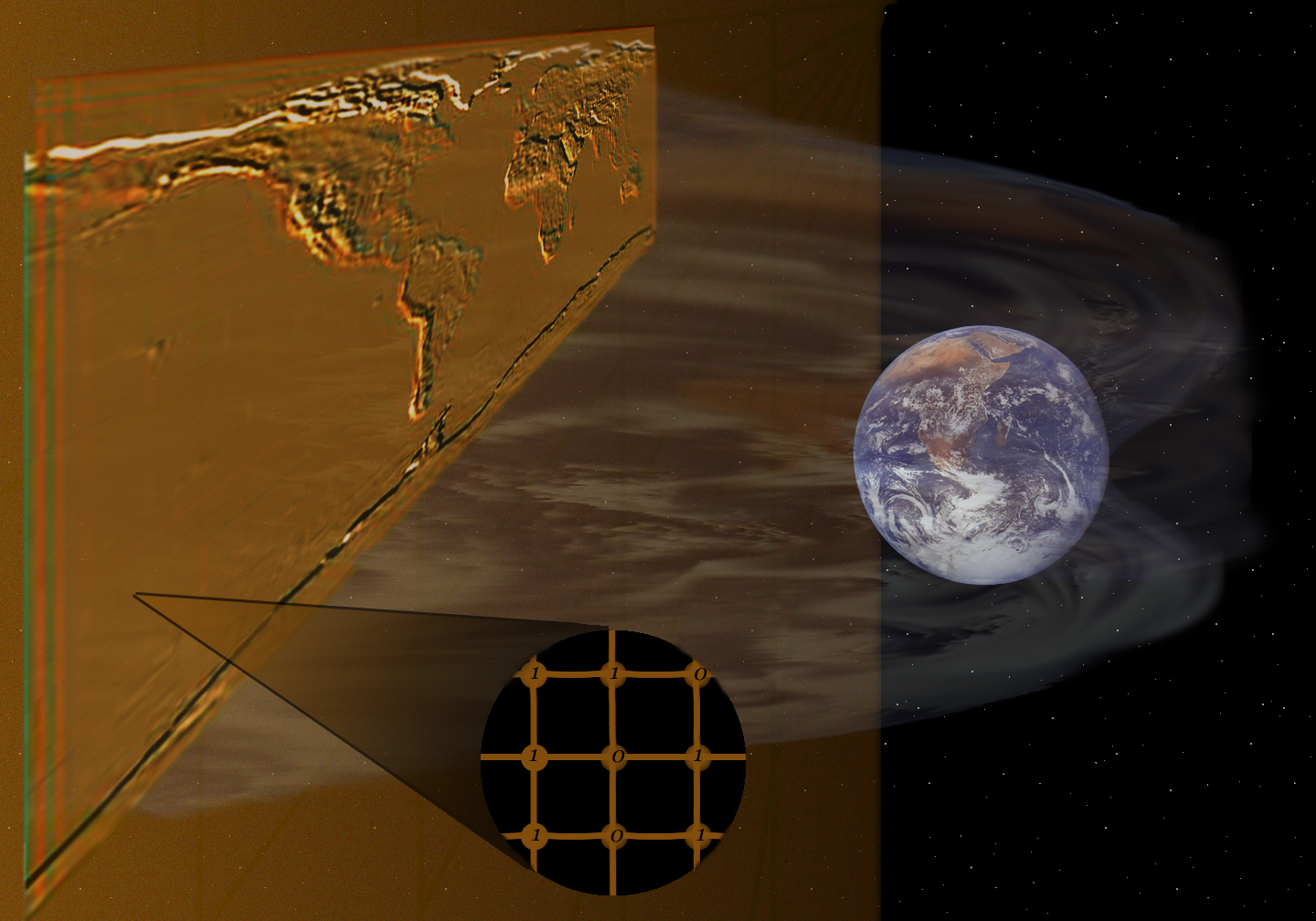
Three days ago I wrote a blog about a new theory that seems to lead to the conclusion that gravity is an effect emerging from quantum mechanical principles.
James “the Amazing” Randi is an icon of skepticism. The man has done more — over a span of several decades — to further the cause of critical thinking and to expose flimflammery of all sorts than arguably anyone else in the world, ever. That is why I was struck with incredulity and sadness yesterday when I read Randi’s latest take on global warming.

Don't be embarrassed, it happens to everyone: One day you wake up to find you've been apped. Remember: it's not your fault. You're still the same person, capable of independent thought and even mild-to-modest calculations. This, despite the fact that calculations are no longer necessary. See? The app does it for you.
If your kids want a Wii, PlayStation or Xbox 360 this holiday season, you may actually have good reason to give them one; it turns out there is some redeeming value in the hours that kids spend transfixed by these video game systems. A new study in Current Directions in Psychological Science reports that regular gamers are fast and accurate information processors, not only during game play, but in real-life situations as well.
With the publication of a new study in Cellular Microbiology, an international team of researchers has shed new light on the infection strategy of Salmonella, suggesting that scientists will have to reassess their understanding of how the pathogens invade host cells.
Although Salmonella are long-known pathogens, the precise mechanisms they use to infect are incompletely understood. The bacteria inject a protein cocktail into host cells using a molecular syringe, leading to dramatic rearrangements of cytoskeletal filaments below the cell membrane.
The potentially damaging effects of marijuana on young brains may be even worse than previously thought, according to new research conducted by scientists from McGill University. Their new study, published in Neurobiology of Disease, suggests that teenagers who consume marijuana daily face a higher risk of depression and anxiety, and may suffer irreversible neurological effects.
"We wanted to know what happens in the brains of teenagers when they use cannabis and whether they are more susceptible to its neurological effects than adults," explained McGill University researcher Gabriella Gobbi.