






Turns out that Dr. Scholl's Freeze Away doesn't work on worry-warts.  So for many people, personality traits like chronic worrying can lead to earlier death, at least in part because these people are more likely to engage in unhealthy behaviors, such as smoking, according to research from Purdue University.

"Research shows that higher levels of neuroticism can lead to earlier mortality, and we wanted to know why," said Daniel K. Mroczek, (pronounced Mro-ZAK) a professor of child development and family studies. "We found that having worrying tendencies or being the kind of person who stresses easily is likely to lead to bad behaviors like smoking and, therefore, raise the mortality rate.

How's this for something new: instead of a steel dental pick poking and prodding around your teeth at you next dentist appointment, imagine a laser doing all that work pain-free.

Thanks to a group of researchers in Australia and Taiwan, this may be possible. They have developed a new way to analyze the health of human teeth using lasers. As described in Optics Express, by measuring how the surface of a tooth responds to laser-generated ultrasound, they can evaluate the mineral content of tooth enamel -- the semi-translucent outer layer of a tooth that protects the underlying dentin.

NASA scientists have discovered glycine, a fundamental building block of life, in samples of comet Wild 2 returned by NASA's Stardust spacecraft.

"Glycine is an amino acid used by living organisms to make proteins, and this is the first time an amino acid has been found in a comet," said Dr. Jamie Elsila of NASA's Goddard Space Flight Center in Greenbelt, Md. "Our discovery supports the theory that some of life's ingredients formed in space and were delivered to Earth long ago by meteorite and comet impacts."

A University of Texas Health Science Center at Houston study suggests that ancient Chinese herbal formulas used primarily for cardiovascular indications including heart disease may produce large amounts of artery-widening nitric oxide.

Nitric oxide is crucial to the cardiovascular system because it signals the inner walls of blood vessels to relax, which facilitates the flow of blood through the heart and circulatory system. The messenger molecule also eliminates dangerous clots, lowers high blood pressure and reduces artery-clogging plaque formation.
There's great news for movie lovers.   That popcorn slathered in butter at the movie theater may be only mostly bad for you.

Snack foods like popcorn and many popular breakfast cereals contain "surprisingly large" amounts of healthful antioxidant substances called polyphenols, said chemist Joe Vinson, Ph.D., who headed a new study and presented the results at the ACS meeting today.

Polyphenols are one reason why fruits, vegetables and foods like chocolate, wine, coffee, and tea have become renowned for their potential role in reducing the risk of heart disease, cancer, and other diseases. 
Last week we revealed the Top 10 Schools for Science based on the results of a 3-year study performed by US News&World Report. The study ranked the nation’s best science graduate programs, based upon the results of surveys sent to academics in Biological Sciences, Chemistry, Computer Science, Earth Science, Mathematics, and Physics.

So who came out on top? Several universities had a strong showing in one particular science specialty, but the top schools demonstrated high performance in multiple disciplines. Which schools scored the highest across all specialties? Here are the Top 10:

1.    Stanford University

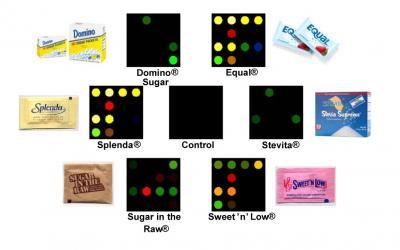
After taking a new approach to developing an effective "electronic tongue" that mimics human taste, scientists in Illinois are reporting development of a small, inexpensive, lab-on-a-chip sensor that quickly and accurately identifies sweetness — one of the five primary tastes. It can identify with 100 percent accuracy the full sweep of natural and artificial sweet substances, including 14 common sweeteners, using easy-to-read color markers.

A large number of hydrocarbon yielding plants like Calotropis procera, Euphorbia antisyphilitica have been reported to yield bio-fuel products. Attempts have been made to increase their growth and hydrocarbon yield potential.

Studies were conducted to improve growth and productivity of these plants under field conditions In Rajasthan, Calotropis procera grows wild while Euphorbia antisyphilitica has been introduced from Mexico. Jatropha grows wild in south east Rajasthan which lies on south east side of Aravalli hill range which roughly divides the state in semi-arid and arid regions.


James Hollis, Ph.D., is a graduate of the C. G. Jung Institute in Zurich. He has taught  mythology and religion, men's issues, and midlife. His books have been translated into Russian, German, Swedish, Spanish, Portuguese, Turkish, Italian, Korean, Finnish, and Japanese. "Under Saturn's Shadow - THE WOUNDING AND HEALING OF MEN" is the impetus for my interview.


SB: Taking words from your book, I feel empowered to dive into life and struggle for depth and meaning. Dr. Hollis, thanks very much for this interview. Shall we get serious about psyche?


"Devil's claw" is a plant that may hold a natural for arthritis, tendonitis and other illnesses that affect millions each year.

Years of drought in Africa's Kalahari Desert have pushed the Devil's claw toward extinction but scientists are making headway in efforts to produce the valuable medicinal chemicals of the Devil's claw and one group reported an advance at the American Chemical Society (ACS) meeting. The researchers described the first successful method of producing the active ingredients in Devil's claw — what made it a sensation to natural medicine proponents in Europe.

They say their technique could lead to the development of "biofactories" that produce huge quantities of rare plant extracts quickly and at little cost.


