






Spotted Cleaner Shrimp


"Wash that for you?" If you were a fish living in the warm turquoise waters off the coast of Bonaire, you may not hear those words, but you'd see the shrimp sign language equivalent. It seems Periclimenes yucatanicus or Spotted Cleaner Shrimp is doing a booming business in the local reefs by setting up a fish washing service.

In honor of my daughter's first birthday, today I thought I'd write about ray weaponry.

With only a quick stop at your local box store, you can be ready to pop a conventional cap in someone’s ass; however, charring said ass to a crisp using a laser or other ray weapon is not so easy. This is because—despite many decades of government promises—laser weapons do not currently exist (despite the ubiquity of industrial cutting lasers and promises by high school tech ed teachers that one false move with a pointer will render your lab partner a cyclops).

Is Facebook that addictive or is a new pilot study correlating Facebook use to lower grades simple picking on the big gorilla of social media?   75 Percent of Facebook users claimed that their use of the social networking site didn't interfere with their studies but college students who use Facebook have lower grade point averages than students who have not signed up.

Don't get too alarmed.    This was a small, exploratory study but it did find that Facebook users in the study had GPAs between 3.0 and 3.5, while non-users had GPAs between 3.5 and 4.0.  And that will get some attention.   In addition, users said they averaged one to five hours a week studying, while non-users studied 11 to 15 hours per week.

After about seven months growing in the womb, a human fetus spends most of its time asleep. Its brain cycles back and forth between the frenzied activity of rapid eye movement (REM) sleep and the quiet resting state of non-REM sleep. But whether the brains of younger, immature fetuses cycle with sleep or are simply inactive has remained a mystery - until now.

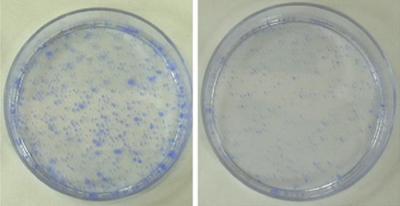
Yuan et al. have identified another anti-cancer effect of the "longevity" protein SIRT1. By speeding the destruction of the tumor promoter c-Myc, SIRT1 curbs cell division. The study will be published in the Journal of Cell Biology.

Applied scientists at the Harvard School of Engineering and Applied Sciences (SEAS) in collaboration with researchers from Hamamatsu Photonics in Hamamatsu City, Japan, have demonstrated, for the first time, lasers in which the direction of oscillation of the emitted radiation, known as polarization, can be designed and controlled at will. The innovation opens the door to a wide range of applications in photonics and communications. Harvard University has filed a broad patent on the invention.

Our modern age has become accustomed to regular improvements in information technology, says Slava Rotkin, but these advances do not come without a cost.

Take the laptop, for example. Its components, especially its billions of semiconductor electronic circuits, are growing ever tinier while the instrument's power and capacity increase. But heat generated by electric current can cause the circuits to melt and the laptop hardware to fail.

Indeed, says Rotkin, an assistant professor of physics, a laptop in use can generate heat faster than an everyday hotplate and almost as fast as a small nuclear reactor.

There was a time when it was virtually impossible not to believe in God.   That made sense; life had (and certainly still has) many mysteries and a divine hand made sense of an irrational world, at least in the sense that you could believe in one supernatural thing rather than many.

But over time two important things happened that should have killed religion; the world got 'smaller' in the sense that a lot more information about people and cultures became available and science was able to explain a much larger, very fundamental and far-reaching set of things about the world in terms of natural laws.

A team of UCSF researchers has used microRNAs to help turn adult mouse cells back to their embryonic state. These reprogrammed cells are pluripotent, meaning that, like embryonic stem cells, they have the capacity to become any cell type in the body.

A drop of blood or a chunk of tissue smaller than the period at the end of this sentence may one day be all that is necessary to diagnose cancers and assess their response to treatment, say researchers at the Stanford University School of Medicine.

In a Nature Medicine study, the scientists used a specialized machine capable of analyzing whether individual cancer-associated proteins were present in the tiny samples and even whether modifications of the proteins varied in response to cancer treatments. Although the study focuses on blood cancers, the hope is that the technique might also provide a faster, less invasive way to track solid tumors.

