





The field of particle physics is poised to enter unknown territory with the startup of a massive new accelerator--the Large Hadron Collider (LHC)--in Europe this summer. On September 10, LHC scientists will attempt to send the first beam of protons speeding around the accelerator.

The LHC will put hotly debated theories to the test as it generates new experimental data. Potential breakthroughs include an explanation of what gives mass to fundamental particles and identification of the mysterious dark matter that makes up most of the mass in the universe. More exotic possibilities include evidence for new forces of nature or hidden extra dimensions of space and time.

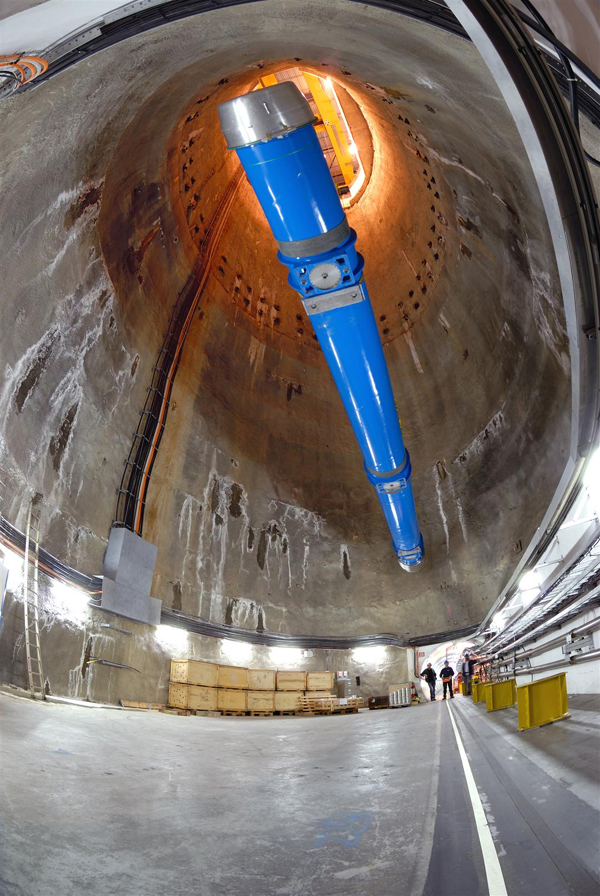
The scale of the LHC is gigantic in every respect--its physical size, the energies attained, the amount of data it will generate, and the size of the international collaboration involved in its planning, construction, and operation. In September, high-energy beams of protons will begin circulating around the LHC's 27-kilometer (16.8-mile) accelerator ring located 100 meters (328 feet) underground at CERN, the European particle physics lab based in Geneva, Switzerland. After a period of testing, the beams will cross paths inside the detectors and the first collisions will take place.

Use of embedded software in electronics devices is growing even faster than advances in electronics themselves. Yet human capabilities for producing software have not increased in Europe over the past decade.

“The amount of software is growing very rapidly and it is increasingly difficult to find the people and resources necessary to develop it all,” explains Dr Pekka Abrahamsson of project coordinator VTT Technical Research Centre in Finland. “As a result, Europe is seeing a lot of development work transferring to India and other countries. An additional problem lies in the speed of development as it is necessary to get solutions to market in optimum time and with sufficient reliability that it works properly.”

Results of the EUREKA ITEA software Cluster AGILE project make it possible for European manufacturers to develop high quality embedded software in markedly shorter times and at much lower costs than possible with traditional techniques. Applying the approach to 68 pilot case studies in industries from avionics and telecommunications to consumer electronics, the project demonstrated clearly that ‘agile’ methodology can lead to massive improvements in embedded software engineering. Suitable tooling was also demonstrated to simplify application of the agile approach. As a result, much more software development can be carried out cost effectively in Europe rather than being outsourced to Asia.

On the 17th of June 2008, The Richard Green Library, a collection of rare scientific books was put up for bid by Christi’s Auction House.

Of the 289 lots sold totaling $11,019,688 the most notable was De revolutionibus orbium coelestium libri V, 1543 (On the Revolutions of the Celestial Spheres), the seminal work, by Nicolaus Copernicus, in which he explained his theory of heliocentricity.

The book, which is often referenced as the beginning of modern astronomy was sold for $2,210,500, the most expensive of the lot.

LHC Start-up

LHC Start-up

Aug 20 2008 | comment(s)

After the Olympics, the next big thing is the international Large Hadron Collider. There's a lot of excitement at CERN. The first injections, and without a hitch, of low energy protons shot through an eighth of the 27 km LHC ring. Back to back for this weekend they're doing it again at 0.45 TeV with the anti-clockwise beam. It's an important preliminary test, kicking the protons from the pre-accelerator loops, into the unknown. At this point CERN is confident there is nothing to worry about. The energy is only half of the currently most powerful collider, Fermilab's Tevatron, in Batavia, Ill. So, CERN's probably right, this time. Higher energies will be the real test.

Now for the news major media aren't covering, from the current Strings 2008, a CERN conference, and not only on String theory. It's another window on CERN that is fascinating.

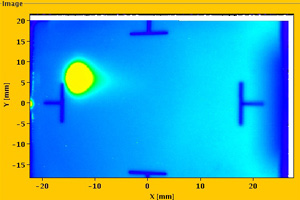
Large Hadron Collider, first test bunch of protons 3 km into collider, courtesy CERN 2008

Scientific happenings, big and small, on this day in history

But first, today’s quiz:

What famous inventor, born on this day in 1871, will forever be famous for something he did for only 12 seconds? Think you know…? You might be right. To be sure check out the answer at the end of the article.

Fluoridation was adopted more by politicking than by science according to Edward Groth III, Ph.D., Senior Scientist, with Consumers Union, publishers of the popular Consumers Reports magazine. In a presentation made at the February 2001 Annual Meeting of the American Association for the Advancement of Science, Groth reported that, with three experimental fluoridation trials incomplete, enthusiastic fluoridation proponents successfully lobbied and persuaded the U.S. Public Health Service (PHS) to endorse fluoridation in 1950 who, then with a few state dental officials, began vigorously promoting fluoridation with little, if any, scientific support.

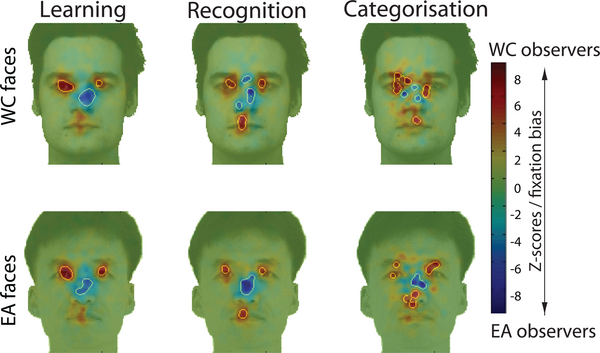
Because face recognition is effortlessly achieved by people from all different cultures it was considered to be a basic mechanism universal among humans. However, by using analyses inspired by novel brain imaging technology, researchers at the University of Glasgow have discovered that cultural differences cause us to look at faces differently.

Lead researcher Dr Roberto Caldara said: "In a series of eye-movement studies, we showed that social experience has an impact on how people look at faces. Specifically we noticed a striking difference in eye movements in Westerners and East Asian observers. We found that Westerners tend to look at specific features on an individual's face such as the eyes and mouth whereas East Asian observers tend to focus on the nose or the centre of the face which allows a more general view of all the features. One possible cause of this could be that direct or excessive eye contact may be considered rude in East Asian cultures."

Alcohol use during the teen years can not only lead to alcoholism, risky sexual behavior and early childbearing, alcohol dependence (AD) has now also been linked to delayed reproduction.

"Reproductive dysfunctions include a range of menstrual disorders, sexual dysfunctions, and pregnancy complications that include spontaneous abortion or miscarriage," explained Mary Waldron, assistant professor of psychiatry at Washington University School of Medicine and corresponding author for the study. "Teenagers who drink tend to have disruptions in their menstrual cycle as well as unplanned pregnancies."

A group of University of Oklahoma researchers studying the environmental fate of petroleum spills have in the process isolated a community of microorganisms capable of converting hydrocarbons into natural gas.

The researchers found that the process known as anaerobic hydrocarbon metabolism can be used to stimulate methane gas production from older, more mature oil reservoirs like those in Oklahoma. The work has now led to the recognition that similar microorganisms may also be involved in problems ranging from the deterioration of fuels to the corrosion of pipelines.

As Dr. Ronaldo Luna, associate professor of civil, architectural and environmental engineering at Missouri University of Science and Technology, watches a machine shake silt from the Mississippi River until it liquefies, he says, "This is what would happen during a major earthquake along the Mississippi River."

Researchers don’t fully understand the liquefaction process for silts (though they have a better understanding of how it works with sands) but Luna is confident, based on his tests, that a 6.5 magnitude earthquake or bigger would cause solid surfaces along the banks of the Mississippi River to turn, momentarily, into liquid.


