





On Sept. 15, 2007, an object hurtled through the sky and crashed near the village of Carancas in Peru. Scientists dispatched to the site found a gaping hole in the ground.

Peter Schultz, professor of geological sciences at Brown University and an expert in extraterrestrial impacts, went to Peru to learn more and he presented the findings from his travels at the 39th annual Lunar and Planetary Science Conference in League City, Texas.

What Schultz and his team revealed: The object that slammed into a dry riverbed in Peru was a meteorite, and it left a 49-foot-wide crater. Soil ejected from the point of impact was found nearly four football fields away.

Developmental biologists at the University of Wisconsin School of Medicine and Public Health (SMPH) say they have gained new understanding of how digits grow and why each digit is different from the others.

Though the research was done on chick digits, it may have implications for humans born with a genetic condition known as bradydactyly, or stubby fingers and toes.

Despite decades of research, the biological basis of depression is unknown, and the molecular and cellular targets of antidepressant treatment remain elusive, although it is likely that these drugs have one or more primary targets.

Researchers from the University of Illinois at Chicago College of Medicine have discovered that a change in the location of a protein in the brain could serve as a biomarker for depression, allowing a simple, rapid, laboratory test to identify patients with depression and to determine whether a particular antidepressant therapy will provide a successful response.

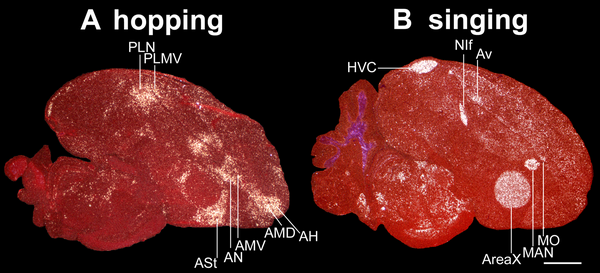
Though they perch far apart on the avian family tree, birds with the ability to learn songs use similar brain structures to sing their tunes. Neurobiologists at Duke University Medical Center now have an explanation for this puzzling likeness.

In all three groups of birds with vocal learning abilities – songbirds, parrots and hummingbirds – the brain structures for singing and learning to sing are embedded in areas controlling movement, the researchers discovered. The team also found that areas in charge of movement share many functional similarities with the brain areas for singing. This suggests that the brain pathways used for vocal learning evolved out of the brain pathways used for motor control.

Bipolar Disorder (BPD or manic-depressive illness) is one of the most serious of all mental disorders, affecting millions of individuals worldwide. Affected individuals alternate between states of deep depression and mania. While depression is characterized by persistent and long-term sadness or despair, mania is a mental state characterized by great excitement, flight of ideas, a decreased need for sleep, and, sometimes, uncontrollable behavior, hallucinations, or delusions.

BPD likely arises from the complex interaction of multiple genes and environmental factors. Unlike some brain diseases, no single gene has been implicated in BPD.

Cocaine addicts often suffer a downward emotional spiral that is a key to their craving and chronic relapse. While researchers have developed animal models of the reward of cocaine, they have not been able to model this emotional impact until now.

Regina Carelli and colleagues report experiments with rats in which they have mimicked the negative affect of cocaine addiction and even how it drives greater cocaine use. They said their animal model could enable better understanding of the emotional motivations of cocaine addiction and how to ameliorate them.

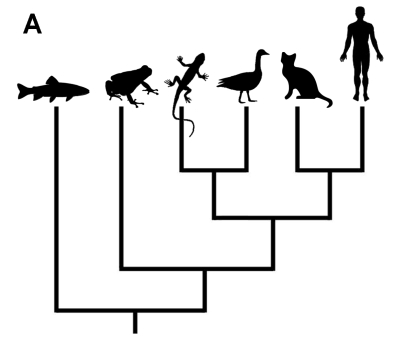
In the first installment of this series, we encountered the common misconception that the order of the terminal nodes ("tips") on an evolutionary tree reflects the actual relatedness among the species represented. Simply rotating some internal nodes without affecting the branching order ("topology") of the tree -- and thus, making no change to the relationships among species -- showed that that the order of tips on a tree is actually arbitrary. What matters is the way that the species are connected through their common ancestors.

Photosynthesis by plants, algae, and some bacteria is crucial to life on Earth. It results in food from sunlight and in its process organisms release oxygen and absorb carbon dioxide.

Scientists at the Carnegie Institution say a new discovery puts a dramatic twist on what we know - namely that certain marine microorganisms have evolved a way to break the established rules of photosynthesis.

The studies, in Biochimica et Biophysica Acta and Limnology and Oceanography, suggest these marine microorganisms get a significant proportion of their energy without a net release of oxygen or uptake of carbon dioxide.

Macrophages, derived from Greek and meaning “eating cells”, are biological cells that spring from white blood cells to destroy foreign or dying cells. They are basically cellular “policemen” that can differentiate between good and bad cells.

But some cancer cells over-express the molecular protein that macrophages recognize as friendly — they create a fake ID — which allows the cancer to avoid being perceived as foreign by macrophages. In addition, the molecules involved in the recognition mechanism appear somewhat variable from person to person, with possible links to success or failure in transplantation of stem cells.

It is generally accepted that America could immediately reduce energy consumption by at least 20% if intelligent conservation efforts were implemented at all levels. As a country, we established energy use habits decades ago when all forms of energy were relatively cheap. Lights on in high rise building at night, corridors in hotels and office buildings that are almost painfully bright, lights on in empty rooms and offices, and escalators that move even when no one is on them. This all came back to me on a recent trip to Brazil.

