



Cameras and sensors that will look for the presence of water on the moon have completed validation tests and been shipped to the manufacturer of NASA's Lunar Crater Observation and Sensing Satellite.

The science instruments for the satellite, which is known as LCROSS, departed NASA's Ames Research Center in Moffett Field Calif., for the Northrop Grumman Corporation's facility in Redondo Beach, Calif. to be integrated with the spacecraft. A video file is available on NASA Television. LCROSS is scheduled to launch with the Lunar Reconnaissance Orbiter aboard an Atlas V rocket from Cape Canaveral, Fla., by the end of 2008.

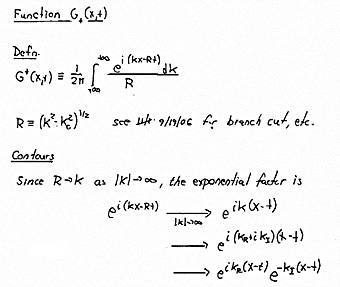
Who needs a computer? Two theoretical physicists at Rensselaer Polytechnic Institute grabbed a piece of paper and described the motion of interstellar shock waves — violent events associated with the birth of stars and planets.

The mathematical solution developed by Wayne Roberge, lead author and professor of physics, applied physics, and astronomy at Rensselaer and his colleague, adjunct professor Glenn Ciolek, reveals the force and movement of shock waves in plasma, the neutral and charged matter that makes up the dilute “air” of space. Unlike many previous studies of its kind, the researchers focused specifically on shock waves in plasma, which move matter in very different ways than the uncharged air on Earth.

Fish oil supplements help some cardiac patients while harming others, according to a new review of evidence compiled by St. Michael’s Hospital and University of Toronto researchers.

In a systematic review of trials where patients with implantable cardioverter defibrillators used fish oil supplements, Dr. David Jenkins and Dr. Paul Dorian found significant differences among the trials, indicating fish oil may be beneficial to some patients while having a negative impact on others.

“Fish oils can have complex and varied effects on the heart,” says Jenkins, a U of T Professor of Medicine who runs the Clinical Nutrition and Risk Factor Modification Centre at St. Michael’s Hospital.

BBSRC scientists have found that the part of the brain that deals with sound, the auditory cortex, is adapted in each individual and tuned to the world around us. We learn throughout our lives how to localize and identify different sounds. It means that if you could hear the world through someone else's ears it would sound very different to what you are used to.

Recognising people, objects or animals by the sound they make is an important survival skill and something most of us take for granted. But very similar objects can physically make very dissimilar sounds and we are able to pick up subtle clues about the identity and source of the sound.

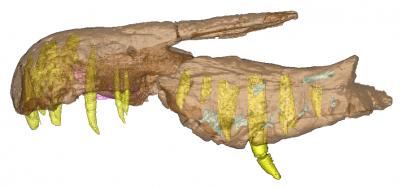
An unusual dinosaur has been shown to have a skull that functioned like a fish-eating crocodile, despite looking like a dinosaur. It also possessed two huge hand claws, perhaps used as grappling hooks to lift fish from the water.

Dr Emily Rayfield at the University of Bristol, UK, used computer modelling techniques – more commonly used to discover how a car bonnet buckles during a crash – to show that while Baryonyx was eating, its skull bent and stretched in the same way as the skull of the Indian fish-eating gharial – a crocodile with long, narrow jaws.

Dr Rayfield said: “On excavation, partially digested fish scales and teeth, and a dinosaur bone were found in the stomach region of the animal, demonstrating that at least some of the time this dinosaur ate fish.

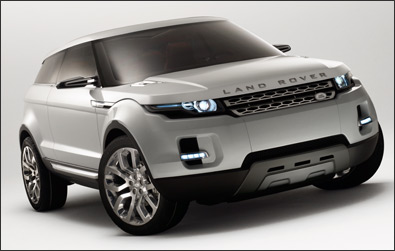
Vegetable-tanned leather, a bio-diesel ready engine and sustainable carpet materials? It's the luxury SUV Leonardo DiCaprio won't be afraid to drive.

The LRX hybrid cross-coupe concept is Land Rover's attempt to create a new market - expensive autos for progressive rich people. It's also the first all-new Land Rover since Gerry McGovern became the company's design director.

LRX is conceived as being powered by a 2.0-liter, turbodiesel engine, capable of running on bio-diesel.

An international study of 20,000 people found seven new genes that influence blood cholesterol levels, a major factor in heart disease, and confirmed 11 other genes previously thought to influence cholesterol.

The international study led by researchers from the University of Michigan School of Public Health set out to identify or confirm genetic variants that influence lipid levels, and secondly, to see if those variants were linked to the decreased or increased risk of heart disease.

The results may lead the medical community to rethink the role of HDL (good cholesterol) and LDL (bad cholesterol) in heart disease, said Goncalo Abecasis, associate professor in the U-M School of Public Health.

University of Minnesota researchers have created a beating heart in the laboratory.

By using a process called whole organ decellularization, scientists from the University of Minnesota Center for Cardiovascular Repair grew functioning heart tissue by taking dead rat and pig hearts and reseeding them with a mixture of live cells.

“The idea would be to develop transplantable blood vessels or whole organs that are made from your own cells,” said Doris Taylor, Ph.D., director of the Center for Cardiovascular Repair, Medtronic Bakken professor of medicine and physiology, and principal investigator of the research.

Nearly 5 million people live with heart failure, and about 550,000 new cases are diagnosed each year in the United States.

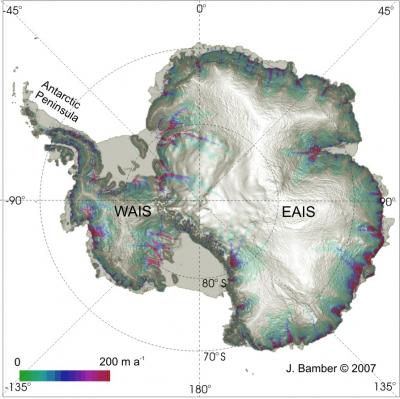
Increasing amounts of ice mass have been lost from West Antarctica and the Antarctic peninsula over the past ten years, according to research from the University of Bristol and published online this week in Nature Geoscience.

Meanwhile the ice mass in East Antarctica has been roughly stable, with neither loss nor accumulation over the past decade.

Professor Jonathan Bamber at the University of Bristol and colleagues estimated the flux of ice from the ice sheet into the ocean from satellite data that cover 85% of Antarctica's coastline, which they compared with simulations of snow accumulation over the same period, obtained using a regional climate model.

In studies involving more than 35,000 people and a survey across the entire human genome, an international team supported in part by the National Institutes of Health (NIH) has found evidence that common genetic variants recently linked to osteoarthritis may also play a minor role in human height. The findings were released in Nature Genetics.

The variants most strongly associated with height in the new genome-wide association study lie in a region of the human genome thought to influence expression of a gene for growth differentiation factor 5 (GDF5), which is a protein involved in the development of cartilage in the legs and other long bones.


