




An international research team has discovered that a magnetic field can interact with the electrons in a superconductor in ways never before observed.

Andrea D. Bianchi, the lead researcher from the Université de Montréal, explains in the January 11 edition of Science magazine what he discovered in an exceptional compound of metals – a combination of cobalt, indium and a rare earth – that loses its resistance when cooled to just a couple of degrees above absolute zero.

“When subjected to intense magnetic fields, these materials produce a completely new type of magnetic tornado that grows stronger with increasing fields rather than weakening,” said Prof. Bianchi. “The beauty of this compound is how we can experiment without breaking it.”

New ways to make sure people are adequately informed about the risks and benefits of taking part in a clinical trial can be field-tested for effectiveness as vigorously as new medical treatments themselves, a study led by a Johns Hopkins bioethicist suggests.

Informed consent, a mainstay of ethical clinical trials, is the process by which potential research subjects are asked to decide whether to participate in research.

A new study by University of Colorado at Boulder researchers indicates older, multi-year sea ice in the Arctic is giving way to younger, thinner ice, making it more susceptible to record summer sea-ice lows like the one that occurred in 2007.

The team used satellite data going back to 1982 to reconstruct past Arctic sea ice conditions, concluding there has been a nearly complete loss of the oldest, thickest ice and that 58 percent of the remaining perennial ice is thin and only 2-to-3 years old, said the lead study author, Research Professor James Maslanik of CU-Boulder's Colorado Center for Astrodynamics Research.

The roundworm C. elegans, a staple of laboratory research, may be key in unlocking one of the central biological mysteries: why we sleep.

Researchers at the University of Pennsylvania School of Medicine report in this week’s advanced online edition of Nature that the round worm has a sleep-like state, joining most of the animal kingdom in displaying this physiology. This research has implications for explaining the evolution and purpose of sleep and sleep-like states in animals.

In addition, genetic work associated with the study provides new prospects for the use of C. elegans to identify sleep-regulatory genes and drug targets for sleep disorders.

Cranberry juice, long dissed as a mere folk remedy for relieving urinary tract infections in women, is finally getting some respect.

Thanks to Prof. Itzhak Ofek, a researcher at Tel Aviv University's Sackler Faculty of Medicine, the world now knows that science supports the folklore. Prof. Ofek's research on the tart berry over the past two decades shows that its juice indeed combats urinary tract infections.

And, he’s discovered, the refreshing red beverage has additional medicinal qualities as well. Prof. Ofek has found that cranberry juice exhibits anti-viral properties against the flu, can prevent cavities, and lessens the reoccurrence of gastric ulcers.

Methadone can be dangerous for some patients but is heroin a good idea for heroin addicts?

Maintenance treatment with heroin is appropriate for heroin misusers under certain circumstances, argue Jürgen Rehm from the Centre for Addiction and Mental Health in Toronto and Benedikt Fischer from the University of Victoria, British Columbia.

They point to trials in Switzerland, the Netherlands and Germany, which found heroin assisted maintenance treatment feasible and effective for those resistant to treatment.

In this week’s BMJ, doctors warn of excess sorbitol intake, a widely used sweetener in “sugar-free” products such as chewing gum and sweets.

Sorbitol has laxative properties and is poorly absorbed by the small intestine.

Their advice follows the cases of two patients with chronic diarrhea, abdominal pain and severe weight loss. Although extensive investigations were carried out, final diagnosis was only established after detailed analysis of eating habits.

New research challenges the generally accepted belief that substantial ice sheets could not have existed on Earth during past super-warm climate events.

The study by researchers at Scripps Institution of Oceanography at UC San Diego provides strong evidence that a glacial ice cap, about half the size of the modern day glacial ice sheet, existed 91 million years ago during a period of intense global warming.

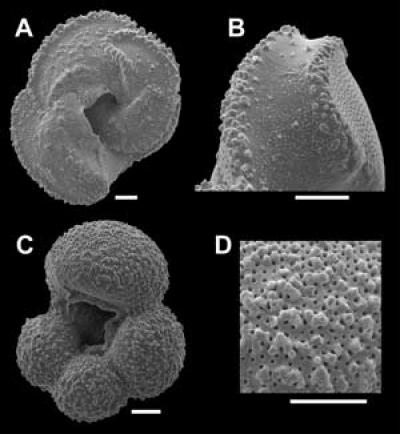
Posted in Science, “Isotopic Evidence for Glaciation During the Cretaceous Supergreenhouse” examines geochemical and sea level data retrieved from marine microfossils deposited on the ocean floor 91 million years ago during the Cretaceous Thermal Maximum.

When nerve damage occurs, there are a few treatment options; microsurgery to sew two ends of the nerve together, using a nerve from another part of the body to replace a damaged section, or placing an empty tube between the cut ends so that nerve fibers can grow through it and back into the muscle.

Grafting a nerve from another part of the body is usually the most effective option, but it creates another injury site and isn’t possible in all patients. The tubes, known as nerve guidance conduits, cannot be used in gaps longer than three or four centimeters. In addition, nerve regeneration with this method is not always successful.

For the first time astronomers are able to see indirect evidence of dark matter and how this invisible force impacts on the crowded and violent lives of galaxies. University of British Columbia researcher Catherine Heymans has produced the highest resolution map of dark matter ever captured before.

Scientists believe that dark matter is the invisible web that houses galaxies. And as the universe evolves, the gravitational pull of this unseen matter causes galaxies to collide and swirl into superclusters.

Heymans and the University of Nottingham’s Meghan Gray led an international team to test this theory that dark matter determines the location of galaxies.


