





If you're going to experience a period of helplessness, it's best to be alone. New research at the University of Haifa found that laboratory rats that were on their own when exposed to uncontrollable conditions, which create a feeling of helplessness, learned to avoid situations which create such feelings better than rats that were exposed to uncontrollable conditions in pairs.

The way laboratory rats react to uncontrollable situations in which their behaviors have no influence on subsequent events has been researched in the past.

People who bake aren't fans of sugar substitutes. 'Equal' does well in hot things like coffee that just require absorption but, for the most part, sugar remains king in the oven.

Natur Research Foods Inc. announced that it has developed and is now distributing an all-natural sugar substitute, Natur Baker's Blend Natural Sweetener, for the purpose of baking.

According to their press release, it has 40 percent fewer calories than sugar and has been tested as low-glycemic. They say it bakes, rises, caramelizes, provides a crust and preserves similar to cane sugar.

A research team at Weill Cornell Medical College in New York City has identified two genes that may be crucial to the production of an immune system cytokine called interleukin-10 (IL-10).

The discovery fills in an important "missing link" in a biochemical pathway that's long been tied to disorders ranging from lupus and Type 1 diabetes, to cancer and AIDS.

"IL-10 production has to be kept in a delicate balance for health," explains study senior researcher Dr. Xiaojing Ma, Professor of Immunology and Microbiology in the Departments of Microbiology and Immunology and Pediatrics at Weill Cornell.

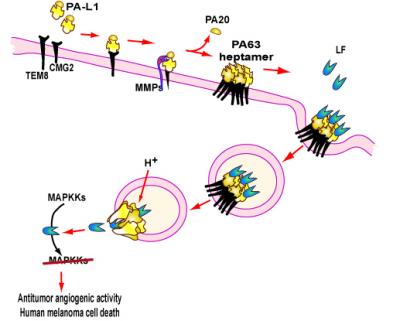
Most people wouldn’t consider anthrax toxin to be beneficial, but this bacterial poison may someday be an effective cancer therapy. Anthrax toxin has actually been shown to be fairly selective in targeting melanoma cells, although the risk of non-cancer toxicity prevents any clinical use.

To develop a better and safer treatment, Stephen Leppla and colleagues created a mutated antrax toxin that could only be turned on by matrix metalloproteinases (MMP), proteins that are overproduced only in cancer cells.

When they tested this mutated toxin in mice, the researchers observed that 100% of the animals tolerated a dose that would be lethal for the natural toxin.

As electronics designers cram more and more components onto each chip, current technologies for making random-access memory (RAM) are running out of room. European researchers have a strong position in a new technology known as resistive RAM (RRAM) that could soon be replacing flash RAM in USB drives and other portable gadgets.

On the ‘semiconductor road map’ setting out the future of the microchip industry, current memory technologies are nearing the end of the road. Future computers and electronic gadgets will need memory chips that are smaller, faster and cheaper than those of today –and that means going back to basics.

Today’s random-access memory (RAM) falls mainly into three classes: static RAM (SRAM), dynamic RAM (DRAM), and flash memory.

When President George Bush announced in 2004 that he wanted to reinvigorate space exploration, he presented a number of arguments for increasing funding but they were all rather tepid. Space exploration technology, for example, led to CAT scans and MRIs. Oh, and we got better weather forecasting.

Honestly, those are pretty weak arguments to justify an organization that gets almost $15 billion per year. Why not mention Tang and a pen that writes upside down? At least Tang is something most of us have had. I have never had an MRI.

A new influenza virus discovered in Missouri pigs has a combination of genes from avian and swine flu viruses, supporting the theory that pigs can serve as a mixing vessel for flu viruses and a potential source for a human pandemic strain, according to a report published yesterday. 

Researchers found that the virus, an H2N3 subtype, caused illness in experimentally infected mice and was transmissible in swine and ferrets, suggesting it has adapted to mammals, according to the report, published in the Proceedings of the National Academy of Sciences (PNAS). In addition, genetic analysis showed the virus has a mutation linked with an increased ability to infect mammals. 

In the New York Times, Abigail Zuger, an M.D., recently reviewed a book called Snake Oil Science: The Truth About Complementary and Alternative Medicine by R. Barker Bausell — the “truth” being, if I read Zuger correctly, that it’s all baloney. Zuger calls the book “immensely educational”. Not educational enough:

In the 19th century, leaders like Bismarck understood that the politics of nation-states and warfare were going to be implemented by countries having the most effective transportation. Railroads required fuel and the notion of a 'strategic resource' - a resource essential for a modern country to be successful - was born.

The 20th century and the rise of tanks, planes and automobiles meant that oil was a strategic resource. If you didn't have it, you had to buy it and if you couldn't buy it, you had to fight to get it.

Highly publicized events such as school shootings arouse public interest in the effects of media violence exposure on children, yet there is still considerable public debate about whether to take this issue seriously.

A recent article in Social Issues and Policy Review summarizes the research on the effects of media violence and convincingly demonstrates the profound influence that media violence is having in our society.

The many studies that have been compiled on the effects of viewing media violence show that there are at least 14 scientifically documented effects on children’s physiological and psychological well-being, both in the short and long term.

