





Sugar-based markers on human sperm cells which may prevent them from being attacked by the female immune system could provide a vital clue to how some cancers spread in the human body, according to new research published in the Journal of Biological Chemistry.

Researchers analyzed these markers, believed to tell the female immune system that the sperm are not dangerous pathogens, and therefore should not be attacked by the woman’s white blood cells during the reproductive process. The study, led by Imperial College London and the University of Missouri, suggests that these sugar markers, found on N-glycans which are part of human sperm glycoproteins, can be universally recognised by all human immune systems, regardless of the individual.

I recently submitted a Letter of Intent for the NSF Cyber-Enabled Discovery and Innovation competition. Kevin Owens is a co-PI and will assist with the laboratory automation component. ChemSpider will contribute the database support. The pre-proposal is due in early January 2008 and we'll be writing it openly here. Comments are welcome. We would ultimately like to enable the chemistry community to directly control the actions of a robot to help us understand some chemistry problems.

More than 10 years after the discovery of the first extrasolar planet, astronomers have now discovered more than 250 of these planets. Until a few years ago, most of the newly discovered exoplanets were Jupiter-mass, probably gaseous, planets. Recently, astronomers have announced the discovery of several planets that are potentially much smaller, with a minimum mass lower than 10 Earth masses: the now so-called super-Earths [1].

In April, a European team announced in Astronomy & Astrophysics the discovery of two new planets orbiting the M star Gliese 581 (a red dwarf), with masses of at least 5 and 8 Earth masses.

Schizophrenia is one of the most debilitating of the major psychiatric disorders, and is also one of the most difficult to treat.

Although numerous antipsychotic treatments are available, they can cause significant side effects and many patients experience only a partial relief of their symptoms and up to 30% no relief at all.

In a new study in Biological Psychiatry, Dr. Stephen Marder of UCLA and colleagues examined the efficacy and safety of a new psychotropic agent for the treatment of schizophrenia in a 6-week, randomized, placebo-controlled trial.

How close are we to real-world bionic parts like they show on TV? We spent Part I discussing Bionic Women on TV and speculating as to why they spent $55 Million on Jaime Sommers in the show but couldn't fix actress Michelle Ryan's chin.

Now we're going to get into actual science, like how we would build a Bionic Woman today if we didn't give a crap about television ratings. It's a good thing I am writing this now because television ratings are important and this show could be cancelled any day, making it a lot less culturally relevant. How will I get you to buy a book on science if it doesn't have pop culture relevance and cute girls?

A plentiful ingredient found in human semen drastically enhances the ability of the human immunodeficiency virus (HIV) to cause infection, according to a report in the journal Cell. The findings help to understand the sexual transmission of HIV and suggest a potential new target for preventing the spread of AIDS, the researchers said.

Collaborating research groups in Hannover and Ulm, Germany, show that naturally occurring fragments of so-called prostatic acidic phosphatase (PAP) isolated from human semen form tiny fibers known as amyloid fibrils. Those fibrils capture HIV particles and help them to penetrate target cells, thereby enhancing the infection rate by up to several orders of magnitude.

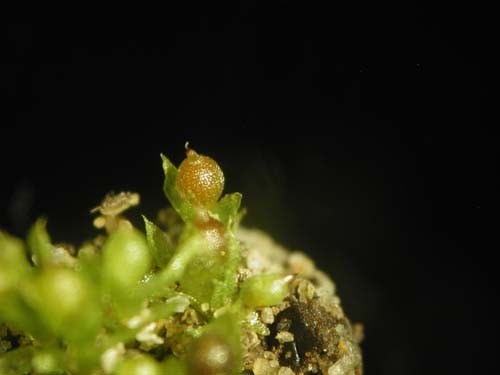
An international team of scientists have sequenced the genome for Physcomitrella – the first non-flowering or ‘lower’ plant to be sequenced – and published their findings in the latest issue of Science.

The moss Physcomitrella patens is a primitive plant, similar to the first plants which began to grow on land around 450 million years ago. Just one cell thick, these early plants had to adapt to withstand cold, heat and drought without roots or complex leaves. The ability of mosses to survive severe dehydration and then regrow when watered could be of enormous use in crops grown in drought-stricken areas of the developing world.


The spore capsule of Physcomitrella.

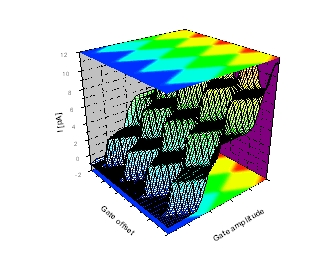
Researchers at Low Temperature Laboratory and Laboratory of Physics (TKK) and at University of Stony Brook (New York) have potentially solved the problem of accurately defining the ampere. The group has developed a frequency to current converter, the accuracy of which is based on the known charge of an electron and the extreme accuracy in defining frequency. The nanodevice is essentially a single electron transistor which works as a simple single-electron turnstile. Its best performance is achieved at very low temperatures.

Previously, the electric current and its unit, the ampere, have been defined through the classical force induced to two parallel leads carrying the current.

Long-lived, wild animals harbor genetic differences that influence how quickly they begin to show their age, according to the results of a long-term study reported in Current Biology. Evidence for the existence of such genetic variation for aging rates—a central tenet in the evolutionary theory that explains why animals would show physiological declines as they grow older—had largely been lacking in natural populations until now, the researchers said.

“We’ve found that individuals differ in their rates of aging, or senescence, and that these differences are (at least in part) caused by genetic effects so they will be inherited,” said Alastair Wilson of the University of Edinburgh.

Their day job is to keep trees upright but the forest's tiniest building blocks could soon be on their way into future products. Imagine a packaging material that also kills bacteria. Or a disposable duvet cover that keeps infection away when you are in a hospital bed.

Scientists in Trondheim believe that exciting new products can be created if we make use of some of nature's tiniest construction materials. They are called “fibrils” and you may never have heard of them, but there are millions of them in each piece of paper you hold.

A wonder of nature

Fibrils form continuously in all growing trees.

