




New research at the University of Leicester reveals that plants react to change in light quality in order to develop freezing tolerance. It showed that a reduction in the ratio of red to far-red wavelengths (R:FR) of light increases the expression of freezing tolerance genes in the model plant species Arabidopsis thaliana.

The ratio of red to far-red light, which is detected by specialized plant photoreceptors called the phytochromes, is highest in direct sunlight and lower in the shade of vegetation or at twilight, which is prolonged at higher latitudes.

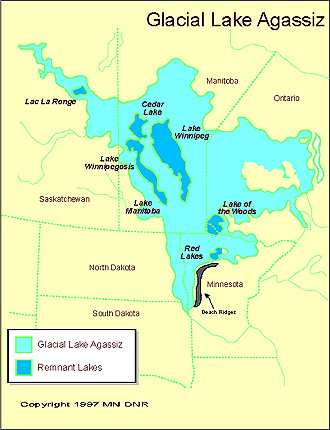
As the giant North American ice sheets melted an enormous pool of freshwater, many times larger than all of the Great Lakes, formed behind them. About 8400 years ago this pool of freshwater burst free and flooded the North Atlantic.

About the same time, a sharp century long cold spell is observed around the North Atlantic and other areas. Researchers have often speculated that the cooling was the result of changes in ocean circulation triggered by this freshwater flood. The sudden addition of so much freshwater would have curtailed (suppressed) the sinking of deep water in the North Atlantic and as a consequence less warm water would be pulled north in the Gulf stream.


Extant of Lake Agassiz.

New research calls attention to the role of the expanding American waistline in health and medicine.

Researchers at the American Association for Cancer Research’s Sixth Annual International Conference on Frontiers in Cancer Prevention Research presented some of the latest research linking obesity, diabetes and metabolism to cancer risk. Their findings link weight gain and diabetes to a variety of cancers affecting both men and women, including breast, prostate and colorectal cancer

Diabetes and hyper-insulinemia as predictors of colorectal cancer risk in a prospective cohort of women. Abstract no.

Measuring soot formation in a diesel engine is far from easy because the turbulent environment in the combustion cylinder means no two combustion cycles are the same. Furthermore, the measurements are difficult to reproduce as the pressure at which fuel is injected into the cylinder causes an extra source of turbulence.

Bas Bougie, a doctoral candidate at Radboud University Nijmegen created a glass cylinder with an engine so he could investigate soot formation and find ways to optimize diesel performance using laser light.

Laser Induced Incandescence (LII) can be used to investigate optimal engine conditions that reduce soot emission from the engine. LII can be deployed in different types of engines and with different fuels.

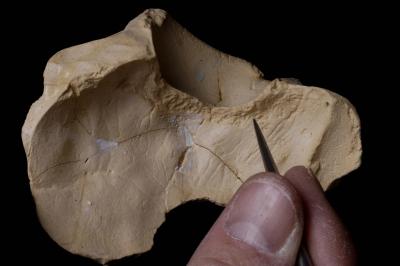
Although most scientists believe tuberculosis emerged only several thousand years ago, new research from The University of Texas at Austin reveals the most ancient evidence of the disease has been found in a 500,000-year-old human fossil from Turkey.

The discovery of the new specimen of the human species, Homo erectus, suggests support for the theory that dark-skinned people who migrate northward from low, tropical latitudes produce less vitamin D, which can adversely affect the immune system as well as the skeleton.

John Kappelman, professor of anthropology at The University of Texas at Austin, is part of an international team of researchers from the United States, Turkey and Germany who have published their findings in the Dec.

Until recently, a student solving a calculus problem, a physicist modeling a galaxy or a mathematician studying a complex equation had to use powerful computer programs that cost hundreds or thousands of dollars. But an open-source tool based at the University of Washington won first prize in the scientific software division of Les Trophées du Libre, an international competition for free software.

The tool, called Sage, faced initial skepticism from the mathematics and education communities.

"I've had a surprisingly large number of people tell me that something like Sage couldn't be done – that it just wasn't possible," said William Stein, associate professor of mathematics and lead developer of the tool. "I'm hearing that less now."

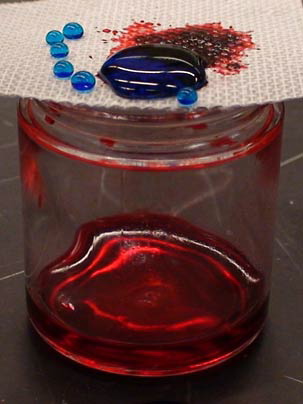
Creating a strongly oil-repelling, or “oleophobic” material, has been a long-standing challenge for scientists since there are no natural examples of such a material.

“Nature has developed a lot of methods for waterproofing, but not so much oil-proofing,” said Gareth McKinley, MIT School of Engineering Professor of Teaching Innovation in the Department of Mechanical Engineering and a member of the research team that have designed the first simple process for manufacturing materials that strongly repel oils. “The conventional wisdom was that it couldn't be done on a large scale without very special lithographic processes.”

Yet the MIT team has done it.

Described as a hotspot of botanical diversity, there are more than 20,000 indigenous plant species in South Africa. Several thousand of them are used by traditional healers every day in that country for treating a range of problems from the common cold to serious diseases such as AIDS.

How safe and effective these treatments are will be the focus of The International Center for Indigenous Phytotherapy Studies (TICIPS), a collaborative research effort between the University of Missouri-Columbia and the University of the Western Cape, South Africa.

It’s a rare case of all light and no heat: A new study reports that a laser can be used to switch a film of vanadium dioxide back and forth between reflective and transparent states without heating or cooling it.

It is one of the first cases that scientists have found where light can directly produce such a physical transition without changing the material’s temperature.

It is also among the most recent examples of “coherent control,” the use of coherent radiation like laser light to affect the behavior of atomic, molecular or electronic systems. The technique has been used to control photosynthesis and is being used in efforts to create quantum computers and other novel electronic and optical devices.

Esquire magazine scribe Tom Junod recently wrote something that made me question my judgment and his sanity - namely that Franziska Michor Is the Isaac Newton of Biology

Now, the last time someone compared themselves to Isaac Newton it was ... well, okay it was me, but even I can't be serious about comparing myself to Isaac Newton. Isaac Newton is a serious guy in physics. A giant. Maybe the giant. It's one thing to make comparisons for dramatic effect, which a keen writer like Junod can do better than anyone, but another to make a serious case.


