



While more than half the academic life science researchers responding to a 2007 survey indicated having some relationship with private industry, the prevalence of such relationships – particularly direct funding for research studies – appears to be dropping.

The Results of a survey, appearing in the November/December 2009 issue of Health Affairs,
also suggest that interest in commercial applications of research appears to be growing, even among investigators without industry funding. The new study is a follow-up to 1985 and 1995 surveys by members of the same team.
Capitalism isn't perfect.  Because business, like science, is about excellence and not fairness some people are going to make more money than other people.  Some are going to be better at marketing and some are even going to cheat.

A professor in chemical engineering with no private sector experience has figured out how to redo capitalism so it works great - in a numerical model.
The details of your personal life, such as grocery purchases, pizza topping preferences and Amazon wish lists, are collected every day ― by both websites and traditional retailers. Though
this data seems fairly innocuous, when it's put together it can tell whoever is gathering it a
whole lot about your health, finances and behavior; and that means it can easily be used against you.

Dr. Michael Birnhack of Tel Aviv University's Faculty of Law and Prof. Niva Elkin-Koren from the University of Haifa recently completed a comprehensive study on information privacy laws in Israel and found compelling reasons for lawmakers everywhere to take notice.
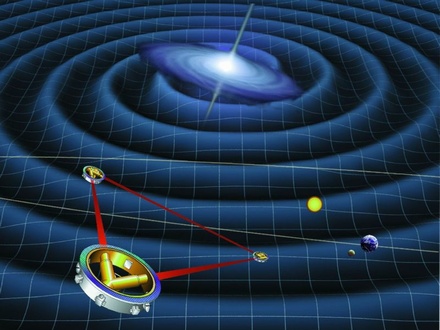
Scientists used a pair of gravity-measuring satellites, GRACE, to look at Amazon river basin water levels and, hopefully, better predict future water storage and runoff.  The twin GRACE satellites measure the mass distribution of the Earth between the two satellites, and accumulating these measurements over time lets us know how the Earth's mass shifts around.  A team led by Shin-Chan Han compared this data with simulations to look at, basically, how water is stored, released, and sloshes about within the Amazon river basin.  They compared the data with simulations.


