






For the first time, researchers have successfully grown functional human blood vessels in mice using cells from adult human donors — an important step in developing clinical strategies to grow tissue, researchers report in Circulation Research: Journal of the American Heart Association.

The researchers combined two different types of progenitor cells in a culture dish of nutrients and growth factors, then washed off the nutrients and implanted the cells into mice with weakened immune systems. Once implanted, the progenitor cell mixture grew and differentiated into a small ball of healthy blood vessels.

Progenitor cells are similar to stem cells but can only differentiate into specific cells, while stem cells can differentiate into practically any cell in the body.

Overweight mothers give birth to offspring who become even heavier, resulting in amplification of obesity across generations, said Baylor College of Medicine researchers in Houston who found that chemical changes in the ways genes are expressed – a phenomenon called epigenetics -- could affect successive generations of mice.

"There is an obesity epidemic in the United States and it's increasingly recognized as a worldwide phenomenon," said Dr. Robert A. Waterland, assistant professor of pediatrics – nutrition at BCM and lead author of the study that appears in the International Journal of Obesity. "Why is everyone getting heavier and heavier? One hypothesis is that maternal obesity before and during pregnancy affects the establishment of body weight regulatory mechanisms in her baby. Maternal obesity could promote obesity in the next generation."

The expectation that East-Asian people emphasize physical symptoms of depression (e.g. headaches, poor appetite or aches/pains in the body) is widely acknowledged, yet the few available empirical studies report mixed data on this issue. A new study from the Centre for Addiction and Mental Health (CAMH) debunks this cultural myth, and offers clinicians valuable insight to into cultural context when assessing a patient, leading to more accurate diagnosis.

In a diet-focused culture, desserts often get a bad rap, but if you have a sweet tooth don't despair. Some can actually be beneficial.

Desserts made with fruit, nature’s natural sweetener, are ideal, healthy after-dinner treats. Reducing the sugar and fats in a recipe can also Gettmake favorite desserts more healthy and still taste good.

The July issue of Mayo Clinic Health Letter offers healthy dessert suggestions, including:

Grill fruit slices: Cut apples, pineapple, pears or peaches into chunks. Brush them lightly with canola oil and sprinkle with cinnamon. Grill the fruit on skewers or wrap in foil and grill over low heat for three to five minutes.

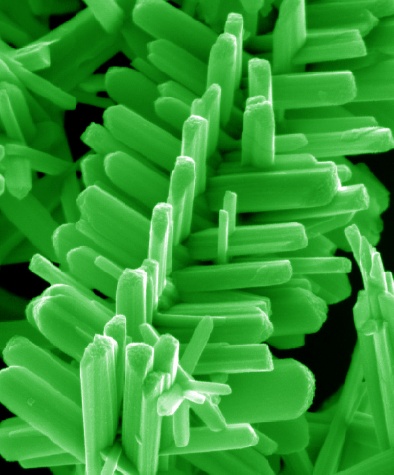
A new technique for growing single-crystal nanorods and controlling their shape using biomolecules could enable the development of smaller, more powerful heat pumps and devices that harvest electricity from heat.

Researchers at Rensselaer Polytechnic Institute have discovered how to direct the growth of nanorods made up of two single crystals using a biomolecular surfactant. The researchers were also able to create “branched” structures by carefully controlling the temperature, time, and amount of surfactant used during synthesis.

Most nanostructures comprised of a core and a shell generally require more than one step to synthesize, but these new research results demonstrate how to synthesize such nanorods in only one step.

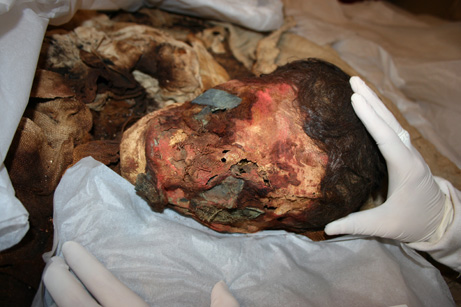
Tulane University anthropologist Kit Nelson is the co-director of a National Geographic-sponsored team that is in the process of unraveling a mummy bundle found in Peru's historic Huaura Valley. The mummy is believed to have been an elite member of the Chancay culture, a civilization that thrived in the central coast of Peru from about 1000 to 1400 AD. The territory of the Chancay was later home to the Incas.

Nelson's work was funded by a Faculty Enhancement Grant from Tulane University and through a grant from National Geographic's Committee for Research and Exploration, a century-old body that funds important work in the earth sciences throughout the world.

More than one million Americans currently participate in the Alcoholics Anonymous (AA) program. AA participants are stereotyped as being heavy coffee drinkers and cigarette smokers but very little research has quantified their consumption of these two products. Recent findings confirm that coffee and cigarette use among this population is greater than among the general U.S. population: most AA members drink coffee and more than half smoke.

With a grant from the World Anti-Doping Agency, University of Vermont anthropology professor Brian Gilley has spent the last year studying attitudes among under-23-year-old cyclists towards use of performance enhancing drugs.

Since the Tour de France ousted its third cyclist from the race, even after multiple doping scandals the last few years, his findings are interesting.

Using American amateur collegiate cyclists as his control, Gilley interviewed elite junior and young adult Italian, Belgian, and American riders and found a surprising mix of responses about willingness to dope. The majority, he says, believe intense pressure from team managers and sponsors forces them to cheat in order to be competitive.

There's a satellite in medium Earth orbit - one of 31 U.S. Air Force satellites - that carries some special cargo; a collection of sensors to detect and triangulate airborne or space-based nuclear explosions anywhere they may occur.

In the recent past, detection has been no problem — there haven’t been any above-ground explosions for decades - but there could be one any time and the country that did it could simply deny if its leaders didn’t believe anyone could track it.

These sensors have to be ready to detect a real explosion and also to compensate for false alarms: There are lightning bolts that occur more than once per second, energetic particles from the Van Allen radiation belt that collide with electronics on the satellite, a welter of “noise” from cell phone communications, and meteors.

Sideria Hendricks is only 10 years old, but she already has suffered two strokes.

The first occurred on Christmas Eve a few years ago. Sideria suddenly couldn't speak, and her left arm and left leg went limp. She eventually recovered, but later suffered a second minor stroke.

About 3,200 strokes occur each year in children under age 18. Although strokes are among the top ten causes of death in childhood, family members and doctors often are slow to recognize symptoms, said Dr. Jose Biller, a co-author of the American Heart Association's new guidelines for managing strokes in children.
