



LONDON, July 15 /PRNewswire/ --

The 13 members of the Organization of Petroleum Exporting Countries (OPEC) pumped an average 32.47 million barrels per day (b/d) of crude oil in June, an increase of 230,000 b/d from the May level of 32.24 million b/d, according to the latest Platts survey of OPEC and oil industry officials. Higher volumes from Saudi Arabia accounted for almost all of the increase.

Excluding Iraq, the 12 members bound by OPEC output agreements pumped an average 29.98 million b/d in June, up from 29.75 million b/d in May, and 307,000 b/d in excess of their 29.673 million b/d output target, the survey showed.

NEW HAVEN, Connecticut, July 15 /PRNewswire/ --

More than 150 Muslim and Christian leaders, including some of the world's most eminent scholars and clerics, will gather at Yale University July 28-31 to promote understanding between the two faiths, whose members comprise more than half the world's population.

Prominent political figures and representatives of the Jewish community also will speak at the conference, which launches a series of interfaith events planned around the world over the next two years. These gatherings respond to the call for dialogue issued in an open letter, A Common Word Between Us and You, written by major Islamic leaders, to which Yale scholars responded with a statement that garnered over 500 signatures.

Of course the flip side, meaning the benefits of the sunk-cost fallacy, need to be addressed. One example can be found in a January 12, 2007 article in the “Freakonomics” section of the New York Times titled “What does Barack Obama Know about Behavioral Economics?”

In the article, Obama is quoted as having said about sending more troops to Iraq as having used the notion of the fallacy. “And essentially the administration repeatedly has said: ‘We’re doubling down; we’re going to keep on going … because now we’ve got a lot in the pot and we can’t afford to lose what we put in the pot.”

Dr. Hal Arkes in the department of psychology at Ohio State University has done extensive studies on the sunk-cost fallacy after he became interested for his personal involvement in politics twenty years ago. His most recent studies look at finding new ways to minimize the fallacy through interventions.

With the help of undergrads and some others at OSU Arkes gives volunteers a scenario having to do with an airplane company and the construction of a $10 million Radar Blank Plane. If the plane has been 90 percent completed, meaning millions of dollars already having been spent, but another company came up with a better version making the almost finished product “grossly inferior,” should the last 10 percent of the budget be spent anyways? Most of the testers said “yes.”

President Bush is quoted in 2005 as saying “we owe them something…We will finish the task that they gave their lives for,” about the soldiers who have died since the 9/11 terrorist attack on the World Trade Center, exemplifying a mode of thinking that appeals to everyone in some way. Most people know this notion as an expenditure made in the past that cannot be modified, or the sunk-cost fallacy.

A recent study in the July issue of Psychological Science tested the relationship between older and younger adults through an individuals’ commitment relating to the “sunk-cost fallacy,” in matters of money.

BALTIMORE, July 15 /PRNewswire/ --

- Partnership will help Nevada Cancer Institute Funnel Cancer Research to Physicians

Physicians and patients of community-based medical practices in Nevada and SW Utah will benefit from a new partnership between Physicians Practice(R), America's Leading Practice Management Journal and Nevada Cancer Institute (NVCI). The new partnership will provide resources to help local physicians manage their practices more efficiently, thereby improving patient care.

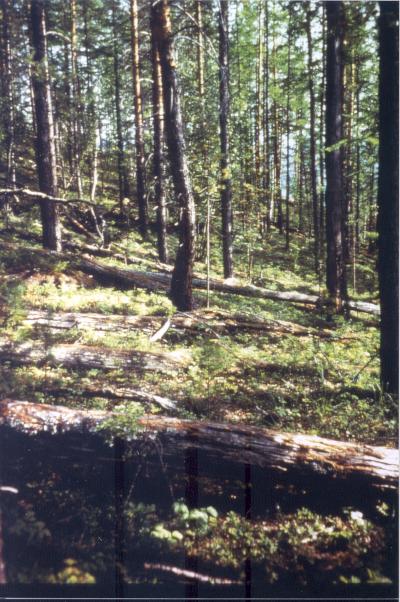
The Tunguska event is regarded as one of the biggest natural disasters of modern times. On 30 June 1908 one or more explosions took place in the area close to the Tunguska River north of Lake Baikal. The explosion(s) flattened around 80 million trees over an area of more than 2000 square kilometres.

The strength of the explosion is estimated to have been equivalent to between five and 30 megatons of TNT. That is more than a thousand times as powerful as the Hiroshima bomb.

This almost unpopulated region of Siberia was first studied in 1927 by Professor Leonid A. Kulik. There are a number of different theories about what caused the catastrophe. However, the majority of scientists assume that it was caused by a cosmic event, such as the impact of a meteorite, asteroid or comet. If it had exploded in the atmosphere just under five hours later, St. Petersburg, which was the capital of Russia at that time, would have been completely destroyed because of the Earth's rotation.

hominin fossils are the most important materials for exploring human origins and evolution. Since most hominin fossils are incomplete, or filled with a heavy calcified matrix, it is difficult or often impossible to reconstruct the endocast in a real fossil without destroying it.

Accordingly, traditional methods limited the study of human brain evolution. CT can explore fossils in a noninvasive way by transforming a real fossil into a virtual object, and make it possible for paleoanthropologists to extend the study of fossil specimens from the exterior to the interior.

SOUTHAMPTON, England, July 15 /PRNewswire/ --

- With Photos

Garmin, the global leader in portable satellite navigation, today announced it has strengthened its relationship with Ford Europe by developing a unique mounting solution that allows seamless integration of the award winning Garmin nüvi 760 to the vehicles electronics. Available on the Focus, C-Max, Kuga, new Fiesta, Transit and Transit Connect, this is Ford's first genuine portable navigation system available at select dealerships across mainland Europe.

LONDON, July 15 /PRNewswire/ --

ICE Clear Europe(TM), a wholly-owned subsidiary of IntercontinentalExchange (NYSE: ICE), today announced that it has reached agreement with LCH. Clearnet (LCH) and Members on the transition date for the movement of all ICE Futures Europe(TM) and ICE over-the-counter (OTC) trading positions from LCH to ICE Clear Europe. The transition will occur over the weekend of September 13-14, 2008. Existing futures and OTC clearing arrangements between ICE and LCH remain unchanged until the transfer is complete. ICE Clear Europe had previously announced that the transition date was expected to occur in the month of August, but was subject to further consultation with LCH and clearing members.
