

From dot-matrix to 3-D, printing technology has come a long way in 40 years. But all of these technologies have created hues by using dye inks, which can be taxing on the environment. Now a team reports in ACS Nano the development of a colorless, non-toxic ink for use in inkjet printers. Instead of relying on dyes, the team exploits the nanostructure of this ink to create color on a page with inkjet printing.

Investigators at The Saban Research Institute of Children's Hospital Los Angeles have created a novel model for studying a lung disorder of newborn babies. Their study, published in PLOS ONE on February 10, describes the first model that allows investigators to consider the chronic effects of developmental lung disease.

MINNEAPOLIS - Poor physical fitness in middle age may be linked to a smaller brain size 20 years later, according to a study published in the February 10, 2016, online issue of Neurology®, the medical journal of the American Academy of Neurology.

"We found a direct correlation in our study between poor fitness and brain volume decades later, which indicates accelerated brain aging," said study author Nicole Spartano, PhD, with Boston University School of Medicine in Boston.

The human fingertip is a finely tuned sensory machine, and even slight touches convey a great deal of information about our physical environment. It turns out, some fish use their pectoral fins in pretty much the same way. And do so through a surprisingly similar biological mechanism to mammals -- humans included.

In a study published in the Proceedings of the Royal Society B on Feb. 10, 2016 University of Chicago scientists have shown for the first time that pectoral fins in at least one species of fish possess neurons and cells that are exquisitely sensitive to touch. The discovery not only sheds light on the evolutionary biology of touch, it might also someday inspire new advances in the design of underwater robotics.

The first law of thermodynamics is commonly known as the law of conservation of energy.  This means that in any process, no matter how big, small, long or short, the amount of energy of the system will always remain the same throughout time, it is a constant.  So if you run an engine, build a bridge, turn a turbine, boil a liquid or do anything else for that matter, the total energy before and after this (and all processes) will be the same.  You can only convert energy from

Dramatic videos created by environmental activists shows tap water being set on fire. In some cases, they were clear hoaxes, in others it turned out to be methane unrelated to drilling. Yet regardless, the belief is that natural gas fracturing (fracking), or conventional extraction, can reach drinking water. Scientists disagree, though conceding that anything can happen in the right circumstances, without it being indicative of the process.

Is a scientist someone who does science? It depends on who you ask, according to a presentation at the AAAS meeting in Washington, D.C.  A century ago, an occupation based on intelligence was regarded as a blue-collar endeavor. Sherlock Holmes was better than the police because he was an amateur detective, self-educated in science. Today, a large number of scientists, and certainly much of the public, thinks you are only a scientist if you are government funded.

A Northwestern University research team has taken CSI to a whole new level: employing sophisticated scientific tools to investigate details of the materials and methods used by Roman-Egyptian artists to paint lifelike mummy portraits more than 2,000 years ago. These visages of the dead are considered to be antecedents of Western portraiture.

Marc Walton and his interdisciplinary team have uncovered telling clues about the paintings' underlying surface shapes and colors. The new details, when coupled together, provide the researchers with very strong evidence as to how many of the 15 mummy portraits and panel paintings were made.

The most desirable cotton is distinguished by having extra-long staple fibers (Egyptian, Pima) and such cotton commands a price premium. But as the cotton moves around the world, and through the fabric value chain, there is the potential for it to be diluted with or fraudulently replaced with lower price, lower quality materials.

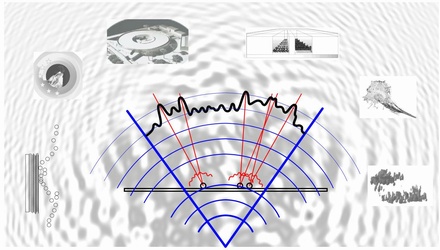
Technological advances may be ushering in a new era of understanding in the search for fundamental physical particles - including dark matter - said Professor Alex Murphy of the University of Edinburgh's School of Physics and Astronomy at the AAAS meeting in Washington, D.C.

Deep space observations together with experiments far underground are hunting for dark matter - an elusive material which, together with dark energy, is thought to account for about 94 percent of the universe.  You can read all about dark matter and dark energy here.