






In America there has been yet another shooting and the common denominator has been the presence of psychiatric medication. Clearly better diagnosis of people is not what is needed, better outcomes are. Medications are wildly over-prescribed and they don't work very well. For some patients, a nicotine patch is as effective as medication after two months.

New research based on modern techniques suggests that recommendations for protein intake in healthy populations may be incorrect. In a paper just published in Applied Physiology, Nutrition, and Metabolism, an NRC Research Press journal (a division of Canadian Science Publishing), researchers put the focus on protein as an essential component of a healthy diet.

Protein helps people stay full longer, preserve muscle mass, and when combined with adequate physical activity, has the potential to serve as a key nutrient for important health outcomes and benefits.

It's not only how much protein you eat, it's the type of protein that is important.

NASA’s announcement of the discovery of a new extrasolar planet has been met with a lot of excitement.

But the truth is that it is impossible to judge whether it is similar to Earth with the few parameters we have – it might just as well resemble Venus, or something entirely different.

The process of distilling water, crude oil or ethyl alcohol are all based on similar science.  When two or more chemicals are thoroughly mixed in a liquid, being able to separate them can be quite a challenge. 

If probiotics have success for boosting human health (that is in doubt, despite the number of papers capitalizing on the craze) it may depend partly upon the food or other material carrying the probiotics, according to a paper in Applied and Environmental Microbiology.

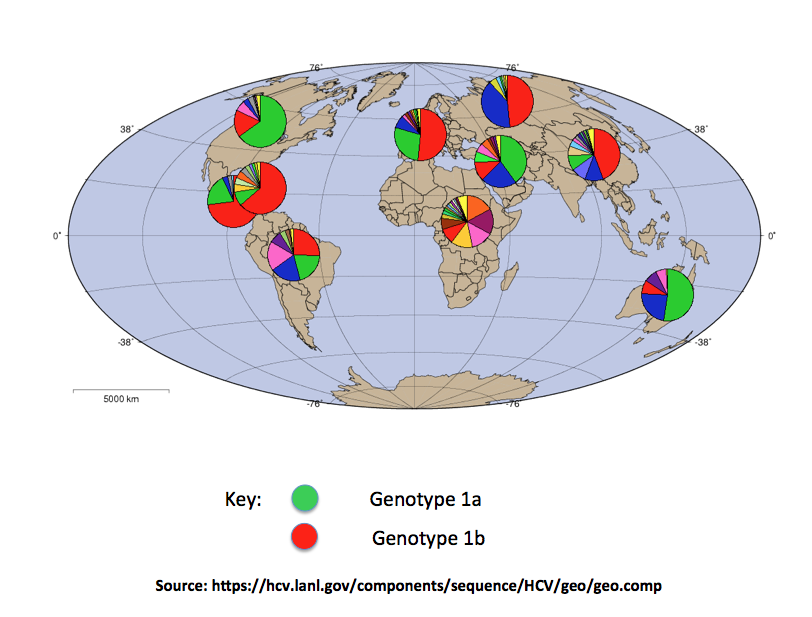
In the July 24th New York Times, there is a featured article about a new, thorny issue—what to do about the millions of Americans who are infected with the hepatitis C virus (HCV). What makes this particular issue especially tricky is that it involves rationing— about as close to a dirty word in the discussion of modern medicine as you'll ever come across. Rationing of medical care is cruel, inherently wrong, arbitrary, and unacceptable in any fair-minded society. Or is it? 
In the July 24th New York Times, there is a featured article about a new, thorny issue—what to do about the millions of Americans who are infected with the hepatitis C virus (HCV). 
This article is a perfect example of the law of unintended consequences. Until recently, there was exactly one treatment for hepatitis C infection, and it was terrible: Interferon (IFN), an immune booster and ribavirin (RBV), a non-specific antiviral which operates by an unknown mechanism. The IFN-RBV therapy is deeply flawed for two main reasons. 
On the heels of a rather poorly constructed International Agency for Research on Cancer (IARC) analysis of organophosphate insecticides and pesticides a short while ago and a bizarre claim by the activist-funded group Moms Across America last year, the public is concerned about popular products like glyphosate. Mainstream journalism is no help, science is complex and when the $100 million Natural Resources Defense Council (famous for the Alar on apples manufactured scare) unleashes its public relations team on politically sympathetic journalists, claims are going to be repeated without much skepticism.

A group of academics have channeled their inner Bernie Sanders and written a wonderfully naïve op-ed about how to lower drug prices: Destroy the industry that made America the world leader in biotechnology.

It's simple. Let government control drug prices and then corporations will just do what they always do, but it will be a lot cheaper. It is so simplistic it could have been written by Paul Krugman in the New York Times. It is also in defiance of how science, creativity and medical advancement works, and would lead to a mass exodus of science jobs from America.

There is so much over enthusiastic hype about this planet today, I thought could do with a bit of more sober reporting of the results, interesting though they are. Much of that speculation derives from just one phrase in the press release I think, where they say:  "Today, and thousands of discoveries later, astronomers are on the cusp of finding something people have dreamed about for thousands of years -- another Earth." The idea of what that means by "another Earth" for astronomers who know the capabilities of Kepler, is rather different from what most of the general public would think of when you say "another Earth".

