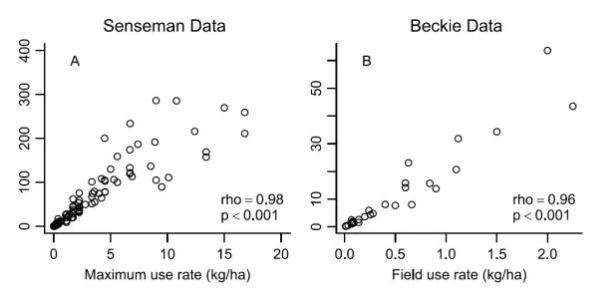




I’ve always been interested in how changes in agricultural production practices impact the environment. In particular, I’ve followed the adoption of genetically modified (GM) crops since I was an undergraduate, and try to stay up to date on research relating to the environmental impact associated with these crops.

Researchers have uncovered further evidence of a system in the brain that persistently maintains memories for long periods of time.

Paradoxically, it works in the same way as mechanisms that cause mad cow disease, kuru, and other degenerative brain diseases. 

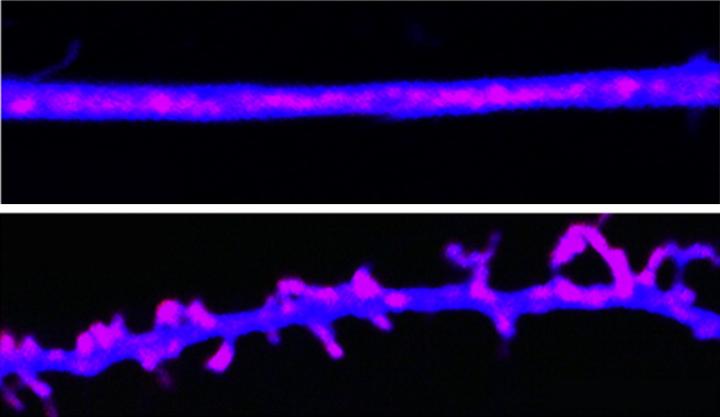
In four papers published in Neuron and Cell Reports, the laboratory of Eric Kandel at Columbia University Medical Center (CUMC) show how prion-like proteins - similar to the prions behind mad cow disease in cattle and Creutzfeld-Jakob disease in humans - are critical for maintaining long-term memories in mice, and probably in other mammals. 

Currently recommended daily allowances of vitamin D may be insufficient in children, according to researchers at Children’s Hospital of Pittsburgh of UPMC and the University of Pittsburgh School of Medicine.  Vitamin D is present in a few foods, milk is usually fortified with it and with enough exposure to sunlight the body naturally produces it.
Metals, which conduct electricity, and insulators, which don’t, are polar opposites.
At least that’s what we’ve believed until now.

But we have discovered that a well-known insulator can simultaneously act like a conductor in certain measurements. We don’t yet know the reason for this mysterious behaviour but it is likely due to new and exciting quantum effects.

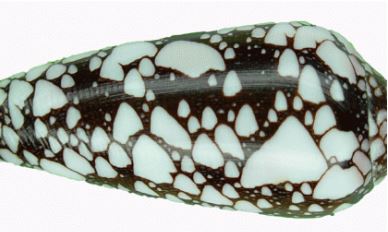
Pain treatment researchers have discovered thousands of new peptide toxins hidden deep within the venom of just one type of Queensland cone snail. The scientists hope the new molecules will be promising leads for new drugs to treat pain and cancer.
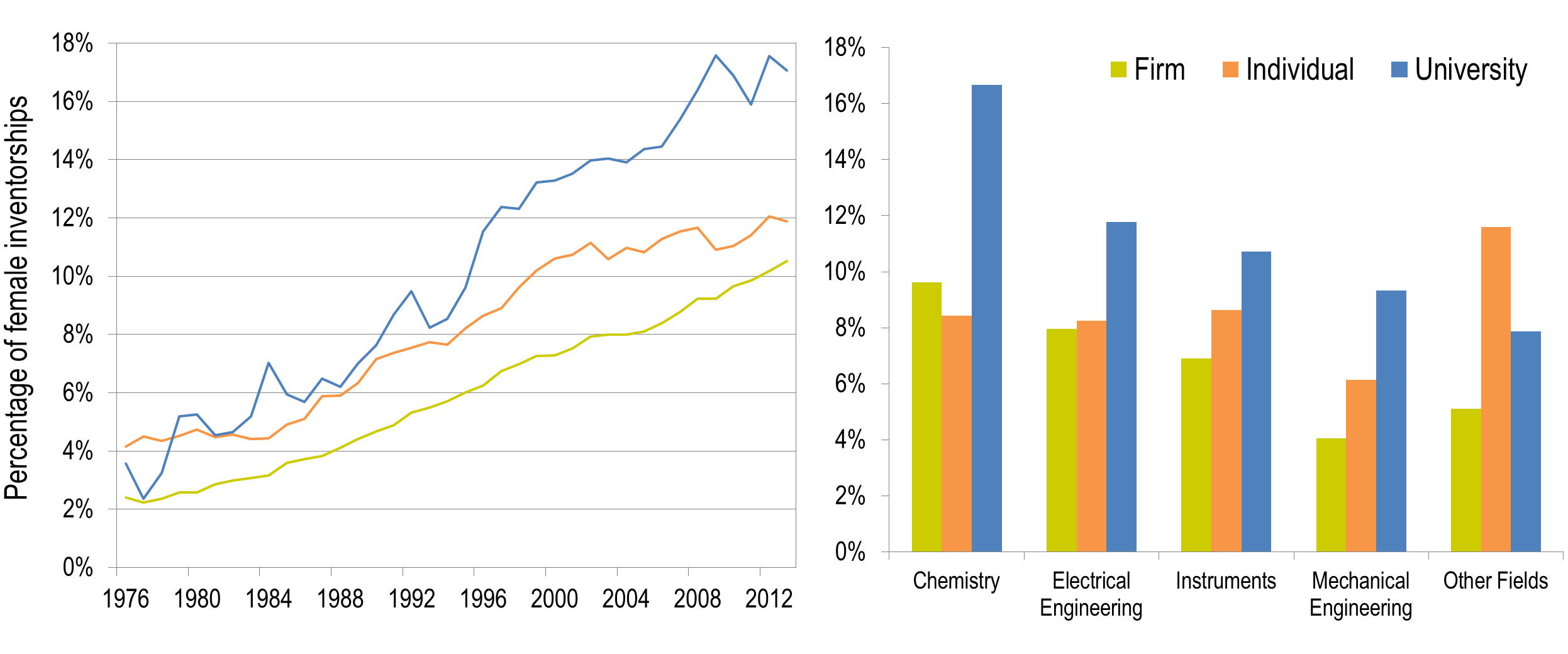
Though women outnumber men in all but tenured positions, there is concern that the numbers are still not high enough. If that is true, you wouldn't know it by filing patents with the U.S. Patent and Trade Office over the past 40 years.

Though drinking alcohol while pregnant is considered a cultural no-no in the United States, that is not the case for other current and former British subjects. 

Data of almost 18,000 women in the UK, Ireland, Australia and New Zealand finds that 20% all the way up to almost 80% of those questioned drank during pregnancy, and across all social strata.
The prevalence of drinking alcohol ranged from 20% to 80% in Ireland, and from 40% to 80% in the UK, Australia, and New Zealand.

Women who smoked were more likely to drink alcohol as well.

We’ve long attempted to recreate living creatures in robot form.

From very early age of robotics, there has been attempts to reproduce systems similar to human arms and hands.

This has been extended to flexible and mobile platforms reproducing different animals from dogs to snakes to climbing spider octopods, and even entire humanoids.

The Tour de France has been rolling for more than a week now and has finally made it to France in a brutal few days that has seen 220 kilometer stages, major crashes, cobbles, steep ramps and broken bones for two race leaders. But perhaps the biggest challenge lies just around the corner in an intriguing Stage 9, where the riders have to cover what looks like a trifling 28 km.


ET phone Earth!

We could be on the verge of answering one of the essential questions of humanity that has captivated our minds for centuries.