The Swedish company Laccure AB recently got CE marking as a Class IIa medical device product for its treatment and prevention of bacterial vaginosis (BV) with a proven cure rate of 80 percent already after one vaginal tablet. Addressing the unmet needs of up to 300 million women suffering from BV infection, the new treatment represents a considerable commercial potential in the OTC market.
Watching single strands of DNA being prepped for repair may help researchers understand the origins of breast cancer.
In a new study, graduate student Jason Bell imaged individual strands of bacterial DNA as they were coated with a protein called RecA. Studying how this process works gives insights into the "mediator" proteins responsible that facilitate it. In humans, one of those mediators is the protein BRCA2, which is strongly associated with breast cancer. RecA, called Rad51 in humans, helps the single strand of DNA find its complementary, matching strand elsewhere in the chromosome. The RecA protein has to displace another protein, imaginatively named single-strand DNA-binding protein, to get to the DNA.
Professor Marie-Pierre Laborie of the University of Freiburg and professors Antonio Pizzi and Alain Celzard from the French Université de Lorraine bagged almost $20,000 in prize money and the distinction of being a "German High Tech Champion" for developing "Biofoambark", a hard foam derived from bark extract that can be used as insulating material for homes.
A little over a year ago I wrote about
the continued disturbing trend in government subsidies of 'magic rocks' while claiming they were science - in that instance, commercial solar companies that were being propped up by American taxpayers, with little or no due diligence, because the president and his Energy Secretary said we were in a 'race with China' to produce cheap solar panels, when China has no unions and no environmental policies and therefore a much lower cost basis.
The scientization of politics is taking a cultural or political world view and rationalizing it using science. Since it is election time in America, it has been open season on Republicans, with social scientists, who are around 99% Democrats, looking for ways to convince people to vote for their candidates - but they want to look impartial doing it.
With Halloween just around the corner, storefronts, lawn ornaments, and general décor have adjusted to reflect our temporary obsession with creepy-crawlies, scary monsters, and death.
The latter topic is something that we – college and graduate students generally in the prime of our lives – rarely think about. Then, last weekend, while standing at the counter of a BBQ joint, I encountered a particularly graphic rendition of a severed hand. Since I’m a relatively recent convert to vegetarianism, I appreciated the appetite killer, and, much later, the musings it engendered about the fate of our bodies post-mortem.
Advanced sensors that monitor extreme pressure and temperature in underground caverns
used to store carbon dioxide might be on their way.CO2 emitted from the combustion of fossil fuels has long been an environmental issue, it represents 84 percent of U.S. greenhouse gas emissions, according to a 2010 analysis by the Environmental Protection Agency. Officials see capturing CO2 emitted by industrial producers like power plants as one possible tool in the fight against climate change. The technique, called carbon capture and sequestration, pumps the captured greenhouse gas into cavities up to two kilometers below the Earth’s surface.
Last time we examined Robert Batterman’s idea that the concept of emergence can be made more precise by the fact that emergent phenomena such as phase transitions can be described by models that include mathematical singularities (such as infinities). According to Batterman, the type of qualitative step that characterizes emergence is handled nicely by way of mathematical singularities, so that there is no need to invoke metaphysically suspect “higher organizing principles.” Still, emergence would remain a genuine case of ontological (not just epistemic) non-reducibility, thus contradicting fundamental reductionism.
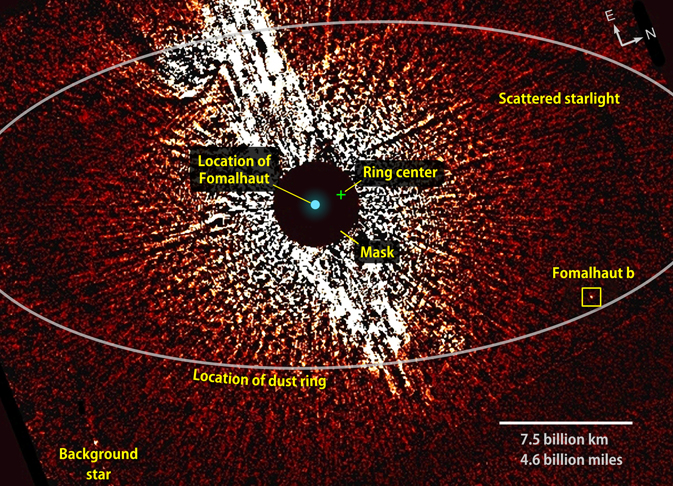
Does the nearby star Fomalhaut host a massive exoplanet? It depends on who you ask.
A new paper says that the planet, named Fomalhaut b, is a rare and possibly unique object that is completely shrouded by dust. Wasn't it already a planet?
Researchers have successfully created a human heart cell model of arrhythmogenic right ventricular cardiomyopathy (ARVC), an inherited heart muscle disorder that puts carriers at high risk of developing life-threatening arrhythmias and sudden cardiac death.