


ANN ARBOR—You've switched to the night shift and your weight skyrockets, or you wake at 7 a.m. on weekdays but sleep until noon on weekends—a social jet lag that can fog your Saturday and Sunday.

Life runs on rhythms driven by circadian clocks, and disruption of these cycles is associated with serious physical and emotional problems, says Orie Shafer, a University of Michigan assistant professor of molecular, cellular and developmental biology.

Now, new findings from Shafer and U-M doctoral student Zepeng Yao challenge the prevailing wisdom about how our body clocks are organized, and suggest that interactions among neurons that govern circadian rhythms are more complex than originally thought.

In honor of the upcoming National Robotics Week (April 5-13, 2014), I’ve created “CockroachBot” based on my Snap Circuits programmable robot I designed for last year’s robotics week. CockroachBot will try to run away when it detects a particular level of light falling on its light dependent resistor. I designed CockroachBot to be easy to build completely out of Snap Circuits parts and easy to program to inspire folks from seven to centenarian to get interested in robotics.

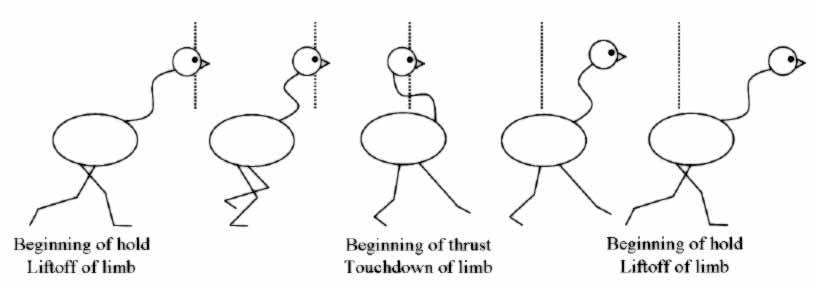
The question : ‘Why do some*(see note below) birds bob their heads when walking?’ has perplexed scientists for many years. Some researchers suggest that head-bobbing may be correlated with the morphology of the retina, but others propose that it’s mechanically linked to the locomotor system, and that its visual functions are secondarily adapted.

Memories are fragile and dependent on any number of factors, including changes to various types of nerves. In the common fruit fly, these changes take place in multiple parts of the insect brain.

Scientists from the Florida campus of The Scripps Research Institute (TSRI) have been able to pinpoint a handful of neurons where certain types of memory formation occur, a mapping feat that one day could help scientists predict disease-damaged neurons in humans with the same specificity.

There is a belief that online social behavior related to video gaming replaces real life but scholars found that is not so; instead of making the social circle smaller, it expands the social lives of gamers.

The authors traveled to more than 20 public gaming events in Canada and the United Kingdom, from 2,500-player events held in convention centers to 20-player events held in bars. The researchers observed the behavior of thousands of players, and had 378 players take a survey, with a focus on players of massively multiplayer online role-playing games such as EVE Online and World of Warcraft.

Generations are generally useless, aside from marketing plans. The Baby Boom happened in 1946, after soldiers returned home from war (the occupying soldiers came from a different, supplemental draft so they often already had kids) and it was later that marketing groups changed them into a generation stretching to 1964 and even 1965.

In 2007, members of the Haystack Group in MIT's Computer Science and Artificial Intelligence Laboratory released a set of Web development tools called Exhibit, which lets novices quickly put together interactive data visualizations, such as maps with sortable data embedded in them, sortable tables that automatically pull in updated data from other sites, and sortable displays of linked thumbnail images.

Medicine stopped being symptom-based over 50 years ago but psychology still uses it. Little is known about why or how the brain works the way it does, much less personality variation, so if a psychological therapy works, it works.

Heart attack death has declined across all regions of the United States but it remains proportionately higher in the South, according to a paperat the American College of Cardiology's 63rd Annual Scientific Session.

In previous research (Nature, July 2013), UC Berkeley scientists Beatriz Vicoso, Ph.D., and Doris Bachtrog, Ph.D., determined that genes on the so-called "dot chromosome," or fourth chromosome, of the fruit fly Drosophilia melanogaster are X-linked in three other related fly species.

These and other findings revealed that the fruit fly's "dot chromosome" had descended from a differentiated X chromosome and suggests that several of the chromosome's puzzling features are remnants of its heritage as a sex chromosome. For example, the expression levels of genes on the "dot chromosome" generally are higher in female than in male fly embryos during early development.

