


Tattoos and body piercings are so ubiquitous in western societies that they are more cliché than  edgy, but social scientists in France say they may be more than fashion trends - they may be harbingers of doom. Individuals who get them  are also more likely to engage in risky behaviors that include substance and alcohol use. 
The second-largest mass extinction in Earth's history, the so-called Late Ordovician mass extinction, coincided with a short but intense ice age during which enormous glaciers grew and sea levels dropped.

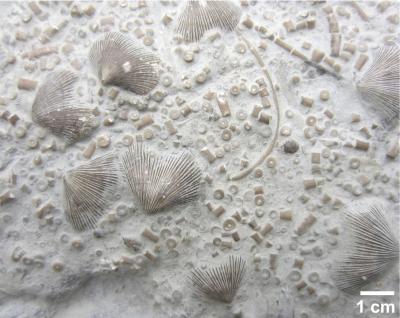
The Late Ordovician mass extinction occurred about 450 million years ago and was related to climate change, that has been known, but exactly how the climate change produced the extinction has not. A team led by scientists at the California Institute of Technology (Caltech) has created a framework for weighing the factors that might have led to mass extinction and has used that framework to determine that the majority of extinctions were caused by habitat loss due to falling sea levels and cooling of the tropical oceans.

As the London marathon gets underway, there are going to be lots of people getting high- 37,500 according to one recent BBC article. However, this is a different “high” than those individuals who partook, or attempted to, in massive marijuana festivities of April 20th, such as the 2011 University of Colorado demonstration to legalize marijuana that was 10,000 people strong.

In a development that would be bad for the U.S. Department of Energy but good for solar power worldwide, a new process developed by scientists at the University of Cambridge has the potential to drive down the cost of manufacturing solar-grade silicon and boost use of photovoltaic devices.

Many of you, especially in the UK will have undoubtedly heard of the collapse of Fabrice Muamba. A Bolton Wanderer's football player, who at the time was playing in a FA cup football match watched by thousands. But is this a one-off or are we scratching at the surface with what happened?

Recent media spotlight

Separate Study Links Acute-on-Chronic Liver Failure to High Short-Term Mortality 

 Two studies presented at the International Liver Congress(TM) 2012 show the true impact that liver disease has across Europe. One highlights the financial cost of liver disease to the community and the second highlights the high mortality rates associated with cirrhosis.

The Committee for Medicinal Products for Human Use (CHMP) of the European Medicines Agency (EMA) has issued a positive opinion for ferumoxytol, a new intravenous (IV) iron therapy with a proposed indication for the treatment of iron deficiency anaemia (IDA) in adult patients with chronic kidney disease (CKD). 

Ferumoxytol is an IV iron therapy with a proposed indication for the treatment of IDA in adult patients with CKD. Its structure and formulation allows for the administration of 510 mg in a shorter time frame than existing IV iron preparations. Ferumoxytol significantly increases Hb levels in CKD patients both on dialysis and in patients not on dialysis compared with oral iron. Clinical trials have also highlighted that ferumoxytol is well tolerated.

Synairgen plc , announces positive data from its Phase II clinical trial. This pioneering trial investigated the potential for SNG001 (inhaled interferon beta) to protect asthmatics from respiratory virus infections (principally the common cold) that can spread to the lung, which are a major cause of worsening asthma symptoms. It is estimated that viral infection is associated with up to eight out of ten asthma-related emergency department visits. 

There are 5.4 million asthmatics in the UK (Asthma UK) and 25.7 million in the USA (Centers for Disease Control and Prevention).

Nnew data presented today at the International Liver Congress(TM) 2012 shows the gut microbiota's causal role in the development of diabetes and non-alcoholic fatty liver disease (NAFLD), independent of obesity[1]. Though an early stage animal model, the French study highlights the possibility of preventing diabetes and NAFLD with gut microbiota transplantation - the engrafting of new microbiota, usually through administering faecal material from a healthy donor into the colon of a diseased recipient.[2]

