After WikiLeaks released classified and sensitive government documents, predictions of the scale and significance of their impact were overstated.
The desire/hope of proponents that the WikiLeaks disclosures of 2010 meant conventional mechanisms for controlling government-held information wee breaking down, heralding a new world of 'radical transparency', were short-lived. Old-style secrecy is still there, argues Alasdair Roberts of Suffolk University Law School. Leak, publish, and wait for the inevitable outrage is easily defeated in practice.
It turns out radical transparency is hard to achieve and a technological fix alone will not do it.
A device the size of a home washing machine uses bacteria growing in municipal sewage to make electricity - and also clean up the sewage at the same time.
Current wastewater treatment technology involves a number of steps designed to separate the solid and liquid components of sewage and clean the wastewater before it is released into a waterway. This often involves settling tanks, macerators that break down larger objects, membranes to filter particles, biological digestion steps and chemicals that kill harmful microbes. One estimate puts their energy use at 2 percent of overall consumption in the U.S.
“And then I was like FUUUUUU”. This is how stories end nowadays. I dare to make a claim about the flow of stories because I believe the ontology of stories follows a predictable and stable pattern and it is this: I present to you a situation in which I was involved, usually as the protagonist. The story is semantically segmented and usually sequenced in sets of 4-6, which culminate in climactic revelation of emotion. Do you know what I meme when I say emotion? I mean forever alone guy, Y U NO guy, Trollface, rage guy, and the others from the gang.
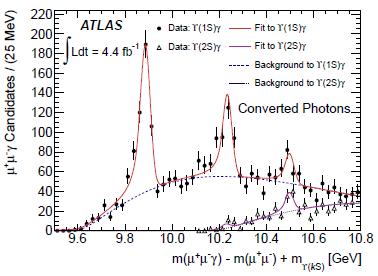
While most High-Energy Physicists nowadays are kept busy with the idle search for non-existent new physics beyond the standard model in the form of improbable Supersymmetric particles, phantom leptoquarks, fairy Z' resonances, putative colorons, invented gravitinos, and what not, the subset of lucky experimentalists who decided to go against the flow and kept their feet on the ground are provided with endless entertainment in the study of resonances that are as real as your breakfast today.
In the era of Big Science, it is often assumed that cutting-edge research can't be done cheaply. Yet even now a piece of tape
can lead to a Nobel prize.
Andre Geim and Konstantin Novoselov got one that way, for their discovery of graphene,
a type of carbon one atom thick but more than 100 times stronger than steel.Sure, we all know graphene will lead to bendable computer screens and ultralight materials but it turns out graphene may also revolutionize genetic sequencing.
Could the big split among anti-science hippies occur over a cute little cat?
PETA loves animals. Greenpeace hates genetic modification and science in general because changes are only 'natural' if high-energy cosmic rays mutate things at random. What about when scientists use unnatural science to help save an endangered species?
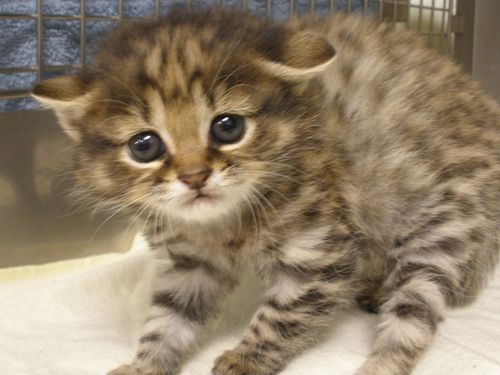
An African Black-footed Cat was born February 6, 2012, at the Audubon Nature Institute in New Orleans. The cool science aspect, or the creepy FrankenKitten aspect if you are a progressive, is that it was born to an ordinary domestic cat - the first of its kind to be born from inter-species embryo transfer.
Wait, a study claims drinking alcohol makes you less likely to throw cultural caution to the wind and spend stupidly? Does. Not. Compute.
Unless it's social psychology, but even then no one is believing it unless they are one of the people writing about how screwed up Republicans are, i.e., need some new framework for the confirmation bias of their audience.
“This study outlines a corpus comparison of British and New Zealander speakers’ use of the phrases ‘I don’t know’ and ‘I dunno’. ”
Dr. Lynn Grant, who is a Senior Lecturer at the School of Languages and Social Sciences at the Auckland University of Technology, New Zealand ('The University for Changing the World') has recently completed a study which examined the linguistic properties of ‘I don’t know’ and ‘I dunno’. Finding that the phrases often find use as 'hedges', markers of uncertainty, and as politeness devices.
One strategy for tackling hard-to-treat bacterial infections could be viruses that can target and destroy bacteria. The development of such novel therapies is being accelerated in response to growing antibiotic resistance, says Dr David Harper at the Society for General Microbiology's Spring Conference in Dublin.
We all want fewer dictators getting rich holding the world hostage to the demands of legacy energy systems. And it can happen, though one anti-science contingent might not like how it gets done.
The hydrogen economy has been ready to start for decades and could begin commercial production of hydrogen in this decade - but, says Dr. Ibrahim Khamis of the International Atomic Energy Agency (IAEA) in Vienna, Austria, it will take heat from existing nuclear plants to make hydrogen economical.