A pair of studies presented Saturday and today at the American Diabetes Association's Scientific Sessions in San Diego suggest diet sodas may be a dietary head fake for the body.
Epidemiologists from the School of Medicine at The University of Texas Health Science Center San Antonio reported data showing that diet soft drink consumption is associated with increased waist circumference in humans. Whatever, associated is not caused - people drink diet sodas more after they put on weight, not when they are still thin - but a second study that found aspartame raised fasting glucose (blood sugar) in diabetes-prone mice is more of a concern.
The role of spirituality and religion in individuals' lives has been studied since the beginning of modern psychology. It's not been a consistent examination, nor always a useful one, but the desire to understand both why people believe in gods and how these religious beliefs can be adaptive and helpful in their lives is a relevant one, since over 70% of Americans profess religious beliefs.
Songbirds have been used in the past to examine the precursor functions to human language in our neural circuitry, but they may be capable of much more than being animal models.
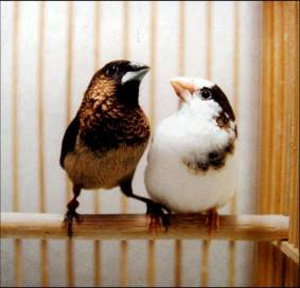
A new study shows the Bengalese finch (Lonchura striata var. domestica) can learn the rules of an artificial grammar system - hierarchical language structure has been previously thought to be specific only to humans.
The common refrain when climate science detractors point out the flaws in numerical models is that, if no one is sure of the accuracy, the risks are being exaggerated.
It could be the opposite. Numerical models could be giving us a false sense of security, a belief that we have plenty of time to fix pollution issues.
Writing in Nature Geoscience, Paul Valdes from the University of Bristol School of Geographical Sciences, discusses four examples of abrupt climate change 'tipping points' over the last 55.8 million years that have been reconstructed from palaeoclimate data and states that the level of inaccuracy could be too comforting.
A fairly new method in genetic research, known as optogenetics (selected as Method of the Year in 2010 by Nature Methods, see video for a great explanation), uses light to control gene expression. Now, researchers form EHT Zürich have engineered human cells (implanted in mice) so that the expression of a gene that plays a role in diabetes can be controlled by light. Instead of creating a whole new genetic network, they combined existing signal pathways, one from the immune system, and one from the eye.
It's rare that you will find me arguing for gender quotas. Obviously I am not for discrimination but, at least in science, mandating representation - which is discrimination against the qualified in the interests of sex organs - does not lead to better science, it leads to equality at the expense of excellence.
Economics, however, is not science and some mandated equality might help. Science says so.
There are plenty of misleading news articles already, including here on Science2.0, about that this experiment is disproving classicality without even needing “spooky action at a distance” or entanglement. The message one often takes away is therefore that this new experiment may be the best proof yet, the most convenient disprove of hidden variables.