JOHANNESBURG, South Africa, June 3 /PRNewswire/ --

- More than 5 Million South Africans Living with HIV Gain Access to First and Only Co-formulated, Non-refrigerated Protease Inhibitor

Abbott (NYSE: ABT) today announced that the new tablet formulation of its protease inhibitor Aluvia(R) (lopinavir/ritonavir), for the treatment of HIV-1, is now available to HIV/AIDS patients in South Africa -- a step the company hopes will positively impact millions of lives across the country.

Mind readers have long been the domain of folklore and science fiction. But some new findings demonstrate the power of computational modeling to improve our understanding of how the brain processes information and thoughts and it brings scientists closer to knowing how specific thoughts activate our brains.

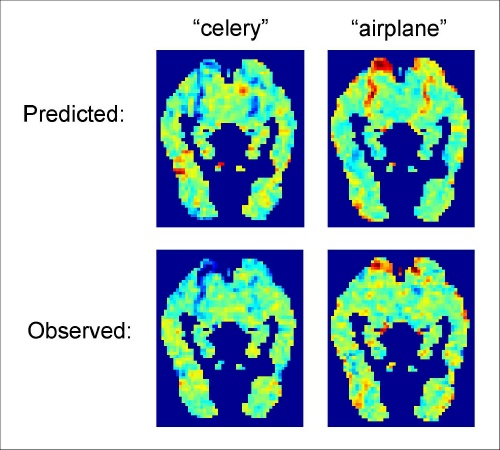
In their most recent work a computer scientist, Tom Mitchell, and a cognitive neuroscientist, Marcel Just, both of Carnegie Mellon University, used fMRI data to develop a sophisticated computational model that can predict the brain activation patterns associated with concrete nouns, or things that we experience through our senses, even if the computer did not already have the fMRI data for that specific noun.

The researchers first built a model that took the fMRI activation patterns for 60 concrete nouns broken down into 12 categories including animals, body parts, buildings, clothing, insects, vehicles and vegetables. The model also analyzed a text corpus, or a set of texts that contained more than a trillion words, noting how each noun was used in relation to a set of 25 verbs associated with sensory or motor functions. Combining the brain scan information with the analysis of the text corpus, the computer then predicted the brain activity pattern of thousands of other concrete nouns.

In cases where the actual activation patterns were known, the researchers found that the accuracy of the computer model's predictions was significantly better than chance. The computer can effectively predict what each participant's brain activation patterns would look like when each thought about these words, even without having seen the patterns associated with those words in advance.
TAIPEI, Taiwan, June 3 /PRNewswire/ --

- Award-Winning SuperBlade(TM) and 1U Twin(TM) Product Lines, Future Server Technology, 2.5" SAS/SATA and Universal I/O (UIO) Solutions

SANTA CLARA, California, June 3 /PRNewswire/ --

- Marvell's Shiva CPU Technology Combines Gigahertz-Class Performance with Ultra Low Power Consumption

Marvell (Nasdaq: MRVL), a leader in storage, communications and consumer silicon solutions, today introduced Shiva(TM), the company's next-generation internally developed CPU technology, raising the bar on performance and low power consumption for embedded CPU applications. Shiva will be integrated in a broad range of Marvell(R) system-on-a-chip (SoC) products spanning mobile, consumer and enterprise infrastructure applications.

(Logo: http://www.newscom.com/cgi-bin/prnh/20070411/SFW034LOGO)

SANTA CLARA, California, June 3 /PRNewswire/ --

- SoCs with Marvell's Powerful Embedded Shiva CPU Deliver High Performance and Low Power Consumption for Digital Home Appliances, PCs and MIDs.

Marvell (Nasdaq: MRVL) a leader in storage, communications and consumer silicon solutions, today introduced the Marvell(R) 88F6000 series, featuring Shiva(TM) embedded CPU Technology. These System-on-Chip (SoC) devices bring low power, high performance application processing to next-generation digital home gateways and are designed to expand consumers' entertainment and personal content choices by enabling video, audio and photos from multiple network and in-home sources to be distributed throughout the home.

SANTA CLARA, California, June 3 /PRNewswire/ --

- Solid state controller to boost PC and MID performance

Marvell (Nasdaq: MRVL), an industry leader in storage, communications and consumer silicon solutions, today announced Marvell's entry into the solid state controller market with the introduction of the ultra-slim Marvell(R) 88NV8120 PCI Express (PCIe)-based NAND flash controller, the first Marvell product in a planned range of solid state storage controllers.

(Logo: http://www.newscom.com/cgi-bin/prnh/20070411/SFW034LOGO)

EDISON, New Jersey, June 2 /PRNewswire/ --

ZSL, a leading information technology integrator specializing in enterprise software and solutions development, today announced its Enterprise 2.0 Computing Framework built on IBM WebSphere sMash and Service Oriented Architecture (SOA).

(Logo: http://www.newscom.com/cgi-bin/prnh/20080602/NEM131LOGO )

ZSL's new Enterprise 2.0 computing framework offerings will enable businesses to protect core legacy system investments while leveraging cutting-edge tools and development languages to streamline programming, processing, enhancements, and integration of new applications.

WASHINGTON, June 2 /PRNewswire/ --

- Criticize Attacks on Biofuels

Ahead of a United Nations conference on food security and climate change, unfair blame has been leveled against the world biofuels industry as playing a major role in the food crisis we are experiencing today. Addressing this manufactured hysteria, the leaders of the biofuels industries in the United States, Canada and Europe today sent a letter to UN Food and Agriculture Organization Director-General Dr. Jacques Diouf and those world leaders attending the summit urging them not to single out biofuels and ignore those factors that have played a much more significant role in driving up the price of food worldwide.

Much of the coverage of autism in the media focuses on the arguments of advocates, scientists, and government officials over the relationship between vaccines and autism. But out of the spotlight, a bigger story is brewing: the hunt for autism genes, a technically difficult hunt which is pressing forward using all of the tools modern genetics has to offer. If you are like me, news stories about autism have left you with only a vague impression of the current scientific state of understanding, the impression that researchers strongly deny any link between autism and vaccines, but have little else to say about what the real cause of autism might be.

If that is your impression, you'll perhaps be surprised to learn that roughly 20% of autism cases in the US are linked to known genetic changes, a minor fraction of autism cases to be sure, but much higher than I would have guessed. That autism has a genetic basis is a well-established finding, and while this by no means rules out environmental factors, genetics is at the core of the recent progress scientists have made in understanding autism. The genetics of autism, however, is not simple - no surprise, since autism involves our most complex organ, the brain, in one of its most complex functions, social interaction. Untangling the genetic and environmental factors that underlie autism will be tough, but in the process we will learn more about how many different genes work together in a child to control the developing brain.

As I wrote a few days ago, if we agree that the nature of science is along the lines I have described, next we need to ask why it is so. Platt, in his classic 1964 article on strong inference, briefly mentions a number of answers, which he dismisses without discussion, but that I think are actually a large part of the reason "hard" and "soft" sciences appear to be so different. These alternative hypotheses for why a given science may behave “softly” include, as Platt puts it, “the tractability of the subject, or the quality of education of the men [sic] drawn into it, or the size of research contracts.” In other words, particle physics, say, may be more successful than ecology because it is easier (more tractable), or because ecologists tend to be dumber than physicists, or because physicists get a lot more money for their research than ecologists do.

The second option is rather offensive (to the ecologists at least), but more importantly there are no data at all to back it up. And it is difficult to see how one could possibly measure the alleged differential “education” of people attracted to different scientific disciplines. Nearly all professional scientists nowadays have a Ph.D. in their discipline, as well as years of postdoctoral experience at conducting research and publishing papers. It is hard to imagine a reliable quantitative measure of the relative difficulty of their respective academic curricula, and it is next to preposterous to argue that scientists attracted to certain disciplines are smarter than those who find a different area of research more appealing. It would be like attempting to explain the discrepancy between the dynamism of 20th century jazz music and the relative stillness of symphonic (“classical”) music by arguing that jazz musicians are better educated or more talented than classically trained ones.




