





KeeLoq, a remote keyless system used for access control since the mid-1990s, is by many the most popular of such systems in Europe and the US. Besides the frequent use of KeeLoq for garage door openers and other building access applications, several automotive manufacturers like Toyota/Lexus base their anti-theft protection on assumed secure devices featuring KeeLoq.

Researchers from Ruhr University Bochum, Germany, presented a complete break of remote keyless entry systems based on the KeeLoq RFID technology. The shown vulnerability applies to all known car and building access control systems that rely on the KeeLoq cipher and allows for illicit access from a distance of 300 feet without leaving traces.

“The security hole allows illegitimate parties to access buildings and cars after remote eavesdropping from a distance of up to 100 meters” says Prof. Christof Paar. His Communication Security Group in the Electrical Engineering and Information Sciences Department has developed the break as part of their research in embedded security.

Electronics work better under cold conditions (-150 C). With less thermal noise, detectors are more sensitive and speed and reliability are increased. Low-noise amplifiers reduce noise further.

Dutch-sponsored researcher Srinivas Vanapalli has investigated the possibilities for the extreme cooling of electronic components at a chip level.

Besides research into extremely small structures, Vanapalli has constructed a proof-of-principle cooler which, despite the smaller dimensions, cools more effectively than conventional coolers and has therefore aroused commercial interest.

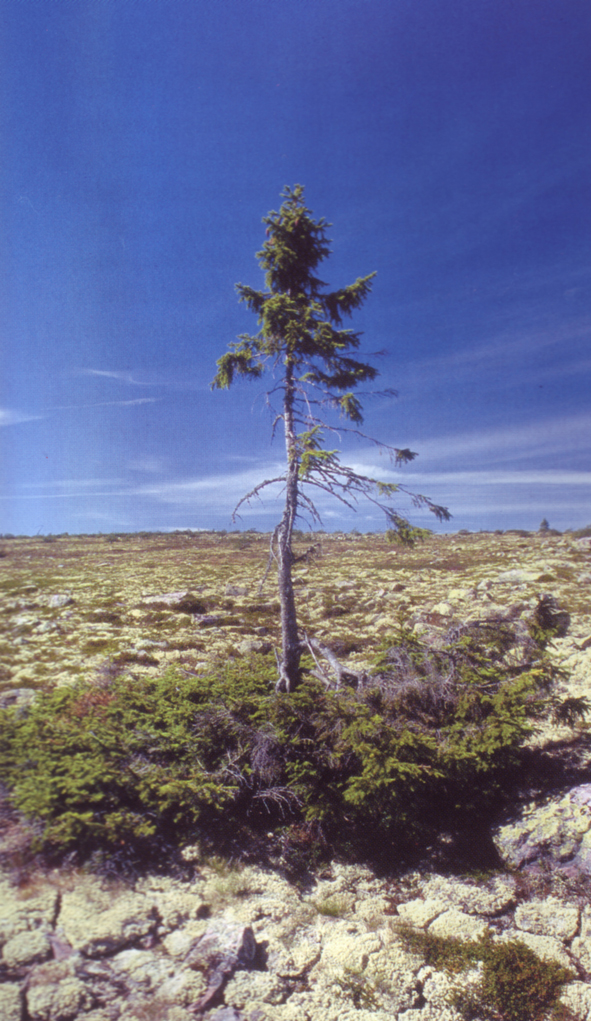
The world’s oldest recorded tree is a 9,550 year old spruce in the Dalarna province of Sweden.

The spruce tree has shown to be a tenacious survivor that has endured by growing between erect trees and smaller bushes in pace with the dramatic climate changes over time.

For many years the spruce tree has been regarded as a relative newcomer in the Swedish mountain region.

”Our results have shown the complete opposite, that the spruce is one of the oldest known trees in the mountain range,” says Leif Kullman, Professor of Physical Geography at Umeå University.

Countless hours spent designing, hand-building and testing model rockets has paid off for 100 teams that will be vying for the sixth annual Team American Rocketry Challenge national title next month.

The Aerospace Industries Association announced the finalists for the world's largest rocket contest Friday. The teams will meet at Great Meadow in The Plains, Va., on May 17 for a final fly-off and a chance to win more than $60,000 in scholarships and other prizes.

About 7,000 students on 643 teams from 43 states and the District of Columbia took part in the qualifying rounds of competition.

Cycling is great fun and and modern bicycles give riders a lot of options. Perhaps too many. For example, novice riders getting onto a cycle with 27 gears change gears too infrequently and too late, get out of breath and don’t enjoy themselves.

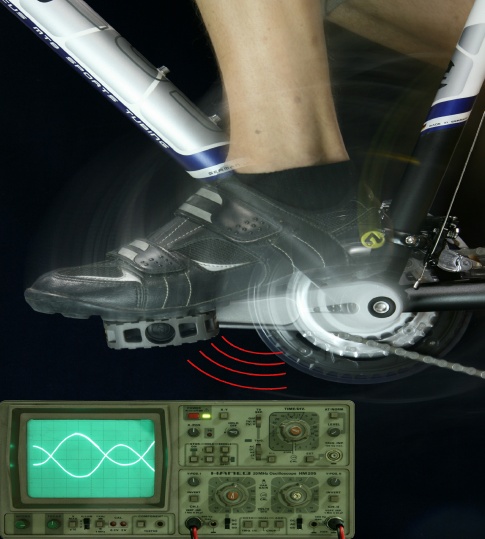
Some new research may soon help; recently on display was a bicycle with adaptronic components which report inappropriate biomechanical stress and an intelligent pedal crank that helps the biker to direct his strength.

Fraunhofer researchers recently displayed a concept. There are two piezo-sensors integrated in one of the pedal cranks of the bicycle. One function of the sensors is to measure the forces that propel the rider forward and show him how ‘evenly’ he is pedaling.

There's no question that air superiority made a huge difference in the Allied victories of World War II but because flight was still very much in its infancy, and high speed aerial combat was previously unknown, a lot of physiological issues had to be addressed in order to keep pilots as safe as possible before going into even more dangerous combat.

Physiology is the study of how molecules, cells, tissues and organs function to create health or disease. World War II-era research came up with a number of advancements that made that possible, according to Jay B. Dean, of the University of South Florida College of Medicine.

Thanks to physiologists then, Ways were developed to safely provide pressurized oxygen to air crews, helping them avoid hypoxia and decompression sickness.

Complex issues demand complex decision-making and not forced simplification, asserts Lasse Gerrits in his dissertation 'The Gentle Art of Coevolution', and the temptation to make important decisions understandable by simplifying them will eventually turn against the decision maker.

And it is also a myth that complex social issues can be readily resolved as long as there is someone who creates order, he says.

How did he reach his conclusions? He investigated the decision-making concerning the expansion of the Hamburg and Antwerp ports and simplification tends to exacerbate rather reduce problems.

A new technique that helps forecasters continuously monitor landfalling hurricanes, giving them frequent and detailed images of a storm's location, will be implemented this summer.

The new system, developed by researchers at the National Center for Atmospheric Research (NCAR) in Boulder, Colo., and the Naval Research Laboratory (NRL) in Washington, D.C., will be implemented at the National Hurricane Center (NHC).

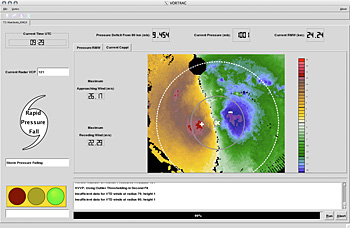
The technique, known as VORTRAC (Vortex Objective Radar Tracking and Circulation), was successfully tested by the hurricane center last year. The system, which relies on existing Doppler radars along the U.S. coast, provides details on hurricane winds and central pressure every six minutes, indicating whether the storm is gathering strength in the final hours before reaching shore.

Machado Joseph disease (MJD) is a neurodegenerative disorder associated with deposits of an aberrant form of the protein ataxin-3 in the brain. The disease is also fatal and the most common hereditary motor neurodegenerative disease in many countries. Despite this, not much is known about MJD including the neurological basis of some of its symptoms, which cannot be linked to the brain damage found in patients.

But now, researchers in Portugal and France using a new animal model of the disease were able to show, for the first time, that MJD also affects the striatum, a brain area associated with movement and balance control.

These new findings, just published as advance online publication in the journal Human Molecular Genetics, finally clarify the cause of previously unexplained symptoms, such as muscle twisting and abrupt dance-like movements of the limbs. The research helps to understand better a still incurable pathology while also providing a new animal model to study the disease as well as potential treatments.

Humans communicate with machines every day and work is always being done to make interfaces more intuitive, but purely in regard to mechanical aspects.

There's no question that the machines are in control - you do it in a way they understand or you are stuck. Moore's Law has been in effect for processors and raw horsepower but interface advancements and understanding are still trapped in the 1960s.

The Humaine project wants to change that by bringing together specialists and scholars from very different disciplines to create the building blocks and tools needed to give machines so-called ‘soft’ skills, like understanding emotions.

