"[W]ho you are depends on the sum total of your neurobiology." --David Eagleman
Modern neuroscience is making advances in knowledge that our society is not keeping up with, may not be able to keep up with. David Eagleman explores these new inroads in what we know about the brain, the conscious mind, and free will in the interesting (and at times frustrating)
Incognito: The Secret Lives of the Brain.
The genome of the medieval form of Yersinia pestis, the pathogen responsible for the Black Death in Europe between 1347 – 1351, has been reconstructed. A surprising finding is that the genes affecting its virulence apparently haven’t changed all that much between then and now.
A research team has used teeth gathered from a burial ground know to contain a lot of Black Death victims to reconstruct the genome of the medieval form of Y. pestis. After the genomic reconstruction, the researchers compared their ‘ancient pathogen’ to the extant forms of the bacterium (see figure 1). In their words:
In an
obituary for biologist Robert Clarke published recently in
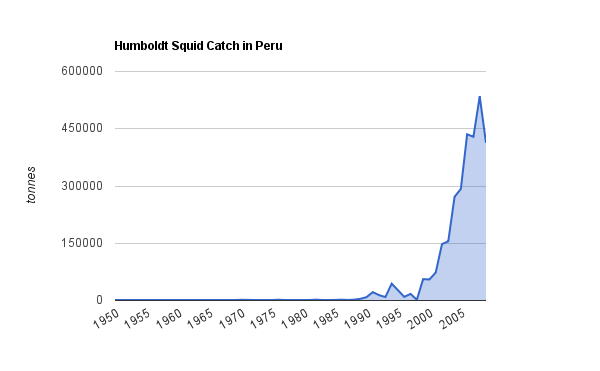
Marine Mammal Science, I read a rather curious passage about this scientist's observations of Humboldt squid:
At first sight, the hand held tablets and screens hosted on nurse tables and held dearly to the palms of able clinical staff, may appear to be incongruous with the functional obligations of their owners and you could be forgiven to mistake them for Apple’s new iPad.
Yet, it is not an uncommon sight, to find them as reverential backpacks and requisite arsenal in the hands of medical personnel, almost akin to the ubiquitous mobile phone. Electronic health records or EHRs as they are widely known across the medical community have largely served as useful substitutes of patient case pads and potentially replaced enormous paperwork with electronic file cabinets that could store a humungous amount of history around a patient.
If words are windows into the soul, scientists are learning to be Peeping Toms: Computerized text analysis shows that psychopathic killers make identifiable word choices beyond their conscious control when talking about their crimes and that insight could lead to new tools for diagnosis and perhaps law enforcement and social media.
The words of psychopathic murderers match their personalities, which reflect selfishness, detachment from their crimes and emotional flatness, says Jeff Hancock, Cornell professor of computing and information science, and colleagues at the University of British Columbia.
Once a product starts to get credit for doing everything, there is a chance you may be in the crackpot zone. If so, look for the downfall of green tea in 2012 because a new study says the
Epigallocatechin-3-gallate (EGCG) in green tea prevents weight gain. Add that on to claims that EGCG prevents arthritis, Alzheimer's, diabetes and breast cancer and even slows AIDS.
On October 5th, Steve Jobs died. At first I was surprised at how choked up I got at his death—it’s not like I ever met him—until I realized that I wasn’t the only one. From special issues of The New Yorker and Wired magazines, to spontaneous memorials of flowers and candles at Apple stores, and front page articles everywhere, it seems that the world has taken a moment to mourn the loss of Jobs. The outpouring of sorrow and grief, in the era of Occupy Wall Street, may seem astonishing. Steve Jobs was, after all, a cantankerous stranger who ran a corporation, at a time when little love is lost for corporations. Why do we care? Why all the sorrow?
Dethinking The Unpossible
A closed mind is totally incapable of being shown real world facts. Lead a person with a closed mind step by step through a very logical process; show them a simple experiment in actual progress; show them what every kid learns in science class: what happens? The closed mind, having seen proof that a thing is real, must employ a strange chain of illogic to show that the proof was not merely impossible but unpossible. A thing which has just been shown to be possible can only be shown to be unpossible by a reverse logic in which thoughts themselves are shown to be unpossible. It takes a special thinking process to deconstruct a scientific proof and replace it with diametrically opposed dogma.
Abortion is not a contentious issue in America these days - campaign platforms primarily center on differences in taxation and the scope of government but, for the most part, abortion for the left and the 2nd Amendment for the right are really only invoked to whip the fringes into a frenzy.
Rhythmic activity of nerve cells supports spatial navigation, say a group of researchers who recently showed that cells in the entorhinal cortex, important for spatial navigation, oscillate with individual frequencies. These frequencies depend on the position of the cells within the entorhinal cortex.