




8,000 years ago, which is basically yesterday in geological time, a now-vanished glacial lake covered a huge expanse of today's Canadian prairie and the rich farmland in the Red River Valley. As big as Hudson Bay, the lake was fed by melting glaciers as they receded at the end of the last ice age. At its largest, Glacial Lake Agassiz, as it is known, covered most of the Canadian province of Manitoba, plus a good part of western Ontario and the Minnesota-North Dakota border.

You can thank the stretching of continents and the oceans that filled those newly created basins for the Earth we know today.  Rifting is one of the fundamental geological forces that have shaped our planet. But rifting involves areas deep below the Earth's surface so scientists have been unable to understand fully how it occurs.

Using one of the most sensitive neutrino detectors on the planet, the Borexino instrument, an international team are measuring the flow of solar neutrinos reaching Earth more precisely than ever before. 

Canola, a specific edible type of rapeseed developed in the 1970s, contains about 40 percent oil and became popular as a substitute for traditional cooking oils. The name is derived as “Can” (for Canada) and “ola” (for oil low acid) and Canola oil is the lowest in saturated fats of all commonly used oils.  While much is imported, North Dakota leads the U.S. in canola, approximately 92 percent of domestic production.
 
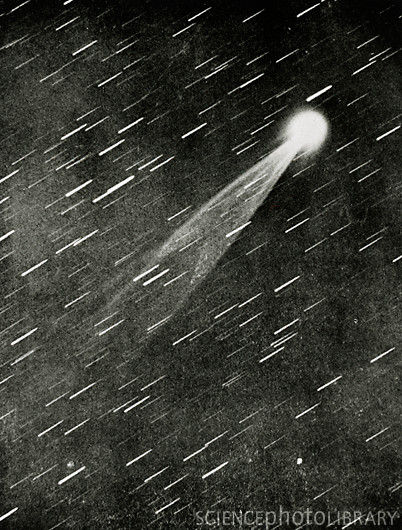
The Draconids (also called Giacobinids) are a meteor shower associated to comet Giacobini-Zinner (see below for a 100-year-old picture of the comet). While most years this shower passes unnoticed to all but few professionals and experts amateurs, yielding only very few meteors in the nights between October 6th and 10th, every once in a while the Draconids do put up a real show, producing hundreds, or even thousands of meteor streaks per hour in clear skies.
Today's post in honor of the 2011 Cephalopod Awareness Days. October 8th is Octopus Day.

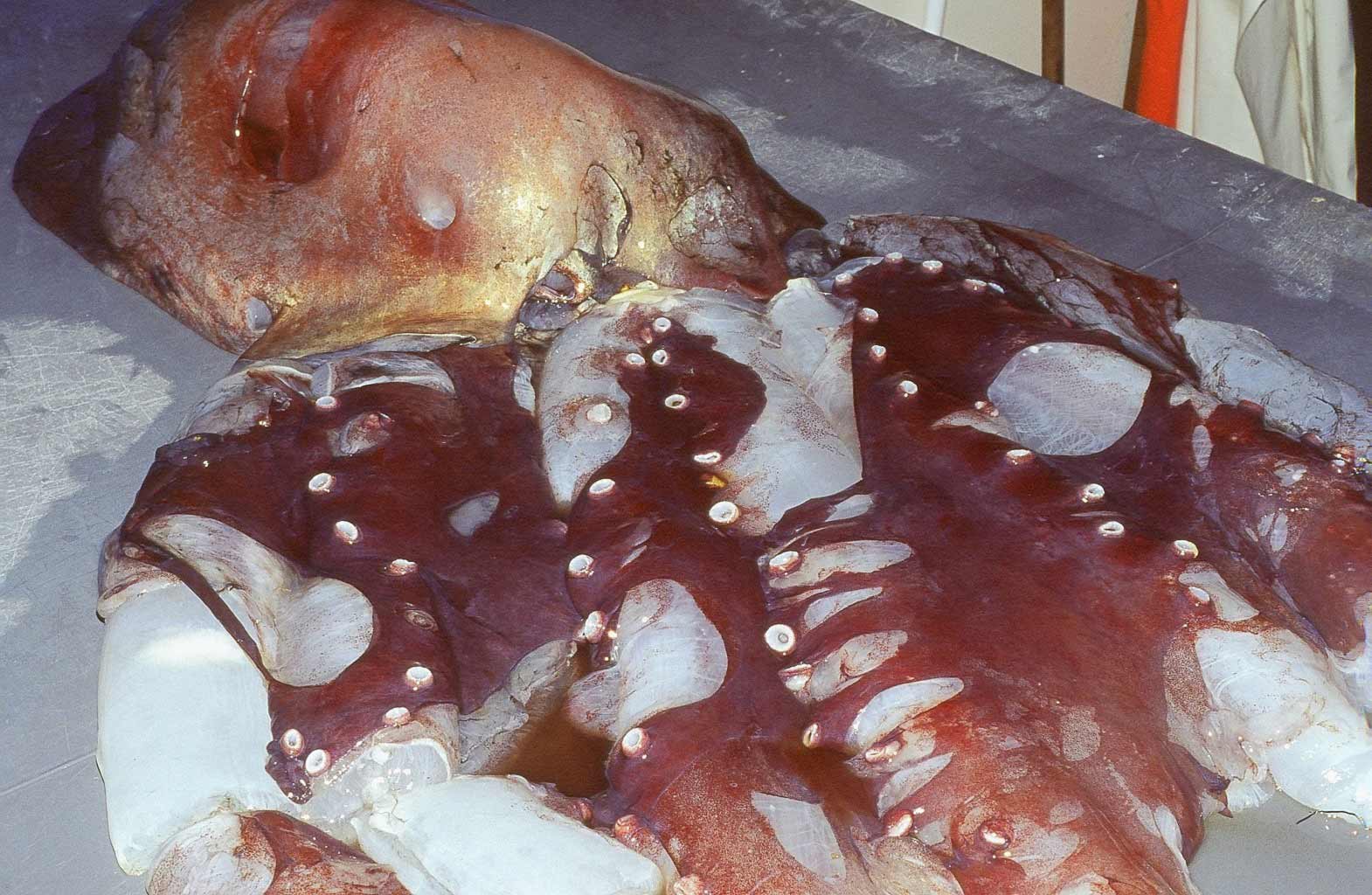
There are some weird octopuses out there, I'll grant you. The tiny-but-deadly blue-ringed octopus. The Dumbo octopus with its "ear flaps"--actually fins. But I propose that Haliphron atlanticus, the seven-arm octopus, outdoes them all.

Color version (from TONMO) of Figure 1 from O'Shea 2004.
This weekend is the first episode in a three-part "Brain Games" series on the National Geographic channel.  Since National Geographic does not have a show on the 'science' of ghost hunting, and since statistics show 97% of Internet readers never finish an article, if you are not a regular Science 2.0 reader I am okay endorsing this and telling you in the first paragraph you will enjoy it, so you can set your DVR and move on to reading about the trial of Michael Jackson's doctor.   

A new review has found evidence that a specific gene is linked to suicidal behavior, which may be one of the many complex causes of suicide. 

In the past, studies have implicated the gene for brain-derived neurotrophic factor (BDNF) in suicidal behavior. BDNF is involved in the development of the nervous system. After pooling results from 11 previous studies and adding their own study data involving people with schizophrenia, scientists writing in the International Journal of Neuropsychopharmacology  found that among people with a psychiatric diagnosis, those with the methionine ("met") variation of the gene had a higher risk of suicidal behavior compared to those with the valine variation. 

It took years of mismanagement, printing Monopoly money by the federal government, and runaway unemployment to get groups claiming to represent 99% of Americans protesting progressive fiscal policy on Wall Street and in other cities.

You may disagree on the purity of that movement, since the Teamsters and the education unions are funding this stuff and are not exactly friends of the little guy (try to get a job in NYC without being in their union) but one thing no one will disagree with; if you take away coffee, 100% of Americans will riot.

Males of many species guard the females they have mated with, a behavior generally interpreted as a tactic to reduce the likelihood that rival males will mate with the female. This, of course, can lead to a conflict between the sexes: where females might want to mate with other males, males will try to prevent this. In this case, the male-female association is based on conflict.

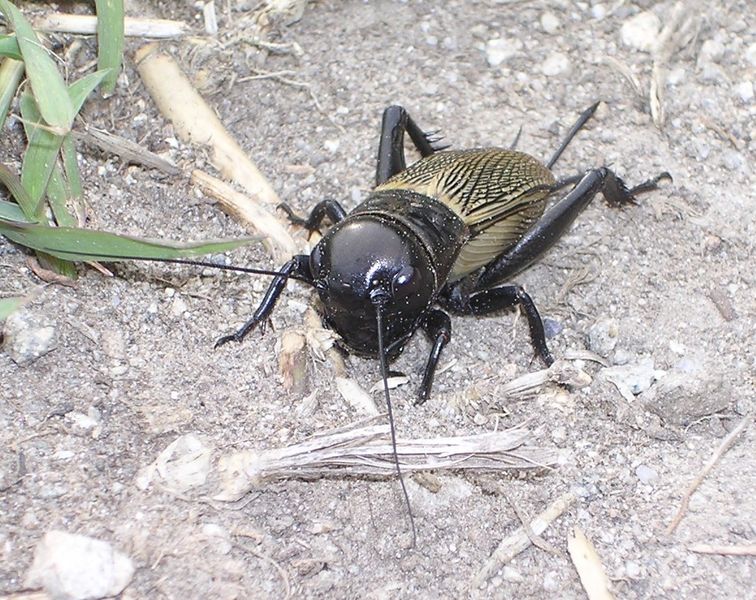
A new study on crickets (Gryllus campestris, see figure 1), however, suggests that the foundation of the couple’s association might be based on cooperation. By continuously monitoring natural cricket populations with marked individuals, the researchers were able to observe behaviors and predation.

