





A new study finds that stress does not appear to increase a person's risk of developing multiple sclerosis (MS). 

Researchers studied two groups of women nurses from the Nurses' Health Study. The first group of 121,700 nurses between the ages of 30 and 55 were followed starting in 1976. The second group of 116,671 nurses between the ages of 25 and 42 were followed from 1989. Participants were asked to report general stress at home and at work, including physical and sexual abuse in childhood and as teenagers. Of the first group, 77 people developed MS by 2005.
There is water inside the moon.  A lot, it turns out, according to the first measurements of water in lunar melt inclusions, which show that some parts of the lunar mantle have as much water as the Earth’s upper mantle.

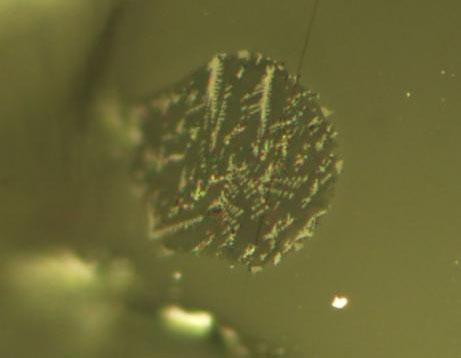
Lunar melt inclusions are tiny globules of molten rock trapped within crystals that are found in volcanic glass deposits formed during explosive eruptions. The new findings show lunar magma water contents are 100 times higher than previous studies have suggested.
Contrary to what you might think by the name, Greenland is rather frigid and Iceland is often quite nice.    Nice for Vikings, anyway.  But for a time Greenland became so miserable even Scandinavians had enough.
Henry Ford - Quote: "History Is Bunk"

It isn't an urban myth: Henry Ford really did say: "History is bunk."

It is somewhat ironic that Henry Ford's words - "history is bunk" - are now a part of the historic record.  What is not clear from most writings about Henry Ford is the context in which he gave his views of history.  I hope to remedy that defect somewhat.

"Understanding Henry Ford is more than a puzzle; it is a pursuit."
The Detroit Saturday Night, cited by -
Henry A. Wise Wood, The New York Times, May 17, 1916

Ayurveda, the most ancient and important system of medicine in India,  is important to modern natural medicine proponents(1) because it regards preserving health and curing diseases as fundamental in providing meaning to our lives.
 
For thousands of years it has been modified based on newer information but efforts have long been made to reconstruct a more authentic version of this treatise and its content and to assess the originality of the different versions of the text, which was written in Sanskrit.  
Let us try to model the experiment described in “Disproving Local Realism” with help of tennis balls. 800 pairs of tennis balls are each prepared, say some instructions are written on them, and then split. One ball is always thrown to Alice on the left; the second flies to Bob on the right.

Every of the 800 trials starts with the preparation of a pair. When the left going ball is about half way to Alice, Alice randomly rotates a setup, called her “crystal”, either so that it is at an “angle” a=0 or a=1.

In defiance of recent efforts to institute mandatory health insurance in the U.S., even for otherwise healthy people, studies using similar current government programs like Medicare show that while Medicare spending varies greatly by geographic area, there is little to show for it by people who are in regions where spending is greater - the health outcomes for people who live in expensive geographic areas are no better than those who live in poor geographic areas.    Spending makes little difference.

As a result, Obama administration policymakers have considered limiting Medicare payments in high-cost areas to try and contain costs for nationalized health care for everyone, a move elderly groups are against.

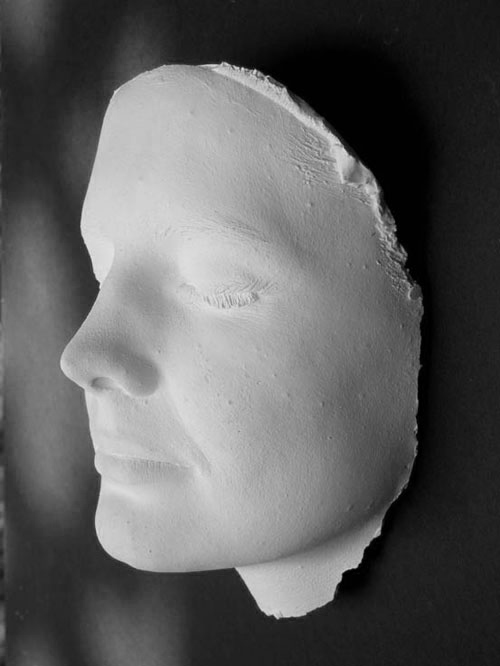
The human face is, by far, one of the most complex features that has stumped the scientists in the field of developmental science. The recent debates on human face transplant makes it obvious that there is a lot more to the story. Just like fingerprints, no two human faces are alike. Even twins have striking dissimilarities. In fact, every human lip has a unique lip print!

Semantics aside, human faces are generally accidents of development. The faces, we consider as beautiful and pretty, are a result of assembly of primary features. So let us understand faces, human faces that's all around us.  

Press conferneces-- are they relevant anymore?  Long a staple of science news, the idea of a massive real-world press conference, with news embargoed until the big event, is a heavily criticized and yet equally heavily used tool of science-generating organizations.  Do they have any utility in a real-time internet and social media world?

Charles Blue (American Institute of Physics media relations) and Dwayne Brown (NASA HQ Public Affairs) weigh in (from the DCSWA conference).  First Blue:

It's like using a lathe-- it's a very specialized tool.

