
Science told us that vitamins are good. The polluted environment and the stress of modern living result in more free radicals than evolution has prepared us for; supplementing is fine. I swallowed it – literally! Science tells us that supposedly “natural” supplements are also just out of molecules and that I am an esoteric mystic if I look into any childish natural stuff.
In my post about the somewhat wretched dating website HotOrNot.com, I wrote about researchers' determination that all humans value the same standards of beauty.

Really, no matter if you're hot or plain, you recognize a set standard of hotness—your self-image is subject to your creative delusions, but there's an inviolable piece of humanity that knows the truth about others. And so the obvious question is what about poultry? Specifically, are turkeys turned on by hot models?

Today, of all days, I'm sure you can see the importance of this research.
We know the mouth is a useful orifice for venting our feelings: if we're "hot," speaking our anger can help us "cool off". And so the bigger the mouth, the better the cooling, right? Actually, yes.

When our brain gets hot, we cool it through the mouth, and the best way to cool through the mouth is by yawning.

Researchers showed this by cooking parakeets.

Okay, they stopped short of actually cooking them, but they found that when temperature increased, the parakeet yawn rate doubled (there was no description of researchers' yawn rates).
“Extraordinary measures” is a heart-wrenching movie about a parent’s quest to save the lives of two dying children with Pompe disease. Starring Brandon Fraser (John Crowley) as the venture capitalist fathering the two children, and Harrison Ford (Robert Stonehill) as the aloof researcher with the science to curing Pompe, the story beautifully illustrates the many difficulties and challenges behind transforming basic science into a usable drug. 
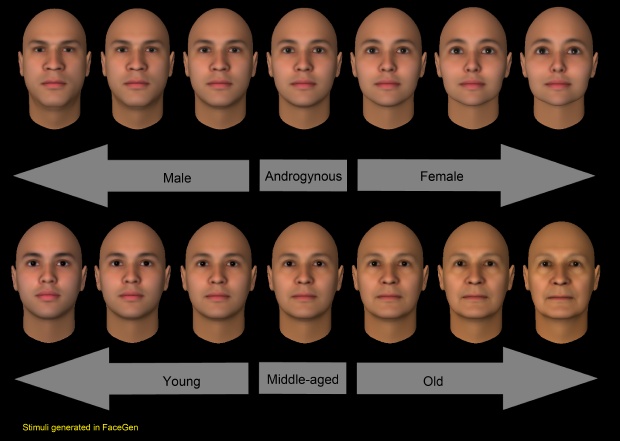
Neuroscientists have discovered that the brain sees some faces as male when they appear in one area of a person's field of view, but female when they appear in a different location, a finding which challenges the longstanding tenet of neuroscience that how the brain sees an object should not depend on where the object is located relative to the observer.

In the real world, the brain's inconsistency in assigning gender to faces isn't noticeable because there are so many other clues, like hair and clothing, but when people view computer-generated faces, stripped of all other gender-identifying features, a pattern of biases based on location of the face emerges.
Researchers have hit on a new way to create a personalized vaccine - an immune response against their own tumors using the tumor itself. This dendritic cell (DC) vaccine was used after surgical resection of metastatic tumors to try to prevent the growth of additional metastases. 

Dendritic cells are critical to the human body's immune system, helping identify targets, or antigens, and then stimulating the immune system to react against those antigens. The new research grew dendritic cells from a sample of a patient's blood, mixed them with proteins from the patient's tumor, and then injected the mixture into the patient as a vaccine. The vaccine then stimulated an anti-tumor response from T-cells, a kind of white blood cell that protects the body from disease.
We don't know about yours but this holiday season, the homes of most scientists will be awash with even more coffee than usual. And that means coffee ring stains.

With the volume of science done in coffee houses (like Newton, who ate his meals in one every day) you'd think that anything about coffee, including coffee rings left behind from spillage, would be studied to death.

Not really.   In 1997, Robert Deegan and colleagues showed that the coffee ring pattern was due to capillary flow induced by the differential evaporation rates across the drop (1) but since then little has been done.    Sometimes science is practical instead of informational and 'just use a coaster' is enough.
Classical Cepheid Variables, commonly called Cepheids, are unstable stars larger and much brighter than the Sun which expand and contract in a regular way, taking anything from a few days to months to complete the cycle and the time taken to brighten and grow fainter again is longer for stars that are more luminous and shorter for the dimmer ones.

This remarkably precise relationship makes the study of Cepheids one of the most effective ways to measure the distances to nearby galaxies and from there to map out the scale of the whole Universe.

Last week while baking muffins with my son's preschool class, I set fire to the school. Okay, technically I didn't set it on fire—it was only butter smoke from the tin that set off the alarm, necessitating the entire school of a couple hundred kids filing out to the basketball courts while the fire department arrived en mass.

Anyway, after the holiday break my wife will be back for Wednesday cooking and I don't imagine Thanksgiving will be NEARLY so exciting. Besides, Leif was line leader that day, and he was really, very proud to lead the class evacuation.

The Nov 22 launch of the heaviest satellite known has everyone a twitter.   A Delta IV Heavy booster out of Kennedy put up NROL-32, a "classified spy satellite cargo for the U.S. National Reconnaissance Office".