Arctic Ice July 2010 - Update #1
Before I write another line about ice, I want to thank all of my readers. Whether or not you leave comments, whether or not you link in other blogs, just knowing that I have so many readers gives me the encouragement to keep going: to keep up the standards I have set myself.
One of the standards I set for myself is to always remember just how much I don't know. We have much still to learn about the Arctic. Just when we think we know all there is to know, you can be sure that nature will remind us most harshly of our blind ignorance.
Arctic ice July update #1
UPDATE: if you came here to learn more details about the rumored Higgs signal, which media around the world are discussing and which Fermilab Today just dismiss-tweeted, please
visit this other more recent post for more details. Below is the original post which apparently originated a lot of buzz.
---------------
And for once, I feel totally free to speculate without the fear of being crucified. If you have followed my past blog adventures for long enough, you know that in at least a couple of occasions my posts have created some friction.
There are many predictions suggesting that climate change could create new permissive habitats for disease transmitting arthropod vectors. As a result of climate change, and associated global warming, permissive environments which provide conditions for enhanced breeding and extended life-spans of insects are predicted. With these environmental changes greater vector-borne disease spread and increases in disease transmission rates are projected in many parts of the world.
Watch out, Jayson Blair - there's a new sheriff in town, and it's going to cross-reference your work to make sure you haven't plagiarized your material.
Plagiarism, using others' work but putting it forth as your own, has been a problem since folks started putting pen to paper (or chisel to stone). Even stalwart heroes like Helen Keller and Martin Luther King, Jr. have been accused of the big P. But pretend you're an editor at a scientific journal - how are you supposed to know, without spending a lot of time, if the submitted article you're reviewing has taken chunks from an article published in a competing journal? Enter CrossRef's CrossCheck, a service that uses iParadigms' iThenticate plagiarism software.
A reality check on“healthy aging.” The real troubles - and opportunities - of a gero-nation go unheeded.
The numbers are increasingly disturbing: By 2050, some 88 million Americans will be over 65, with more than 20 million over 85. That such huge demographic shifts portend a challenge to the medical system goes without saying.
The traditional American response holds that such needs will be filled by an innovative business culture responsive to market demand.
Women are waiting until their 30s and 40s to have children, but when they decide to do so, they are a lot more willing to engage in a variety of sexual activities to capitalize on their remaining childbearing years, according to new research by psychologists at The University of Texas at Austin.
I happened to be reading Howard Bloom's book
The Genius of the Beast when I saw something odd happening in social media - there was a minor blow up on a science blogging site called
Scienceblogs.com over a new column that would be written by people from Pepsi, which threatened to become a major blow-up because of social media, and it got me thinking about re-purposing and symbol stacks.
Mercola, webster of woo, he of the get your vitamin D through our tanning bed fame, has a new post up at Huffington Post.
"My plan for today:
1. Pick up dry cleaning.
2. Go to dentist.
3. Think up brilliant idea.”
Good luck with that third bullet. Big ideas can’t be planned like growing tomatoes in one’s garden. We stumble upon ideas, and although we can sometimes recall how we got there, we could not have anticipated the discovery in advance. That’s why grant proposals never wrap up as, “And via following this four-part plan, I will have arrived at a ground-breaking new hypothesis by year three.”
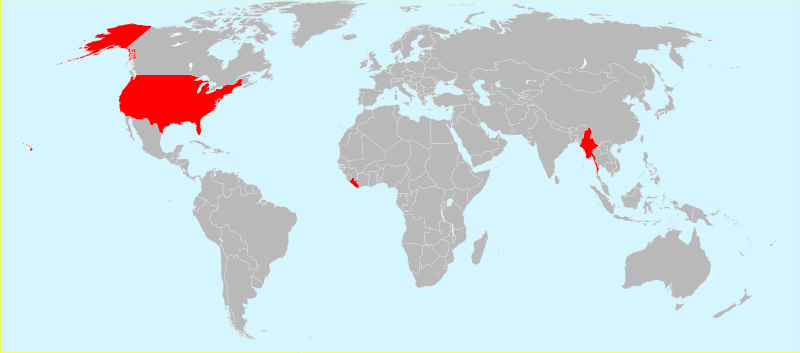
Which country does not belong in the following list: Burma, Liberia, Somalia, United States?
OK, that was not too difficult. As astute Scientific Blogging reader you got that right. Somalia has made the step to metric (SI) units already half a century ago, and therefore does not belong in one list together with the three remaining countries that haven't embraced the metric system yet.