The next time you have a little too much to drink and need to sober up, researchers say you should avoid caffeine because it doesn't counter the effects of alcohol intoxication and may lead to some less than brilliant choices, like driving.
The reason? People who consume caffeine and alcohol are likely to feel awake and competent and may have a harder time recognizing that they're drunk as a result.
One of the cool things I have learned to do, through years of experience in data analysis at particle colliders, is to visualize the complex kinematics of a signal process in a multi-dimensional space, and imagine ways to separate it from backgrounds by selecting in the hyperspace the signal-rich region. I came across a very simple example of the above rather abstract statement yesterday, and I wish to share it with you.
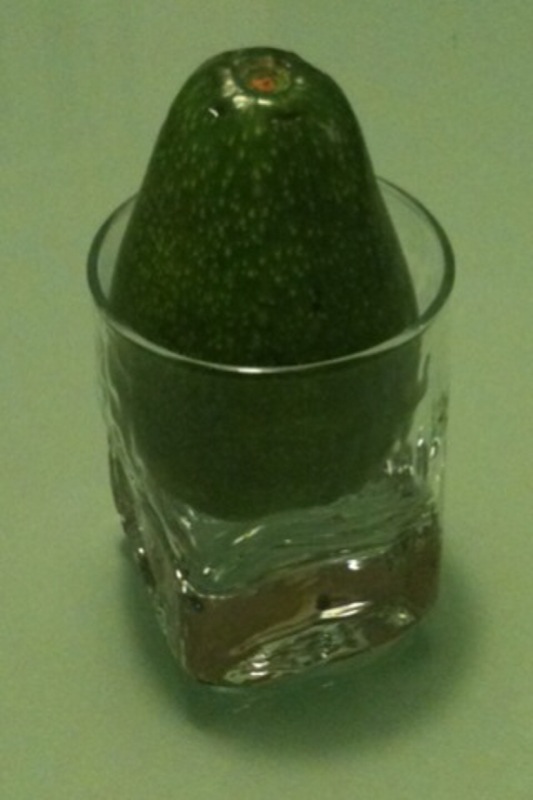
To help you visualize what I am going to discuss, here is the example: an avocado in a square tumbler. The avocado is top pair production, and the glass is Z plus b-antib production.
... Confused ? Let me explain.
As a freelance scientist, I find my Friday to-do lists are particularly eclectic. A little backstory: I work as a freelance a) science writer and b) programmer in order to support A) my family and B) my hobbies.
As long as, from a cash perspective,
$a+$b > $A+$B
and, from a time perspective,
dt(a)+dt(b)< dt(A)+dt(B)
... then I'm happy.
For type 2 diabetics, the choices are invariably slim: take medications and hew to a strict diet, or don’t take medications and hew to an impossibly strict—and largely unpalatable—diet. Such are the current options for maintaining the strict control of blood sugar needed to fight off the worst effects of the disease and its almost inevitable consequences of hypertension and heart disease.
A recent article entitled "
Risk of blood clot after surgery higher and lasts longer than previously thought" raises an interesting point especially in light of recent discussions about public perceptions regarding medical care.
The risk of venous thromboembolism (a collective term for deep vein thrombosis and pulmonary embolism) is known to increase after surgery, particularly after major orthopaedic (joint) surgery. The risk is thought to be highest during the first few weeks after an operation but little is known about the exact pattern and scale of this increased risk.
I do not know about you, but top quarks fascinate me. Since my early years as a student in particle physics I participated in the top search, and then the top discovery, with the CDF experiment at the Tevatron collider; and I then worked for many more years with top quark samples. And that particle is fascinating for many different reasons: its phenomenology, the richness of its decays, its mass close to the scale of electroweak symmetry breaking.
I feel honored by having had a chance to study the first few tens of top quark events that physicists have been able to produce, and yet I regret that during the last few years I have been unable to put my hands on the much larger datasets collected by the CDF experiment.
The winners of our first-ever
writing competition here at Scientific Blogging were announced this week, and we couldn’t be happier with the results. Three outstanding articles were selected by YOU – the readers, and all three are certainly worthy of the recognition.
Our ability to learn new information and retain lifelong memories appears to lie in the minute junctions where nerve cells communicate, according to a new study conducted by NYU Langone Medicine Center researchers and published online this week in the journal Nature.
The scientists, led by Wen-Biao Gan, PhD, associate professor of physiology and neuroscience at NYU School of Medicine, discovered that a delicate balancing act occurs in the brain where neuronal connections are continually being formed, eliminated, and maintained. This feat allows the brain to integrate new information without jeopardizing already established memories.
An international team of scientists has developed a new method of measuring CO2 absorption by the oceans and mapped CO2 uptake for the entire North Atlantic for the first time.
Appearing tomorrow in the journal Science, the study could greatly improve our understanding of the natural ocean 'sinks' and enable more accurate predictions about how the global climate is changing.
The new technique could also lead to the development of an 'early-warning system' to detect any weakening of the ocean sinks – seen by some scientists as the first sign of more pronounced climate change.
Thanks to compliance with the Montreal Protocol, the ozone layer is beginning to recover and that means Antarctica is about to experience more warming and an increase in snowmelt, a new study in Geophysical Research Letters predicts.
Based on space-borne microwave observations between 1979 and 2009, the study suggests that Antarctic snowmelt levels should revert to higher norms as one of the climate drivers, the SAM (Southern Hemisphere Annular Mode), subsides as the damage to the ozone layer is repaired.