Just because a vaccine is available doesn't mean people will choose to be inoculated, according to new research published amid widespread public confusion about the merit of H1N1 flu shots.

The research, appearing in the December issue of Health Services Research, looked at acceptability of potential future HIV vaccinations among high-risk adults in Los Angeles and demonstrated that many factors come into play when a person decides whether or not to be vaccinated.
Before you eat that next slice of pecan pie or second serving of mashed potatoes at Christmas dinner this year, you may want to think twice; those extra helpings could be even worse for your waistline than previously thought.

 A new research report appearing online in The FASEB Journal suggests that a diet high in fat and sugar actually switches on genes that ultimately cause our bodies to store too much fat. This means these foods hit you with a double-whammy as the already difficult task of converting high-fat and high-sugar foods to energy is made even harder because these foods also turn our bodies into "supersized fat-storing" machines.
Tomorrow morning Venice will sink under a maximum tide predicted to reach 1.30 meters above average sea level. The event will occur at 8.35AM, a time when Venetian residents are in the streets trying to bring children to school or to reach their workplace. You can see the predicted evolution of the tide in the graph below, where the red curve shows the time variation of the season's average, and the blue one the actual prediction for tomorrow. The peak of 130 cm above average sea level is predicted to occur at 8.35AM -which is 2.35AM in New York, or 5.35PM in Tokyo.

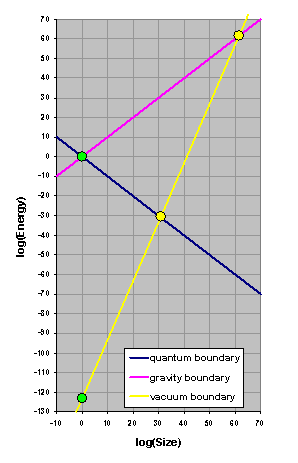

What is the size of the universe? How heavy is it? How big can black holes grow? How small are subatomic particles? How many orders of magnitude will I cross when going from the microscopic quantum world to the edge of the universe? Are we humans somewhere in the middle between all these length scales?
Does it cost money to be green, or can a company make greater profits by being green? Even a decade ago, most companies thought environmental sensitivity was too expensive an option, that it would render them uncompetitive in a harsh marketplace. Today, most thoughtful CEOs understand that environmentally sustainable products and practices are keys to greater profits.[1]
An opinion piece in the Boston Herald criticizes the squid dissection component of an overnight family education event at the New England Aquarium:
The barbaric highlight of the night was when the children were instructed to use the squid’s pseudo-spine to puncture its ink sac and then write their names on the carcass. [My son] Ari rolled his eyes at this vanity ritual in disbelief, calling it “mean” and “crazy.” I’ll go one step further and brand it “borderline satanic.”
Yes, what's up! Here we go. Climate change and ozone depletion affect one another in complicated ways. In simple terms, "the ozone hole" pertains to the Southern Hemisphere. However, reductions in ozone content in the stratosphere above the Arctic have been recorded during the northern winter untill early spring (January through March) in recent  years. These reductions, about 20-25%, are much smaller than those measured in each southern spring (September through December) over the Antarctic ozone hole, the big one.
In honor of the 150th anniversary of the publication of the Origin of Species, The Star has decided to trash Darwin.

No, they're not going creationist on us, but Stephen Marche argues that Genesis beats the Origin hands down as literature: