EMBARGOED until: 24 November 2009 00:01 GMT
‘COSMIC SLOT MACHINE’ MATCHES GALAXY COLLISIONS
A new website will give everyone the chance to contribute to science by playing a ‘cosmic slot machine’ and compare images of colliding galaxies with millions of simulated images of galactic pile-ups.
These collisions, which astronomers call ‘galactic mergers’, could be the key to finding out why the Universe contains the mix of galaxies it does -- some with trailing spiral arms, others more like compact ‘balls’ of stars.
My blog is not a place for hot-off-the-press news - in it you are more likely to find discussions on material well digested and thought over. Nevertheless, I do not have the guts to sit on today's news. The Large Hadron Collider at CERN has produced its first high-energy proton-proton collisions, in the core of the experiments instrumenting its underground caverns.
It has been a long way since the first design of this extraordinary machine. I was reminded of just how much effort the construction and commissioning took by a slide shown by Ives Sirois at a workshop in Turin today: it is a schedule of the construction of the LHC dated 1989!

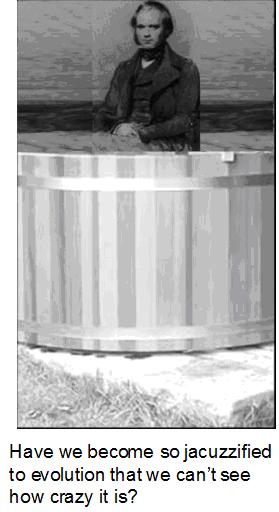
“Come on into the hot tub,” I told my three year old boy. But he wouldn’t budge. No way was he joining his older sister in there. “It’s warm, and it feels nice!” I urged, “There’s nothing to be afraid of.” But it was only when I turned off the jets that I could eventually coax him in.
Being a graduate student in particle physics is a tough, stressful job. I know it because I once was one, and I still remember the burden of giving exams, carrying on single-handedly a difficult analysis, and desperately struggling to learn the job of particle physicist, all the while trying to prove my worth to my colleagues. On the personal side, further trouble compounds the situation: one is usually fighting with tight money, stranded away from her family and boyfriend, and finds herself in the company of people whose similar priorities make the otherwise natural impulse of "having fun whenever possible" the last of their thoughts.
While your co-geeks may out this as a simple math trick, most people unable to recite pi past the decimal point will be amazed. It also has the advantage of requiring almost no physical, sleight-of-hand expertise.
1. Set the deck—from the top down, it should read 2, 3, 4, 5, 6, 7, 8, 9, A, A, A, A (the numbers in any suit and all four aces).
2. Shuffle, being sure not to affect the top 12 cards (yes, this is a cheap trick).
3. Ask an audience member to pick and state a number between 10 and 20 (not 20!).
4. Taking one at a time from the top of the deck, count that many cards into a face-down pile on the table.
5. Ask your dupe to add the two digits of his/her number and state the sum.
Ignoring all of the likely reasons why Africa may see more civil wars in the future, a study published this week in the Proceedings of the National Academy of Sciences suggests that global warming could increase the likelihood of civil war in sub-Saharan Africa by over 50 percent within the next two decades.
The study, conducted by researchers at UC Berkeley as well as at Stanford University, New York University and Harvard University, provides the first "quantitative" evidence linking climate change and the risk of civil conflict, the authors claim. They conclude by urging accelerated support by African governments and foreign aid donors for new and/or expanded policies to assist with African adaptation to climate change.
A new study published in Palaeogeography, Palaeoclimatology, Palaeoecology suggests that the volcanic super-eruption of Toba on the island of Sumatra about 73,000 years ago deforested much of central India, some 3,000 miles from the epicenter.
The volcano ejected an estimated 800 cubic kilometers of ash into the atmosphere, leaving a crater (now the world's largest volcanic lake) that is 100 kilometers long and 35 kilometers wide. Ash from the event has been found in India, the Indian Ocean, the Bay of Bengal and the South China Sea.
While surveying monkeys in the Magombera Forest in Tanzania, environmental scientists this week unexpectedly discovered a new species of chameleon called Kinyongia magomberae, or the Magombera chameleon.
The researchers distinguished the new specimen by collecting, testing and comparing it to two others found in the same area of the Udzungwa Mountains National Park. Their results are documented in the African Journal of Herpetology.
"Discovering a new species is a rare event so to be involved in the identification and naming of this animal is very exciting, said co-discoverer Dr Andrew Marshall.
The capacity of oceans and terrestrial ecosystems such as forests and grasslands to store carbon emissions is considered one of the primary ways the effects of climate change can be mitigated. Unfortunately, such natural carbon sinks may not be much help to Europe thanks to the continent's intensive land management practices, according to a new published online in Nature Geoscience.
Short of a global economic collapse or the construction of a new nuclear power plant everyday, stabilizing or reducing greenhouse gas emissions is impossible, says University of Utah atmospheric scientist Tim Garrett.
In his new Climatic Change study – which is based on the concept that physics can be used to characterize the evolution of civilization – Garrett argues that energy conservation or efficiency doesn't really save energy, but instead spurs economic growth and accelerates energy consumption.