In a few days, scores of Italian post-doctoral researchers in experimental particle physics will get tested on their knowledge of the matter, without any promise of a position, but just to get one further "stamp" on their curriculum, testifying that they are competent enough to be worth offering a temporary position by INFN, the Italian Institute for (sub)Nuclear Physics. So this is a national exam, with the sole purpose of giving a green light to be admitted to two-year positions , which are typically paid less than 1400 euros a month, and which are so far not available. Frankly, I feel ashamed, since I myself work for INFN, and I strongly disagree with its current recruitment policies.
How proteins recognize specific stretches of DNA is one of the key questions of gene regulation. One would like to be able to look at the regulatory DNA sequence adjacent to a gene, and predict which regulatory proteins bind there, and control the adjacent gene. In other words, we want to, just by running a few computer programs over a genome, know how the genes in that genome are regulated.
Elsevier today announced the highlights of its journal impact factor performance in 2008. Elsevier overall saw 75% of its journal impact factors (IF) increase from 2007 to 2008. According to the 2008 Journal Citation Report(R) published by ThomsonReuters, Elsevier journals took the #1 position in 51 categories (of 229) across all of the sciences and social sciences.
In addition, 30 Elsevier journals got their first impact factor this year. Cell Stem Cell (http://www.cell.com/cell-stem-cell/home) (16.826) entered the Cell Biology category ranked 6th (of 157 journals), while Cell Host Microbe (http://www.cell.com/cell-host-microbe/home) (7.436) entered the Microbiology category ranked 10th (of 91 journals).
An international team of researchers has modified chlorophyll from an alga so that it resembles the extremely efficient light antennae of bacteria. The team was then able to determine the structure of these light antennae. This is the first step to converting sunlight into energy using an artificial leaf.
Leiden researcher Swapna Ganapathy has obtained her PhD based on this subject, under the supervision of Professor Huub de Groot, one of the initiators of the research.
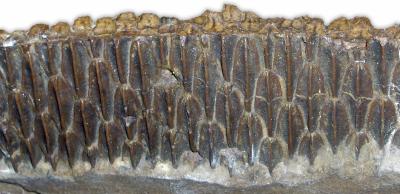
Microscopic analysis of scratches on dinosaur teeth may have helped scientists unravel an ancient riddle of what a major group of dinosaurs - the Hadrosaurs - ate and exactly how they did it.
A study led by the University of Leicester has found evidence that the duck-billed dinosaurs called Hadrosaurs had a unique way of eating, unlike any living creature today. Working with researchers from the Natural History Museum, the study used a new approach to analyze the feeding mechanisms of dinosaurs and understand their place in the ecosystems of tens of millions of years ago.
Scientists at Queen Mary, University of London have discovered that an ingredient in human breast milk called pancreatic secretory trypsin inhibitor, or PSTI, protects and repairs the delicate intestines of newborn babies.
PSTI is found at its highest levels in colostrum, the milk produced in the first few days after birth. The lining of a newborn's gut is particularly vulnerable to damage as it has never been exposed to food or drink. The new study highlights the importance of breastfeeding in the first few days after the birth.
The researchers found small amounts of PSTI in all the samples of breast milk they tested but it was seven times more concentrated in colostrum samples. The ingredient was not found in formula milk.
The current H1N1 influenza A swine flu strain has genetic roots in an illness that sickened pigs at the 1918 Cedar Rapids Swine Show in Iowa, report infectious disease experts at the University of Pittsburgh Graduate School of Public Health in the New England Journal of Medicine. Their paper, published online today, describes H1N1's nearly century-long and often convoluted journey, which may include the accidental resurrection of an extinct strain.
The Columbine school shooting in the US and Dawson College in Canada are examples of recent traumatic events that, due to their broad timeframe, allow researchers to examine their residual impact.
The Columbine shooting occurred in 1999 and was followed by 60 similar ones, despite increases in gun regulations in the US and Canada, twice as many as the previous decade. Part of the reason may be 'copycat' attempts at the kind of impact and attention Columbine brought.
Between the 1932 and 2008 Olympic Games, world record times in the men's 100 meter sprint improved by 0.6 seconds, mostly due to improved training techniques and technological advances.
Scientists at the Research Institute of Wildlife Ecology in Austria say they can duplicate that improvement with a simple change in diet. The research presented on 29th June 2009 at the Society for Experimental Biology Annual Meeting says they have managed to achieve an equivalent feat in mice fed on a diet high in polyunsaturated fatty acids.
University of Minnesota Medical School researcher Iris Borowsky, M.D., Ph.D., and colleagues found that one in seven adolescents believe that it is highly likely that they will die before age 35, and this belief corresponded to more adolescents engaging in risky behaviors.
Borowsky and colleagues analyzed data collected by the National Longitudinal Study of Adolescent Health, a nationally representative sample of more than 20,000 youth in grades 7 through 12 during three separate study years. In the first set of interviews, nearly 15 percent of adolescents predicted they had a 50/50 chance or less of living to age 35.