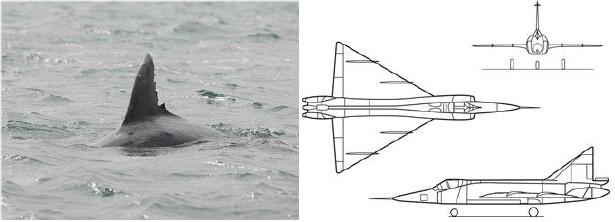




Dolphins, whales and porpoises are perfectly adapted for maximum aquatic agility.  We know why that is - biologists expect that as a result of evolution - but to-date no one in physics had ever successfully analyzed how the animals' flippers interact with water; the hydrodynamic lift that they generate, the drag that they experience and their hydrodynamic efficiency.

Laurens Howle and Paul Weber from Duke University teamed up with Mark Murray from the United States Naval Academy and Frank Fish from West Chester University to find out more about the hydrodynamics of whale and dolphin flippers.   Their findings; some dolphins' fins generate lift in the same way as delta wing aircraft.
Research from the Centre for Addiction and Mental Health (CAMH) in Canada says that 4 percent of worldwide deaths are directly attributable to alcohol consumption and the rise is mainly due to increases in the number of women and Europeans drinking.

The president wants to transform healthcare with new laws and new technology, but once upon a time, a moral bond ruled between patient and physician.

Recently, I experienced something so rare in American medicine that it often catches people up short when I relate the story. A doctor actually apologized to me. Not only that, but he admitted that he caused harm, hurt feelings and inconvenience.

If you have followed this blog for long enough, dear readers, the words "multi-muons", "anomalous muons", or even "lepton jets" are not foreign to you. They all refer to a paper appeared on the ArXiv on the evening of Halloween last year. In the paper the CDF collaboration published the results of a detailed analysis which described how a component of collider data containing two or more muons could not be explained by known Standard Model processes.
An interesting phenomenon in growing random networks:

The number of 3-node, 3-edge connected subgraphs in a random, scale-free network of N nodes scales as N0 (=1). No matter how big your network grows, you're going to have a roughly constant number of 3-node, 3-edge  subgraphs that depends only on the ratio of edges to nodes.

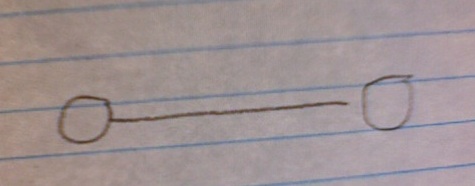
Let's back up a minute before we see why this counterintuitive result is so and what it means.  Imagine that we have a network made up of N nodes connected by E edges. You can start out with two nodes connected by one edge:


David Brooks takes on evolutionary psychology and gets it sort of right:

The first problem is that far from being preprogrammed with a series of hardwired mental modules, as the E.P. types assert, our brains are fluid and plastic. We’re learning that evolution can be a more rapid process than we thought. It doesn’t take hundreds of thousands of years to produce genetic alterations.

    Part of the enjoyment of doing research is that ideas pop into your head all the time. Everyone has ideas, but the hard part is to choose which should be subjected to critical tests that have the primary aim of proving them wrong. That’s the most efficient way to discard bad ideas, because most of them in fact don’t work. Only after an idea survives the crucible of initial testing can it be taken more seriously and tested further. Then, if it still survives, you can publish.

The first two articles of this series have covered a brief overview of evolutionary psychology and the difficulty in defining and measuring intelligence. In the first article, I covered that we can measure what people prefer and value, but we don’t know the "why" behind those preferences and values.

An evolutionary psychologist from the London School of Economics, Satoshi Kanazawa, wrote a paper on the origin of individual values and preferences that suggests values are tied to IQ, and you can theoretically predict the values of a nation based on its average intelligence.

Sudden Cardiac Death (SCD) is an unexpected death caused by a sudden loss of heart function (sudden cardiac arrest, SCA). Every year, 400,000 adults die of SCD, making it one of the largest causes of death in Europe. Sudden Cardiac Death begins with Sudden Cardiac Arrest, mostly caused by an arrhythmia called “ventricular fibrillation” (a rapid, chaotic, lethal rhythm of the heart). When this occurs, the heart will abruptly stop to pump blood. Consequently, the patient feels dizzy and faints. SCD occurs within minutes, if no resuscitation is immediately initiated.
A team of scientists led by chemist and Netherlands Organization for Scientific Research (NWO) Pioneer laureate Piet Gros and medical microbiologist Jos van Strijp from Utrecht University have succeeded in 'freezing' a chain reaction of the immune system and they're calling it a breakthrough in the field of immunology.

One of the oldest defense mechanisms of our body is the complement system. Unlike white blood cells, which must learn to recognize pathogens, the complement system works from birth onwards. The system consists of proteins that initiate a chain reaction to kill bacteria and damaged cells. However the system is not perfect; it can run wild and attack our own healthy cells.

