We already have a war on drugs, a war on terror, and war against everything French (freedom fries anyone?) but our capacity for war is seemingly unlimited and the newest vendetta has targeted high BMIs. That's right, we're fighting a war on fat people and the soldiers have just added a new weapon to their arsenal.
Not only does obesity cause diabetes, heart diseases, stroke, cancers, depression, high blood pressure, asthma, arthritis, and urinary tract infections (i.e everything) but now obese people also cause global warming. If we could prove that obesity caused 9/11 and the AIDS epidemic, we would have found the root of all evil, hands down.
I have a confesson to make; I'm probably smarter than you.
Why are people scared before an epidemic even happens?—A question inspired by the recent H1N1 outbreak. From a sociological perspective, entities that we rely upon to keep us safe from harm are now advising us that a threat is amongst us which is highly troubling to the human psyche. Aside from of our sense of safety being compromised, the usual suspects—media outlets and major public institutions, are also to blame for contributing to the present swine flu hysteria.
The oldest submerged town in the world is about to give up its secrets — with the help of equipment that could revolutionise underwater archaeology.
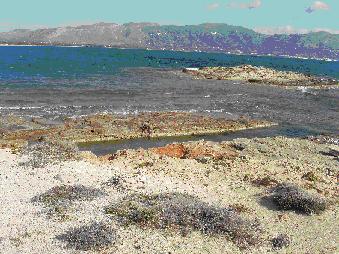
The ancient town of Pavlopetri lies in three to four metres of water just off the coast of southern Laconia in Greece. The ruins date from at least 2800 BC through to intact buildings, courtyards, streets, chamber tombs and some thirty-seven cist graves which are thought to belong to the Mycenaean period (c.1680-1180 BC). This Bronze Age phase of Greece provides the historical setting for much Ancient Greek literature and myth, including Homer’s Age of Heroes.
Bio-oil is an aqueous, acidic, highly oxidized mixture. However, its high oxygen content and instability turn out to have a negative impact: bio-oil cannot be used directly as a liquid fuel. It would, however, be highly interesting as a source of basic raw materials if it were possible to convert it to alkanes. Alkanes, which are also commonly called paraffins, are saturated hydrocarbons; they are among the most important raw materials for chemical industry, and in particular as starting materials for the production of plastics. Furthermore, they are among the primary fuels in the world's economy.
Rare traits persist in a population because predators detect common forms of prey more easily. Researchers writing in BMC Ecology found that birds will target salamanders that look like the majority – even reversing their behavior in response to alterations in the ratio of a distinguishing trait.
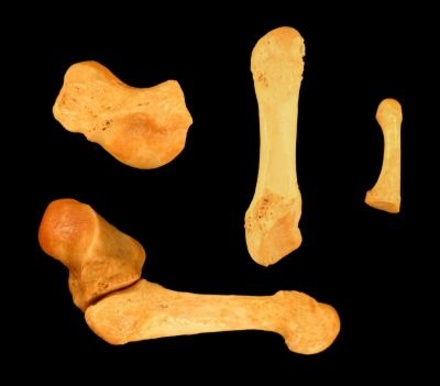
The discovery of a gruesome feeding frenzy that played out 73 million years ago in northwestern Alberta may also lead to the discovery of new dinosaur species in northwestern Alberta.
University of Alberta student Tetsuto Miyashita and Frederico Fanti, a paleontology graduate student from Italy, made the discovery near Grande Prairie, 450 kilometres northwest of Edmonton.

With an unexpected move, the Austrian Minister of Research and Science, Johannes Hahn, announced last Friday that he intends to put an end to the 50-year-long participation of Austria to CERN.
Such a move is hard to understand, in light of the great prospects of physics that the start-up of LHC will bring at the end of this year. Losing membership to CERN would mean a downgrade of Austrian scientists in all the projects they are involved, and it would be detrimental to the experiments, to the lab, and to particle physics in general, but most of all it would be a catastrophe for Austrian research.
Frederick II (1194 –1250), Holy Roman Emperor and King of Sicily, so I have read, preferred equation-solving contests to watching knights impaling each other in jousting. Certainly, the great mathematician we know today as Fibonacci spent some time at his court.
As a result of this development, Italy became a leading centre of the mathematical arts, and by the 1530s the solving of cubic equations was all the rage in Venice, with great prize money.
A couple of entomologists at Arizona State have done what NASA famously failed to do: name a thing after Stephen Colbert. The Agaporomorphus colberti diving beetle joins the ranks of Colbert’s many namesakes: the Aptostichus stephencolberti trapdoor spider, the Diamphipnoa colberti stonefly, and just about everything else that needed naming in the last few years.
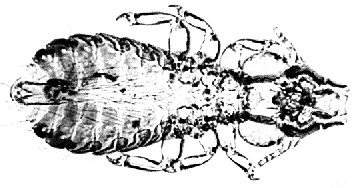
This Colbert-named arthropod series is in good company. There is a wealth of homage, wordplay, and good ol’ scientist shenanigans hiding beneath the latinized genus and species names of formal biological nomenclature. Here are a few highlights.