A protein that the heart produces during its early development reactivates the embryonic coronary developmental program and initiates migration of heart cells and blood vessel growth after a heart attack, researchers at UT Southwestern Medical Center have found.
The molecule, Thymosin beta-4 (TB4), is expressed by embryos during the heart's development and encourages migration of heart cells. The new findings in mice suggest that introducing TB4 systemically after a heart attack encourages new growth and repair of heart cells. The research findings indicate that the molecule affects developmental gene expression as early as 24 hours after systemic injection. The study will appear in an upcoming issue of the Journal of Molecular and Cellular Cardiology.
A research team say they have found a sample of massive galaxies with properties that suggest that they may have formed relatively recently, which runs counter to the widely-held belief that massive, luminous galaxies (like our own Milky Way) began their formation and evolution shortly after the Big Bang, some 13 billion years ago. Further research into the nature of these objects could open new windows into the study of the origin and early evolution of galaxies.
New research from Vanderbilt University has found students benefit more from being taught the concepts behind math problems rather than the exact procedures to solve the problems. The findings offer teachers new insights on how best to shape math instruction to have the greatest impact on student learning.
The research by Bethany Rittle-Johnson, assistant professor of psychology and human development at Vanderbilt University's Peabody College and Percival Mathews, a Peabody doctoral candidate, is in press at the Journal of Experimental Child Psychology.
In works on evolution written by a certain class of biologist we can often see “for the good of the species” references derided in no uncertain terms. Comments such as “fuzzy thinking”, “they got it wrong” and so on have become so habitual that they almost go unnoticed. But is the “for the good of the species” idea really all that bad? It might well be that some comments and discussions are indeed fuzzy, in that they might be poorly thought out or presented. But here’s a discussion from Robert Ardrey’s The Social Contract to consider. Ardrey described the communication between starlings as an element in their defence against peregrine falcons, the falcons being hindered in their attacks by the speed for which they are famous.
If I were a sneaky disease, working my pathological magic through mimicry, I think I'd be vocal cord dysfunction.
What's VCD? I didn't even know it existed until last week, so don't feel embarrassed. Also known as laryngeal dysfunction, paradoxical vocal cord motion, laryngeal dyskinesia, vocal cord malfunction and a number of medicalese terms, this tricky little guy masquerades most commonly as the everyman of respiratory conditions, asthma. (And from the dawn of the 20th century to today, occasionally it's diagnosed as hysteria. It's all in your head, person who can't breathe, it's all in your head.)
Today I was forwarded by several people a really bad and confused op-ed piece by New York Times columnist David Brooks. It is entitled “The End of Philosophy,” which naturally raised my baloney detector level to yellow alert.
What's the key to everlasting youth? For years now, evidence has steadily accumulated, from studies on mice, flies, worms, and even yeast, that cutting calories is the secret to a long lifespan - at least in a wide range of non-human organisms. But does this work in humans?
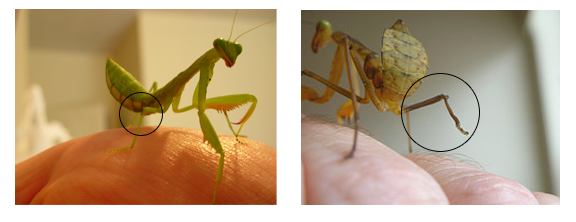
Dave Cooper’s pet mantis, Cinco Zapatos, was a good-looking Giant African Mantis with a notable distinguishing feature: her sixth leg was missing. It didn’t seem to hamper her much. Her first weeks as Dave’s insect familiar were uneventful until Dave returned from a three-day trip to find that Cinco Zapatos had molted—and had become Seis Zapatos in the process. Cinco Zapatos had regrown most of her leg.
Last week I described how a boulder-sized meteorite exploded in the skies over Murchison, Australia, forty years ago. The remarkable mix of organic compounds discovered in samples of the meteorite, which included amino acids, confirmed that some of the compounds required for the origin of life could have an extraterrestrial origin, as John Oro had proposed ten years earlier. But where did the organic compounds come from, and how were they synthesized?
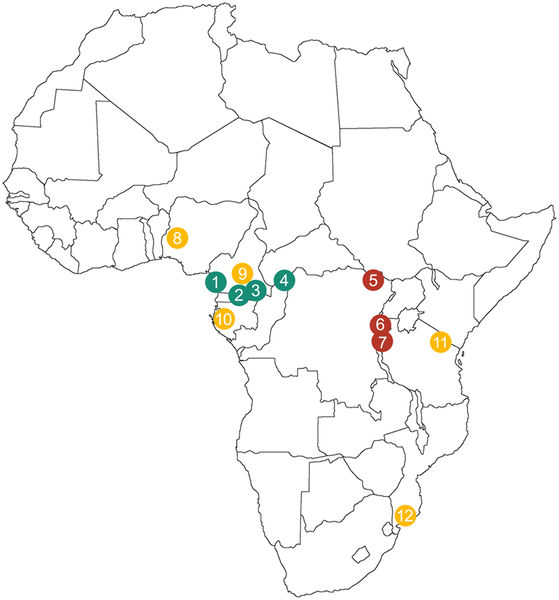
The central African belt is a fascinating look back in time for humanity because the largest group of hunter–gatherers of Africa, the Pygmies, still inhabit the region and they coexist with neighboring farmers.
All African Pygmies, inhabiting a large territory extending west-to-east along Central Africa, descend from a unique population who lived around 20,000 years ago, according to an international study led by researchers at the Institut Pasteur in Paris. The research concludes that the ancestors of present-day African Pygmies and neighboring farmers separated ~60,000 years ago.