





Portuguese scientists discovered a new molecular mechanism that allows gamma herpes viruses to chronically infect patients and helps to explain why these patients present an abnormally high incidence of the lymphocyte (or white blood cell) cancer lymphoma, particularly when their immune system is compromised.

The research, just published in the advance online edition of The Embo Journal, reveals how these viruses mimic the host molecular machinery to shutdown NF-kB –a key regulatory protein complex involved in cell division and death – on infected lymphocytes, and how this - probably by disrupting the cells normal regulatory systems - creates the conditions for the development of lymphomas.

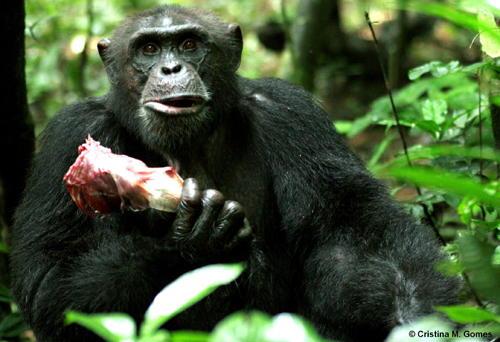
Before the invention of boxed chocolates, Corvettes and bling-bling, all a man had to do for sweet lovin' was provide his special ladies with meat.  Studies of extant hunter-gatherer societies show that literally bringing home the bacon leads to greater reproductive success.  Highly skilled hunters also partake in more extra-marital affairs and in polygamous societies, have more wives. 

Researchers at the Joslin Diabetes Center have demonstrated that adult humans still have a type of "good" fat previously believed to be present only in babies and children. Unlike white fat, which stores energy and comprises most body fat, this good fat, called brown fat, is active in burning calories and using energy. The finding reported in The New England Journal of Medicine could pave the way for new treatments both for obesity and type 2 diabetes.

Scientists had thought that brown fat only existed in humans during childhood and was mostly gone by adulthood. The paper shows that brown fat not only exists in adult humans, but also for the first time, that the fat is metabolically active.

Spoonjack today announced iBone -- the Pocket Trombone for iPhone and iPod Touch. iBone lets users play along with music in their iTunes library and with songs from the iBone Songbook and even shows them how. iBone combines an instrument, band, and trainer into a single application.

"Our aim is to produce something playable, practicable, and fun," said Tom Scharfeld, Founder of Spoonjack. "With iBone, we've brought the Bone and the band to the phone so users can make music, have fun, and even learn wherever they may be."

iBone features an interface easy enough for anyone to use: 1. Touch the display or blow into the microphone to produce a sound. 2. Slide fingers to change pitch. 3.

Complex objects like automobiles and birthday cakes are created using a 'top down' process; the structure is imposed from the outside.    When things grow using order imposed from within, like biological objects, it is called a bottom-up approach.   

The construction of complex man-made objects--a car, for example, or even a pizza--almost invariably entails what are known as "top-down" processes, in which the structure and order of the thing being built is imposed from the outside (say, by an automobile assembly line, or the hands of the pizza maker).

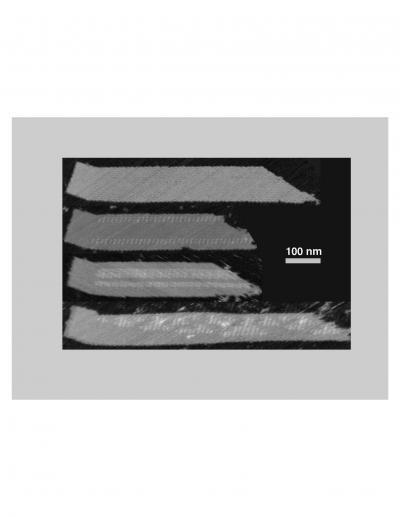
Engineers at Oregon State University say they have discovered a way to use ancient life forms, diatoms, to create one of the newest technologies for solar energy - systems that may be surprisingly simple to build compared to existing silicon-based solar cells.

Diatoms are tiny, single-celled marine life forms have existed for at least 100 million years and are the basis for much of the life in the oceans, but they also have rigid shells that can be used to create order in a natural way at the extraordinarily small level of nanotechnology.   They are also a key part of the marine food chain and help cycle carbon dioxide from the atmosphere. 

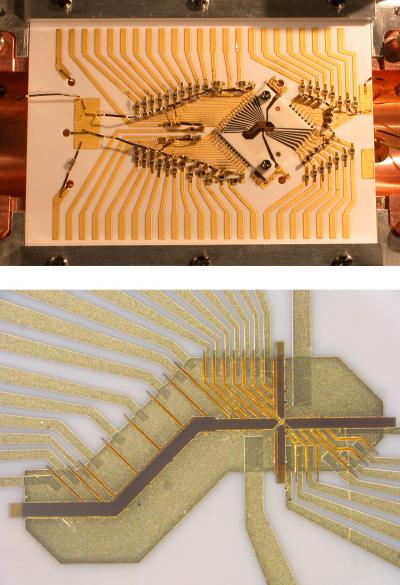
Physicists at the National Institute of Standards and Technology (NIST) have demonstrated a new ion trap that enables ions to go through an intersection while keeping their cool. Ten million times cooler than in prior similar trips, in fact.

The demonstration described in Physical Review Letters is a step toward scaling up trap technology to build a large-scale quantum computer using ions (electrically charged atoms), a potentially powerful machine that could perform certain calculations—such as breaking today’s best data encryption codes—much faster than today’s computers.

The great thing about science is that we will converge on the correct answer eventually.  In something like climate change, there is rarely one correct answer and while greenhouse gases have long been center stage in discussions about global climate change, new NASA research suggests that much of the atmospheric warming observed in the Arctic since 1976 may be due to changes in tiny airborne particles called aerosols.

That doesn't mean mankind is off the hook.   Aerosols are emitted by both natural and human sources and, regardless of where they come from, they can directly influence climate by reflecting or absorbing the sun's radiation. The small particles also affect climate indirectly by seeding clouds and changing cloud properties, such as reflectivity.

Researchers at the University of Arkansas have shown that changing the chirality, or direction of spin, of a nanoscale magnetic vortex creates an electric pulse, suggesting that such a pulse might be of use in creating computer memory and writing information. 

Physicists Sergey Prosandeev and Laurent Bellaiche reported their findings in Physical Review Letters.

“This is new physics,” Prosandeev said. “There are many possibilities that can follow from this.”
A team of astronomers, led by Dr. Bo Wang from the Yunnan Observatory of the Chinese Academy of Sciences, have developed a new model which explains the formation of the most youthful type Ia supernovae. In a paper published in Monthly Notices of the Royal Astronomical Society, Dr. Bo Wang and his team show how the transfer of material from a ‘helium star’ to a compact white dwarf companion causes these cataclysmic events to take place early on in the life of the galaxy they formed in.


