Reports by scientists of meteorites striking Earth in the past have resembled police reports of so many muggings — the offenders came out of nowhere and then disappeared into the crowd, making it difficult to get more than very basic facts.
Now an international research team has been able to identify an asteroid in space before it entered Earth's atmosphere, enabling computers to determine its area of origin in the solar system as well as predict the arrival time and location on Earth of its shattered surviving parts.
A new study appearing in Clinical Cardiology examines the average fitness level of the morbidly obese (body mass indexes between 40.0 and 49.9). The findings show that the tested population was sedentary for more than 99 percent of the day and, on average, walked less than 2,500 steps per day – far below healthy living guidelines of 10,000 steps per day. The results provide important links between obesity, poor fitness and cardiovascular disease.
The study used a precise body sensor to continually measure physical activity, caloric expenditure and movement minute-by-minute over a 72-hour period within their home environments. Following collection of the data, structured cardiorespiratory fitness testing was performed on each subject.
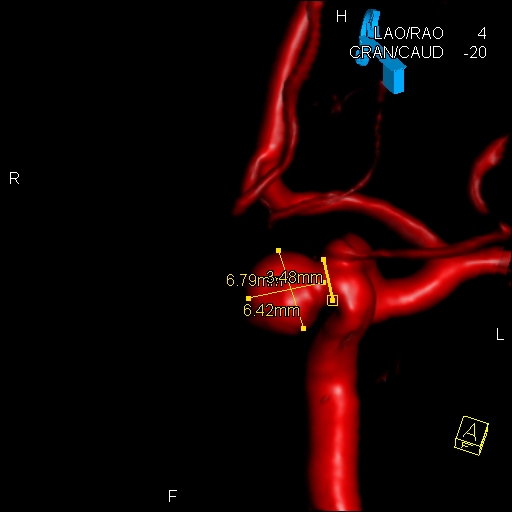
Norma Wooley checked into Loyola University Hospital on a recent Monday morning for brain surgery to repair a life-threatening aneurism (also: aneurysm). She went home on Tuesday, cured of the slurred speech, drooping face and worst headache of her life.
Wooley had a cerebral aneurism, a weak spot in a blood vessel that balloons out and fills with blood. About six million Americans -- 1 in 50 people -- have brain aneurisms that could rupture. Each year, aneurisms burst in about 25,000 people, and most die or suffer permanent disabilities, according to the Brain Aneurysm Foundation.
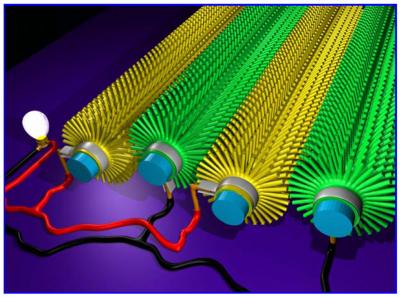
You may soon be able to say goodbye to batteries for your Blackberry or cell phone. Instead, they will get power from just a wave of your hand.
In research presented at the ACS meeting in Salt Lake City, scientists describe technology that converts mechanical energy from body movements or even the flow of blood in the body into electric energy that can be used to power a broad range of electronic devices without using batteries.
"From Stettin in the Baltic to Trieste in the Adriatic, an iron curtain has descended across the Continent."
Thus spoke Sir Winston Churchill, in the company of President Harry S. Truman, on March 5, 1946, at Westminster College, Fulton, Missouri.
But this Iron Curtain was not a single boundary, but two fences (mostly) separated by a furlong or so (5 furlongs = 1 kilometre) with a no-man’s-land in between.
_0.jpg)
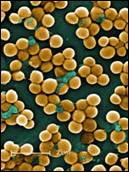
One of the largest health threats facing our society today is not some super-virus spread from birds, or a tropical parasite spread by mosquito. Instead, it is the increasing resistance of common bacteria to antibiotics and even severe antibacterial treatment. Antibiotics have allowed us some amount of freedom from harmful bacterial infections, diseases and death, but as our antibiotics become overused, and ineffective against infection, our freedom from disease is significantly limited.
"Are you confused by all the talk about DNA and genes? We can help," claims the University of Utah. There is now no excuse for not knowing what stem cells do, what messenger RNA is, why SNPs are important, or about any other hot topic in the news about the latest biomedical research. University scientists are getting into the online communication game, although in many cases they are doing it awkwardly. What else do you expect from a bunch of pointy-headed, tweed-wearing, absent minded nerds?
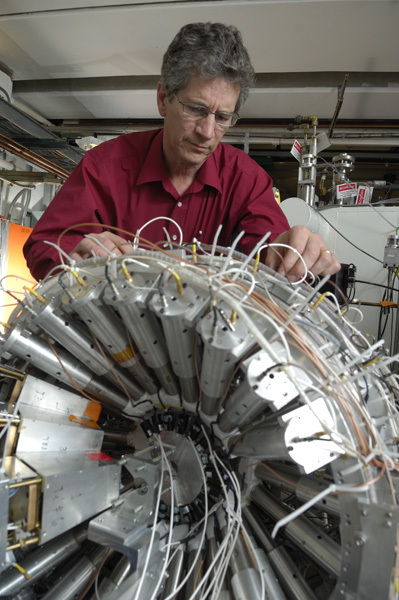
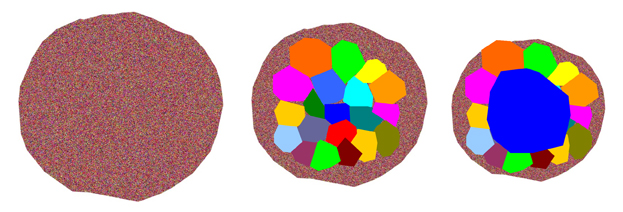
Research by Michigan State University scientists is helping shed light on neutron stars, city-sized globs of ultra-dense matter that occasionally collapse into black holes.
A team led by Betty Tsang, a professor at MSU’s National Superconducting Cyclotron Laboratory, has had some success in measuring a key nuclear quality that may make it easier to describe the outer crusts of such stars.
If physicists lived in Flatland—the fictional two-dimensional world invented by Edwin Abbott in his 1884 novel—some of their quantum physics experiments would turn out differently (not just thinner) than those in our world.
The distinction has taken another step from speculative fiction to real-world puzzle with a paper from the Joint Quantum Institute (JQI) reporting on a Flatland arrangement of ultracold gas atoms. The new results, which don’t quite jibe with earlier Flatland experiments in Paris, might help clarify a strange property: “superfluidity.”
Dale Deutsch, Ph.D., Professor of Biochemistry and Cell Biology at Stony Brook University and colleagues discovered a new molecular mechanism for the processing of endocannabinoids, brain compounds similar to THC, the active ingredient in marijuana, and essential in physiological processes such as pain, appetite, and memory. Reported online this week in the Proceedings of the National Academy of Sciences (PNAS), the finding could pave the way for new medicines for pain, addiction, appetite control and other disorders.



_0.jpg "Iron Curtain – Ribbon Of Life")