




Show Me The Science Month Day 7

The birth of new species always involves a barrier to cross-breeding between two different groups of the same species. This barrier may start out as a geographical barrier (two raccoon populations on different sides of a mountain never encounter each other and thus fail to interbreed), but however it starts, reporductive barriers always turn into a genetic barrier. To form new species, two populations of organisms have to drift apart genetically.

The genetic split can happen in a variety of ways, as scientists are discovering in the their quest to find 'speciation genes.' It can happen because a selfish gene fails to be shut down in the offspring of cross-breeding flies, and it can happen because one mouse gene doesn't work right when it encounters genetic variants from another subspecies.

A report in Science describes one more speciation gene, this time in two sub-species of thale cress plants. In this case, the barrier to reproduction is the result of faulty gene copying.
When most of us, especially in the SB community, think of supercomputers we usually think of large-scale hydrodynamics or fusion reaction simulations which stretch our knowledge of the universe and provide us with a validation or a denial or of some complicated physical theory.

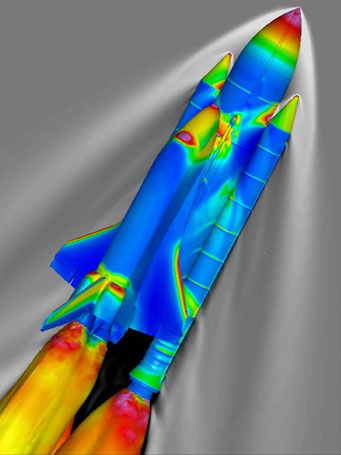
Indeed, this is what most supercomputers are up to: simulating climate change, the structure of proteins, or the dynamics of a supernova, while producing awesome pictures like this one:


An awesome picture of the ascending Space Shuttle and the pressure coefficients of the outside. Photo Credit: NASA Advanced Supercomputing Facility

If you have not already chosen your new love, researchers suggest you stay away from those with big chins as they have a tendency to cheat. Researchers from four universities across the US and Canada prodded into the sexual habits of chinny and relatively chin-less females to determine these results.

Throughout history, scientists, philosophers, mathematicians and Phd students lacking funding for actual research have turned to the thought experiment in hopes of discovering something publishable, thereby retaining tenure and/or attracting the admiration of comely undergraduates. The best thought experiments throw light into dark corners of the universe and also provide other scientists, philosophers, mathematicians and destitute Phd students a way to kill time while waiting for the bus.

Below is a classic thought experiment, pillaged from my book The Geeks' Guide to World Domination (Be Afraid, Beautiful People). I'll post a new thought experiment each day this week.


Maxwell’s Demon
A study by UC Davis researchers published in  Archives of Pediatric&Adolescent Medicine has found that most of the healthy children and teenagers in the United States who are taking daily vitamin and mineral supplements probably don't need them.  The study also found that the children who most need to take vitamins aren't getting them.
The idea of ecosystem services is a promising conservation concept but has been rarely put into practice. In  Frontiers in Ecology and the Environment, researchers have created a tool they say can report some of the first quantifiable results that place values on nature's services to humans.

Some of the best-described ecosystem services include pollination of crops, flood and storm protection, water filtration and recreation. The challenging part is translating these services into something with a measurable value. Economic valuation methods take changes in the supply of ecosystem services and translate these into changes in human welfare. 
If you care about the environment, you probably have become familiar with the phrase 'food miles' - along with production methods, it has become a key factor in what environmentally conscious people do to get quality food with less impact on the ecosystem.

But they may be negating it, according to new research by the University of Exeter (UK) p ublished in the journal Food Policy.   Shopping locally may not be as good for the environment as having food delivered -  on average, lower carbon emissions result even from having food delivered right to your house than driving to a local farm.
Most animals, like humans, have separate sexes.  We are born, live out our lives and reproduce as one sex or the other, but some animals live as one sex in part of their lifetime and then switch to the other sex, a phenomenon called sequential hermaphroditism.   Yale scientists believe the bigger puzzle is why the phenomenon is so rare, since their analysis shows the biological “costs” of changing sexes rarely outweigh the advantages.

This process is even evolutionarily favored, they say, so its rarity cannot be explained by an analysis of the biological costs vs benefits.
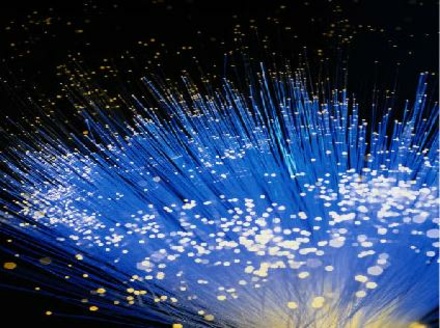
Sliced light is how we communicate now. Millions of phone calls and cable television shows per second are dispatched through fibers in the form of digital zeros and ones formed by chopping laser pulses into bits. This slicing and dicing is generally done with an electro-optic modulator, a device for allowing an electric signal to switch a laser beam on and off at high speeds (the equivalent of putting your hand in front of a flashlight). Reading that fast data stream with a compact and reliable receiver is another matter. A new error-free speed-reading record using a compact ultra-fast component—640 Gbits/second (Gbps, or billion bits per second)—has now been established by a collaboration of scientists from Denmark and Australia.
Whenever humans create a new antibiotic, deadly bacteria can counter it by turning into new, indestructible super-bugs. That's why bacterial infection is the number one killer in hospitals today. But new research from Tel Aviv University may give drug developers the upper hand in outsmarting bacteria once and for all. 

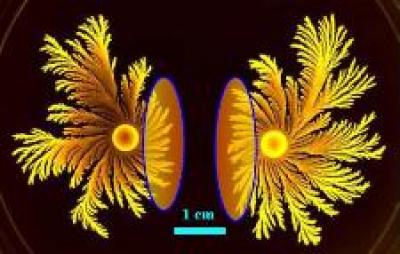
The secret weapon against a colony of bacteria may be to stress it with its own protection system, which forces it to reduce its population through ... cannibalism.


