To make children happier, we may need to encourage them to develop a strong sense of 'personal worth', according to Dr. Mark Holder, Associate Professor at the University of British Columbia, Visiting Assistant Professor Dr. Ben Coleman and graduate student Judi Wallace. Their research says that children who feel that their lives have meaning and value and who develop deep, quality relationships – what they term measures of spirituality – are happier.
But according to their paper in the Journal of Happiness Studies, actual religious practices have little effect on that happiness.
6 newly discovered genes for obesity have a neural effect, according to the international GIANT (Genetic Investigation of Anthropometric Parameters) consortium.
So far, the scientists have analyzed two million DNA variations in 15 genome-wide association studies with a total of more than 32,000 participants and the identified candidate genes were validated in 14 further studies including 59,000 participants.
In addition to the FTO and MC4R genes already known, it was now possible for six more obesity genes to be identified: TMEM18, KCTD15, GNPDA2, SH2B1, MTCH2, and NEGR1.
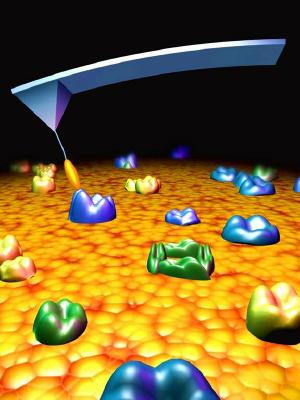
Nanotechnology exploits the properties of materials on a nanometric scale, (a nanometer is one millionth of a millimeter). The ultimate limit for such miniaturization is the development of devices formed by atomic structures created artificially to fulfil a determined purpose.
The tools that permit the visualization and manipulation of atoms are called proximity microscopes. This includes the Scanning Tunneling Microscope (STM), whose development in 1986 earned G. Binning and H. Rohrer the Novel prize for physics, and more recently the Atomic Force Microscope (AFM).
The International Year of Astronomy 2009 (IYA2009) is a global celebration of astronomy and its contribution to society and culture, with strong emphasis on education, public participation, and the involvement of young people, and with events at national, regional, and global levels. Many thousands of individuals in over 135 countries around the world are already involved, forming the world's largest ever astronomy network.
IYA2009 portrays astronomy as a peaceful global scientific endeavour that unites astronomers in an international, multicultural family of scientists, working together to find answers to some of the most fundamental questions that humankind has ever asked.
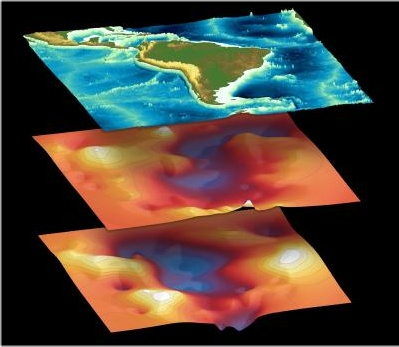
South America is the world’s most species-rich area and there have been many theories as to why, ranging from animals and plants accompanying the continent when it broke loose from Africa to variations in the extent of the rainforests over millions of years creating new species.
A thesis from a Gothenburg University doctoral student proposes a different theory: that the formation of the Andes was a 'species pump' which spread animals and plants across the continent.
When Charles Darwin published his landmark book On the Origin of Species(*) in 1859, his theories on evolution were quickly accepted by the vast majority of scientists. The general public, however, was not as eager to accept Darwin’s ideas, due largely to the fact that they challenged established religious beliefs.
Today, 150 years after the publication of Darwin’s book, science and religion remain as conflicted as ever when it comes to the subject of evolution.
“There is a real disconnect between what science says and what the public believes, at least in the United States,” says Ben Pierce, holder of the Lillian Nelson Pratt Chair in Biology at Southwestern University in Georgetown, Texas.
Einstein and Bohr – No names loom larger in the history of twentieth-century physics, and rightly so, Albert Einstein and Niels Bohr being the figures most prominently associated with the relativity and quantum revolutions.(1)
Kawasaki Disease, recently in the news due to the death of Hollywood film star John Travolta's son Jett, has had some genetic variations identified in a genome-wide association study published in PLoS Genetics.
The ultimate cause of human behavior is the mind. The mind, an emergent property from the workings of collections of neurons, hormones, proteins, and other biochemical agents, controls everything every human does. From their intended actions to their subconscious actions, all of it is controlled by the human analogue of a central processing unit. Cognitive models in the social sciences and particularly in psychology and economics take seriously this point of view of the human decision maker and apply it to political, economic, and other social situations.
One of the major ideas of the subject is that people are equipped with a cognitive “toolbox” that houses tools that help them to solve problems in different environments.
2009 is the international year of astronomy, celebrating the 400th anniversary of Galileo's observations of Venus, Saturn and Jupiter published in Sidereus Nuncius (Starry Messenger).
Unlike numerous other scientific initiatives to educate the populace, I think this global effort may actually have some impact. Not only are there educational materials, but practical tips, movie clips, and a myriad of projects to draw in amateurs and experts alike. The initiative is also harnessing the power of the Internet, much like Obama did in his campaign, to spread the word.