The extra layer of information that you add to a message when speaking is called prosody. The most important conclusion is that prosody lies not only in the voice but also in the facial expression. Further it appears that auditory and visual information together are more effective than the same information separately. 

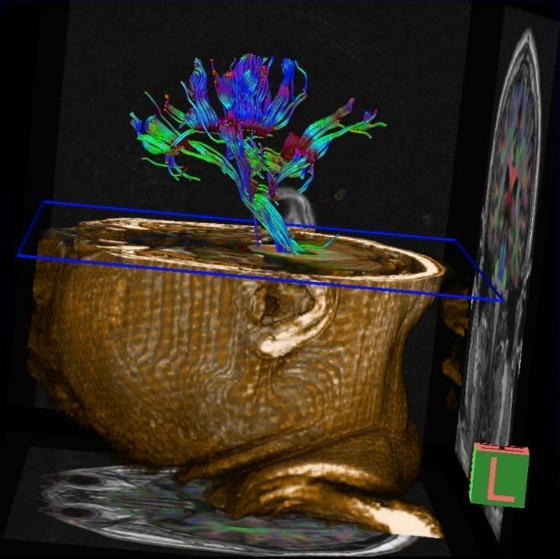
In middle age we begin to lose myelin, the fatty sheath of "insulation" that coats our nerve axons and allows for fast signaling bursts in our brains. So if you want to be the best at anything requiring speedy brain reaction times, you'd better get it in by age 39.

Writing in Neurobiology of Aging, Dr. George Bartzokis, professor of psychiatry at the UCLA Semel Institute for Neuroscience and Human Behavior at UCLA, and colleagues compared how quickly a group of males ranging in age from 23 to 80 could perform a motor task and then correlated their performances to their brains' myelin integrity.

The researchers found a striking correlation between the speed of the task and the integrity of myelination over the range of ages. Put another way, after middle age, we start to lose the battle to repair the myelin in our brain, and our motor and cognitive functions begin a long, slow downhill slide.

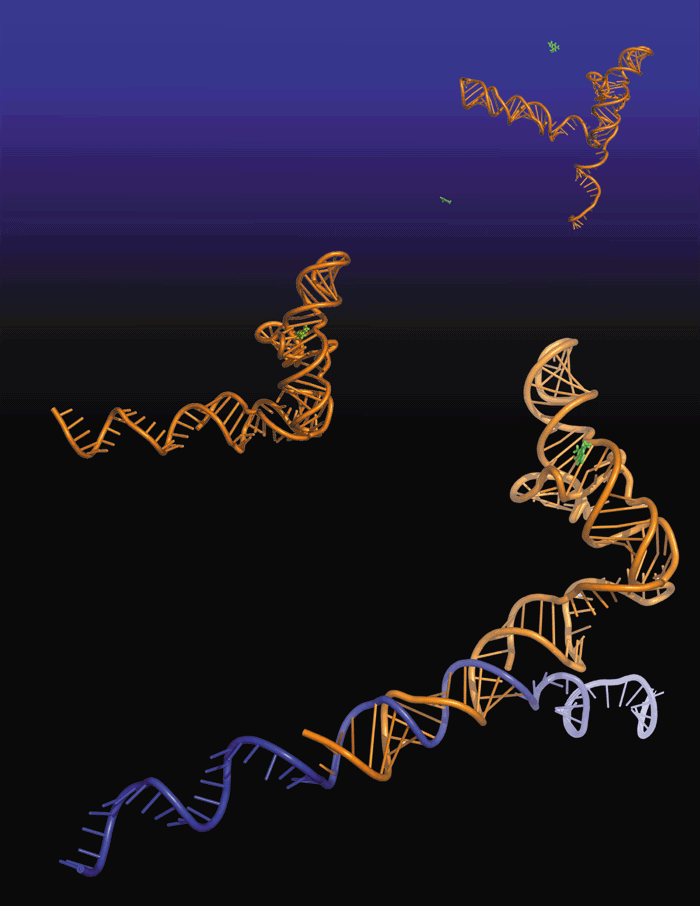
Engineers from the California Institute of Technology (Caltech) have created a "plug-and-play" synthetic RNA device--a sort of eminently customizable biological computer--that is capable of taking in and responding to more than one biological or environmental signal at a time.

In the future, such devices could have a multitude of potential medical applications, including being used as sensors to sniff out tumor cells or determine when to turn modified genes on or off during cancer therapy.

A synthetic RNA device is a biological device that uses engineered modular components made of RNA nucleotides to perform a specific function--for instance, to detect and respond to biochemical signals inside a cell or in its immediate environment.

The awe of staring into the never-ending black sky is what brings thousands to the hilltops every year; myself included. I have always been interested in astronomy and the vastness of space. Even as a thirteen year old I was wishing upon stars, plotting constellations, and dreaming of venturing to a world beyond...

Knowing how much I loved the sky, my mother set up a trip to the Sierra Nevada's to catch a glimpse of the miraculous night sky. The view was beautiful, just dazzling with stars brighter than I had ever seen. Looking up into a world of pearls nestled in a black canvas, shimmering wildly, and in contrasting colors ... but I wasn't going to settle for just looking at the dots in the sky; I wanted to see the planets up close. To define their unique characteristics and so on, so the few dozen astronomers who had hosted this event set up their telescopes, directly pointing them at various stars and galaxies.

I will never forget the feeling it gave me... an irresistible sense of insignificance when I peered into space, almost a euphoria. Realizing that I was smaller than a speck of dust in the whole scheme of things baffled me, and it changed my perspective toward many things as a result...

It was an exhilarating experience and it included the outstanding pleasure of seeing other worlds as well as S'mores by the campfire when the event was through. Needless to say, when I returned home the following night, I immediately ran outdoors to capture the remarkable sights yet again. Only something had drastically changed; the millions of stars I had seen the night before were reduced to a handful - if that. 

 

People who use 'high fructose corn syrup' and 'fructose' interchangeably are either uninformed or intentionally misleading consumers, says the Corn Refiners Association (CRA), and they'd like to set the record straight.

Well, we are certainly against deception by fundamentalists with agendas manipulating data so we are happy to help. Because there are so many recent studies on the effects of sweeteners in the diet, it is important that people understand the differences among various ingredients used in scientific studies.

Research into tobacco dependence published online today (Friday 17 October 2008) in the November issue of Addiction, has shown that recent ex-smokers who find exposure to other people's cigarette smoke pleasant are not any more likely to relapse than those who find it unpleasant.

Led by Dr Hayden McRobbie and Professor Peter Hajek of the Tobacco Dependence Research Unit at Barts and The London School of Medicine and Dentistry, researchers examined the hypothesis that those who find the smell of smoke pleasant are more likely to relapse than those who have a neutral or negative reaction to it. Surprisingly, they concluded that finding the smell of other people's cigarettes pleasant does not make abstaining smokers any more likely to relapse.

The DNA's double helix--the sub-microscopic core of our life--has been the subject of intense study and scrutiny for decades.

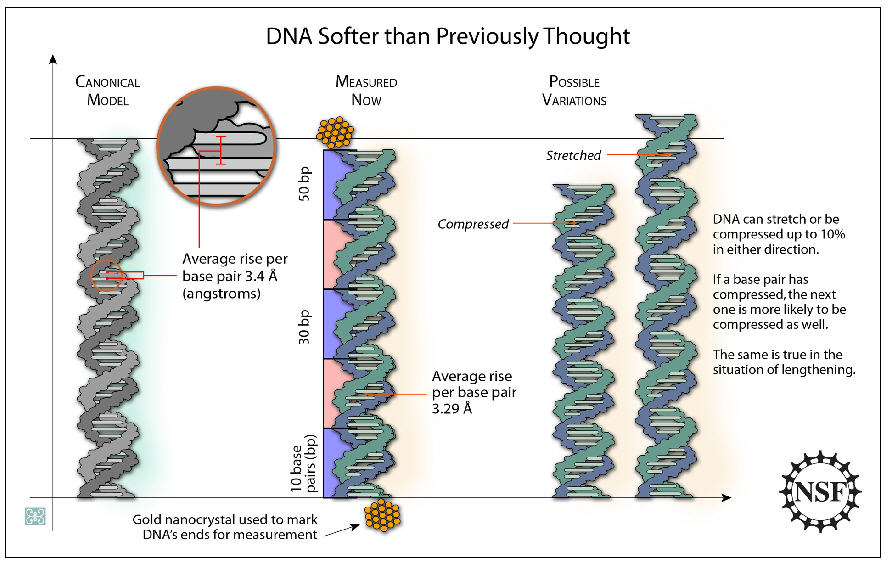
Observations and measurements at the scale of DNA are tricky. The distance between the rungs in DNA's ladder (or base pairs), for example, was thought to be barely over 3 millionths of a millimeter, or 3.4 Å (angstroms). And this ladder has been typically assumed to be very rigid.

But now a team of Stanford scientists, supported in part by the National Science Foundation, have used a novel molecular ruler to cast doubts on this picture. Using this molecular ruler, they marked each end of a snippet of DNA with electron-dense gold nanocrystals. These markers scattered X-rays directed at the sample differently than the rest of the molecules, and allowed for a more precise calculation.

A new University of Sussex study provides evidence that gorilla communication is linked to the left hemisphere of the brain - just as it is in humans.

Psychologist Dr Gillian Sebestyen Forrester developed a new method of analysing the behaviour of gorillas in captivity and found there was a right-handed bias for actions that also involved head and mouth movements. The right side of the body is controlled by the left hemisphere of the brain, which is also the location for language development.

As the world’s money markets do their best to combat the 'credit crunch', a University of Sunderland politics lecturer says that the root of modern democracy’s money woes may lay with the first corporations – pirates.

Dr Peter Hayes is Senior Lecturer in politics at the University of Sunderland. In his latest paper ‘Pirates, Privateers and the contract theories of Hobbes and Locke’ Dr Hayes argues that the roots of modern democracy were not in Britain or the USA, but were the ‘corporations’ which were created on pirate ships during the golden age of buccaneering.

Newswise — With the economy in crisis and foreclosures at an all time high, financial anxiety among Americans seems to be soaring to new heights. In a poll distributed by the American Psychological Association (APA) to more than 1,700 U.S. adults, eight out of 10 surveyed said the economy is a significant cause of stress.

“When there is a sense of uncertainty about the future or when folks feel as if their long-term goals such as retirement or children’s college funds are being threatened, a number of emotions may surface,” says Michael Groat, PhD, a psychologist for the Professionals in Crisis program at The Menninger Clinic in Houston. “We may feel as if we are no longer in control or there may be feelings of anger or lack of trust in our government leaders. All these factors together may make it difficult for people to cope, causing not only emotional distress, but stress related physical ailments as well.”