



GRACE & GOCE

GRACE & GOCE

Sep 30 2008 | comment(s)


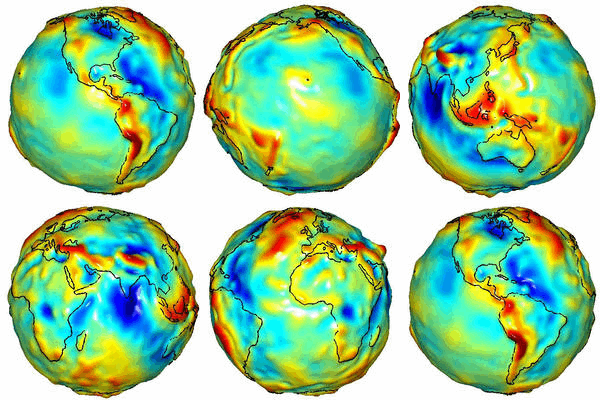
A gravity model of the Earth constructed with data from GRACE. Credit: University of Texas Center for Space Research and NASA


It is all about gravity these days. First came GRACE (Gravity Recovery and Climate Experiment) and then we'll have GOCE (Gravity field and steady-state Ocean Circulation Explorer). I'll reveal the difference right away: GRACE measures time variations while GOCE measures the static gravity field. Both are equally important for a number of societal application and both are hot on the satellite scene this fall. Well, actually amazing science results have come out based on data from GRACE ever since it was launched in 2002. In particular the increased resolution is stunning and continue to enthuse the scientists. One of my colleagues, Srinivas Bettanpur at the University of Texas, has increased the spatial resolution beyond our wildest dreams and provides now researchers with an instrument that can estimate mass changes with a spatial resolution of less than 322 km (200 miles) – a lot better than first anticipated.

Wind farms pose less of a threat to farmland birds than previously feared, new research has found. The study, published this week in the British Ecological Society's Journal of Applied Ecology, helps resolve a potentially major environmental conflict: how to meet renewable energy targets at the same time as reversing dramatic declines in biodiversity on European farmland.

Dr Mark Whittingham and colleagues from Newcastle University conducted bird surveys on arable farmland around two wind farms in the East Anglian fens. They recorded almost 3,000 birds from 23 different species, including five red-listed species of high conservation concern – the yellowhammer, the Eurasian tree sparrow, the corn bunting, Eurasian skylark and the common reed bunting.

In case you haven’t noticed, election season is upon us! Ok, it has been upon us for almost two years, but never mind that. Pollsters are busy trying to determine why people might be voting for one candidate or another, with special attention being paid to the so-called undecided voters, on whose last-minute whim the fate of the nation -- and the world -- seems to hinge.

Two recent studies, however, provide much food for thought about why people vote one way or the other, and about the reasons they give to themselves and others.

I am obsessed with CSI (excluding CSI Miami, David Caruso is just too smarmy). I simply can’t help it. I will watch an episode of CSI that I have already seen twice, just for the thrill of seeing the cases unfold. I even downloaded the entire first season of CSI and watched every single episode, back to back, without sleeping. I know that I am not alone. Shows like CSI have swept the nation due partly to its drama, but also to its science. The fact that a single hair, nail or swath of skin could yield a lead on a case is captivating. It is also true.

Granted shows like CSI sensationalize the lab work and results yielded by forensic science, but its basis is accurate. DNA profiling is one of the most valuable tools used by law enforcement and in fact does help to solve cases.

People come to this web site for well written, interesting columns on science. To some degree it must be questioned as to whether economics is a science. That being said, the current financial crisis is worthy of some commentary here as it will affect all of us to some degree. As a futurist, I see this crisis as part of a bigger transition from one Age to another. The Information Age began in the 1970s and is now giving way to the Shift Age. All year, in speeches given around the country, I have stated that the economic downturn we are going through must be looked at from a new perspective. The ‘is it a recession or not’ and ‘is it a bear stock market or not’ is a far too narrow focus for insightful discussion. There is something much larger that we are beginning to move through.

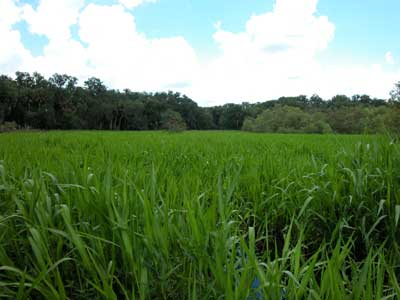
Remember that old expression about your fence, "the grass is always greener on the other side?" Although this may not be entirely true, a recent study shows that a daily dose of the green stuff may actually prove beneficial to both your mental and physical health. 

Students attending college in San Marcos, Texas are taking advantage of their luscious green surroundings and are feeling quite good about it.

A.L. McFarland, a graduate student at Texas State University's Department of Agriculture, is head of a new "green" study which created data on the effects of outdoor interaction on a student's overall quality of life.

An analysis of news media coverage of medical studies indicates that news articles often fail to report pharmaceutical company funding and frequently refer to medications by their brand names, both potential sources of bias, according to a study in the October 1 issue of JAMA.

New articles represent an important source of medical information for many patients, and even some physicians. "An increasingly recognized source of commercial bias in medical research is the funding of studies by companies with a financial interest in the results," the authors write. Little is known about how frequently news articles report the funding sources of the medical research they report on, or how frequently news articles use brand medication names instead of generic names, which could create commercial bias.

A link between reduced levels of the 'stress hormone' cortisol and antisocial behaviour in male adolescents has been discovered by a research team at the University of Cambridge.

Levels of cortisol in the body usually increase when people undergo a stressful experience, such as public speaking, sitting an exam, or having surgery. It enhances memory formation and is thought to make people behave more cautiously and to help them regulate their emotions, particularly their temper and violent impulses.

The new research, funded by the Wellcome Trust, shows that adolescents with severe antisocial behaviour do not exhibit the same increase in cortisol levels when under stress as those without antisocial behaviour.

Sunnybrook researcher Dr. Donald Redelmeier and Stanford University statistician Robert Tibshirani have found an increased risk of fatal motor vehicle crashes on United States (US) presidential election days.

US presidential elections have large effects on public health by influencing policy, the economy, and military action. "Whether the US presidential electoral process has a direct effect on public health had never been tested despite the endless media commentary and the 1 billion dollars spent on this year's election alone," says Dr. Donald Redelmeier.

It's not what you take but the way that you take it that can produce different results in women who take hormone replacement therapy (HRT), according to new research on the association between HRT and heart attacks, published the European Heart Journal [1] today.

The study is the largest to look at the effects of HRT since the Women's Health Initiative trial was stopped early after finding that HRT increased the risk of women developing a range of conditions including breast cancer and thromboembolism.

The research is an observational study of 698,098 healthy Danish women, aged 51-69, who were followed between 1995-2001. It has found that overall there was no increased risk of heart attacks in current users of HRT compared to women who had never taken it.


