In 2006 there was a serious decline in the number of honey bee colonies in parts of Europe and the United States and it brought renewed concern about another Colony Collapse Disorder, which had last occurred in the mid-1990s.
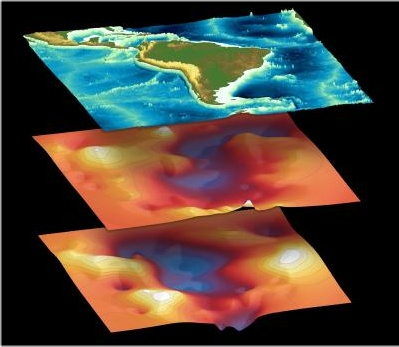

Salt rock behaves as a fluid and can play a pivotal role in the large-scale, long-term collapse of the world's continental margins. However, the precise way in which this occurs is laced in controversy; nowhere is this controversy more apparent than along the Brazilian continental margin, where the origin of a feature called "the Albian Gap" has generated much heated debate over several decades.

Albian Gap is a zone in the Santos Basin, offshore Brazil, up to 75 kilometers wide and within which the Albian section is missing. 
The U.K. government has indicated that it wishes to introduce testing for all children at Reception (when they first enter school at age four) this year. These tests seek to provide baseline assessments of a child’s ‘school readiness’ but teacher unions have criticized testing as being too narrowly focused and likely to add to the difficulties of an already challenging period for both children and their teachers.

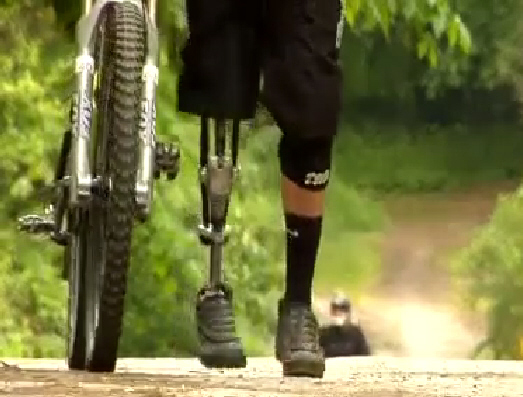
When Brian Bartlett was 24 he was hit by a car from behind so hard it ripped his right leg off instantly. It all happened so fast. He doesn’t like to talk about it. “You really can’t understand,” he told me. “There’s just no way to…until you have an injury where you’re ripped or cut apart instantly.”

By Joel Shurkin, Inside Science -- Super Balls are toys beloved by children because of their extraordinary ability to bounce. Physicists love them for exactly the same reason.

Drop a baseball on the floor and it will hardly bounce at all. Drop a Super Ball from shoulder height, and it will bounce back 92 percent of the way to the drop-off point. Super Balls also are just as bouncy vertically as they are horizontally, and they spin oddly.

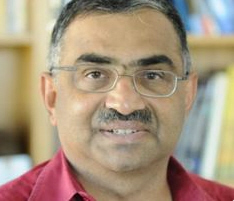
I was initially rather excited to see that one of my friends and collaborators, Professor Shri Kulkarni from Caltech, had his picture littering my Facebook feed recently.

Unfortunately for Shri, it was because in an interview with National Public Radio he had described many scientists as secretly being “boys with toys”. Worse, he had said “You’re not supposed to say that”, which indicated that although it might be controversial, he said it anyway – which is typical of Shri.

There are many ways to interpret Shri’s comment, one is that scientists are boys, but as it turns out that is not what Shri meant.

School disciplinary actions handed down to students at Utah public schools disproportionately impact American Indian children over all other ethnicities enrolled in the state's public education system, new research from the University of Utah S.J. Quinney College of Law Public Policy Clinic reveals.

A new article publishing online today in the Quarterly Journal of Medicine has reported the first case showing an association between exposure to head injuries in rugby union players and an increased risk in neurodegenerative disease.

Until now, the association between head injuries and neurodegenerative disease, specifically chronic traumatic encephalopathy (CTE), has predominantly been made with boxers. However Dr Michael Farrell and colleagues have presented the first comprehensive case report of CTE in a former amateur rugby union player, who died six years after displaying the first symptoms of neurological decline at age 57.

When people do terrible things, it seems reasonable to believe we should have taken steps to identify them beforehand. If we can do that, then surely we can prevent them from doing harm.

The crash of Germanwings Flight 9525 in March, which appears to have been an intentional act, is an example. It shocks us (and understandably so) when a trusted professional harms those who have entrusted their lives to him or her.

So why not identify pilots at risk and take steps to prevent similar events from ever occurring again?

Because it is likely impossible, and maybe even counterproductive.

Recently on Countryfile (BBC) we saw a presenter and a photographer together in the Pennines, the mountains that form the ‘backbone’ of England.  The photographer makes a living by taking spectacular scenes with a high-end camera and all different lenses, whereas the presenter was comparing what she took with her mobile. 

He was worried that in the public domain the best images would be lost in a massive cloud which includes a lot of inferior (though he didn’t specifically use the word) data.

This clicked with me, because of my experience of attempting astrophotography with what is known as a ‘bridge’ camera, somewhat between a compact and an SLR.