






At various times, Alan Turing was hailed as a brilliant cryptologist, leading a team of code breakers at Bletchley Park which cracked the German Enigma machine cypher during World War II, and then later as a gay martyr. Now, due to popular media accounts of computers seeming 'human' over and over, he is known for The Turing Test and is getting a biopic, "The Imitation Game", starring Benedict Cumberbatch in the lead role.

In a 1950, Turing propose The Turing Test, where he outlined a standard for a computer being considered human and proposed that the solution to artificial intelligence would be a program with the mind of a child and teach it to think.  So the goal of the test is not to determine if a machine is correct, but whether or not it is considered real.
Many new particles and other new physics signals claimed in the last twenty years were later proven to be spurious effects, due to background fluctuations or unknown sources of systematic error. The list is long, unfortunately - and longer than the list of particles and effects that were confirmed to be true by subsequent more detailed or more statistically-rich analysis.

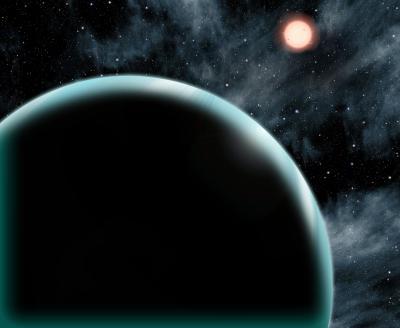
Kepler-421b
has been revealed as a transiting exoplanet with the longest known year - 704 days. For comparison, Mars orbits our Sun once every 780 days.

 The farther a planet is from its star, the less likely it is to transit the star from Earth's point of view. It has to line up just right, and most of the 1,800-plus exoplanets discovered so far are much closer to their stars and have much shorter orbital periods. The host star, Kepler-421, is located about 1,000 light-years from Earth in the direction of the constellation Lyra. 

Easy metrics like 'it takes a gallon of gas to make a pound of beef' or 'it takes 140 liters of water to make a cup of coffee' get mainstream media because they are outrageous. They are outrageous because they are completely wrong.

What is the 'real' cost of eating beef? Are the other animal or animal-derived foods better or worse?

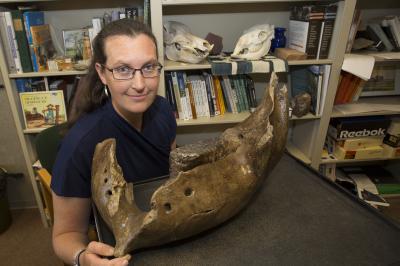
Mammoths and mastodons, the famously fuzzy relatives of elephants that lived in the American midwest, weren't as nomadic as previously believed – or Cincinnati was just a great place to be at the end of the last ice age. A study led by Brooke Crowley, an assistant professor of geology and anthropology at the University of  Cincinnati, shows the ancient proboscideans enjoyed the area so much they likely were year-round residents and not nomadic migrants as previously thought. 

They even had their own preferred hangouts. Crowley's findings indicate each species kept to separate areas based on availability of favored foods here at the southern edge of the Last Glacial Maximum's major ice sheet.

Statistical analysis of average global temperatures between 1998 and 2013 shows that the slowdown in global warming during this period is consistent with natural variations in temperature, according to research by McGill University physics professor Shaun Lovejoy.

In a new paper, Lovejoy concludes that a natural cooling fluctuation during this period largely masked the warming effects of a continued increase in man-made emissions of carbon dioxide and other greenhouse gases.  

Eating probiotics regularly may modestly improve your blood pressure, according to a new review of none studies examining blood pressure and probiotic consumption in 543 adults with normal and elevated blood pressure.

Probiotics are live microorganisms naturally occurring bacteria in the gut thought to have beneficial effects; they have recently been a nutrition trend and common sources are yogurt or dietary supplements. 

Researchers have helped identify over 100 locations in the human genome associated with the risk of developing schizophrenia, in what is the largest genomic study published on any psychiatric disorder to date. The findings point to biological mechanisms and pathways that may underlie schizophrenia, and could lead to new approaches to treating the disorder, which hasn't made much scientific progress in the last 60 years. 

Age-related macular degeneration (AMD) is the most common cause of visual impairment and blindness in industrialized countries but it is questionable whether it can continue to be defined as a disease in people in their 50s and beyond.

Investigations to determine the incidence of age-related macular degeneration undertaken as part of the Gutenberg Health Study of the University Medical Center of Johannes Gutenberg University Mainz (JGU) have shown that even persons under the age of 50 years may be affected by an early form of the eye disease.

Just under 4 percent of the 35 to 44-year-old subjects in the population-based study were found to be suffering from AMD. 

Models for the evolution of life are now being developed to try and clarify the long term dynamics of an evolving system of species. Specifically, a recent model proposed by Petri Kärenlampi from the University of Eastern Finland in Joensuu accounts for species interactions with various degrees of symmetry, connectivity, and species abundance. This is an improvement on previous, simpler models, which apply random fitness levels to species.

The findings demonstrate that the resulting replicator ecosystems do not appear to be a self-organized critical model, unlike the so-called Bak Sneppen model, a reference in the field. The reasons for this discrepancy are not yet known.

