


New Haven, Conn. — A multi-center phase I study using an investigational drug for advanced bladder cancer patients who did not respond to other treatments has shown promising results in patients with certain tumor types, researchers report. Yale Cancer Center played a key role in the study, the results of which will be presented Saturday, May 31 at the 2014 annual conference of the American Society of Clinical Oncology (ASCO) in Chicago.

Structural biologists have made important progress towards better understanding the functioning of the circadian clock. The circadian or inner clock coordinates the sleep-wake rhythm and many other body processes that regulate, for example, metabolism, blood pressure, and the immune system. A research team led by Professor Eva Wolf, recently appointed Professor of Structural Biology at the Institute of General Botany of Johannes Gutenberg University Mainz (JGU) and Adjunct Director at the Institute of Molecular Biology (IMB), has for the first time identified the molecular structure of a protein complex that plays an important role in regulating the circadian rhythm.

The clinical promise of stem cells has been dampened by concerns that the immune system will reject the transplanted cells before they could render any long-term benefit.

Previous research in mice has suggested that even adult stem cells produced from a subject's own tissue, induced pluripotent stem (iPS) cells, can trigger an immune attack.

Now researchers at the Stanford University School of Medicine have found that differentiating iPS cells in the laboratory to become more-specialized progeny cells before transplantation into mice allows them to be tolerated by the body's immune system.

CHICAGO – People in the late stages of cancer and other terminal illnesses are not only unharmed by discontinuing statins for cholesterol management, they may benefit, according to a study presented Friday by researchers at Duke Medicine representing a national research network.

The finding addresses a thorny question in treating people with life-limiting illnesses: When, if ever, is it appropriate to discontinue medications prescribed for other conditions that will likely not lead to their death?

Boston, MA – The tangled highway of blood vessels that twists and turns inside our bodies, delivering essential nutrients and disposing of hazardous waste to keep our organs working properly has been a conundrum for scientists trying to make artificial vessels from scratch. Now a team from Brigham and Women's Hospital (BWH) has made headway in fabricating blood vessels using a three-dimensional (3D) bioprinting technique.

The study is published online this month in Lab on a Chip.

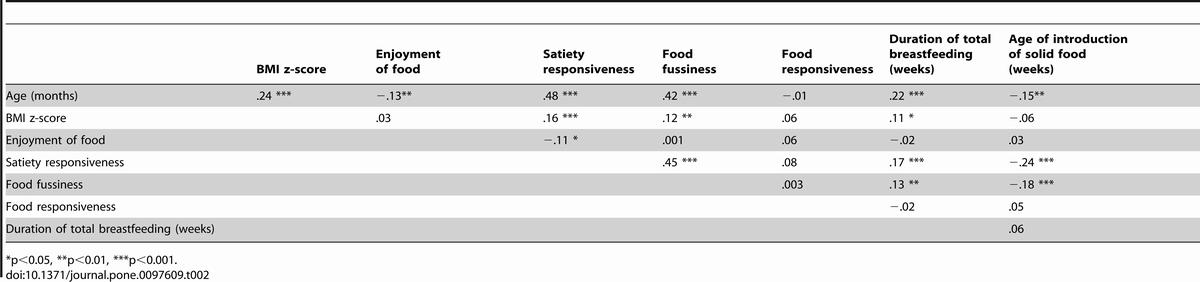
Exposing infants to a new vegetable early in life encourages them to eat more of it compared to offering novel vegetables to older children, say psychologists from the University of Leeds.

How dare biologists create something not found in nature!

Well, mankind has a lot of experience in trying to keep nature from killing us - the war between man and nature is a grudge match whose history and resentments run deep.  When scientists stop trying to keep nature from killing us is when we should worry.
To advertisers, there is only one knock on the Science 2.0 audience; there are too many women.

Before we complain about the sexism of advertisers, we have to take the issue on its merits. When we think of technological innovation, we think of men. Is it because it's always been men due to a legacy culture or are men actually more innovative? Fashion designers don't advertise here because science is not their audience and technology companies don't advertise here because women are not their audience, yet we know women adopt technology. 
Researchers of the Universitat Politècnica de València at the Campus de Gandia have designed and experimentally evaluated a new structure that permit the complete absorption of sound at a wide range of frequencies.

The best part is that they used conventional porous materials already common in the construction industry. No expensive metamaterials or mathematical wizardry.

The researchers demonstrated how the structure achieves extraordinary sound absorption using what might seem like a contradictory strategy - the sound attenuation increases when the quantity of absorbent material is reduced, so a totally reflective surface becomes a perfect absorbent despite the fact that, for the most part, there is no material that absorbs sound.

Shakespeare characterized Richard III as a hunchback because his personal and physical deformities were well known. Certainly some history is written by the winners, and he was a big loser in the War of the Roses, but now everyone can explore the true shape of one of history's most famous spinal columns.

Multimedia experts have created a 3-D model of Richard III's spine and the visualization reveals how the king's spine had a curve to the right, but also a degree of twisting, resulting in a "spiral" shape. During analysis, the skeleton was analyzed macroscopically for evidence of spinal deformity and any changes to the tissue caused by the condition.

